
Moving Containers
Recommendation
Moving Container Reviews
Recommendation
Truck Rentals Reviews
Storage Recommendations
Storage Review
Junk Removal Recommendations
Junk Removal Reviews
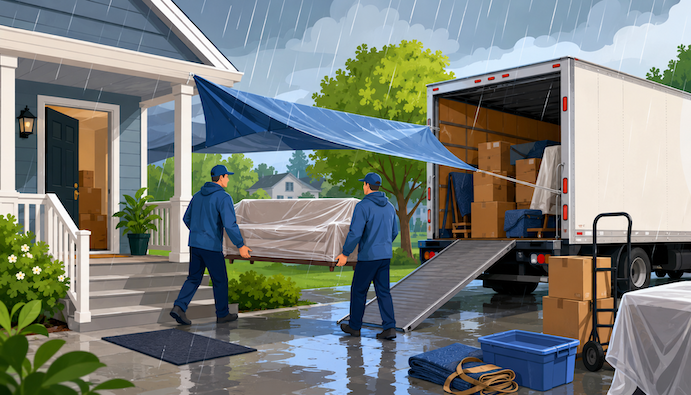

Moving day rarely goes exactly as planned, and unexpected rain can quickly turn an organized schedule into a stressful experience. Wet boxes, slippery walkways, muddy footprints, and water-damaged furniture are enough to make anyone worry. Fortunately, a rainy moving day doesn’t have to ruin your relocation.
With the right preparation and a few practical strategies, you can protect your belongings, keep everyone safe, and stay on schedule even when the weather doesn’t cooperate. Whether you’re moving across town or to a new state, knowing how to handle rain on moving day helps prevent unnecessary delays, costly damage, and added frustration.
Below are proven tips to help you manage a move in rainy weather while keeping your possessions dry and your move running smoothly.
A little preparation before loading begins can make a significant difference when rain starts falling. The goal is to reduce the amount of time your belongings spend outdoors while creating a safer environment for everyone involved.
Start monitoring the weather several days before your move. While forecasts aren’t always perfect, they provide enough notice to gather supplies and adjust your moving plan if needed.
If heavy rain or thunderstorms are expected, coordinate with your movers ahead of time to discuss timing and any precautions they’ll take.
Having the right materials nearby saves valuable time during the move. Keep these items easily accessible instead of packing them away:
Heavy-duty tarps
Plastic furniture covers
Large garbage bags
Packing tape
Towels
Microfiber cloths
Plastic storage bins
Floor mats
Mop and bucket
Extra umbrellas
These inexpensive supplies can prevent hundreds or even thousands of dollars in water damage.
Cardboard boxes and wooden furniture are especially vulnerable to moisture. Even a brief walk through light rain can cause damage if items aren’t properly protected.
Whenever possible, shorten the distance between your home and the moving truck.
If your home has a covered porch, use it as part of your loading path. You can also secure a tarp between the house and the truck to create temporary overhead protection. While this won’t eliminate exposure completely, it helps keep furniture and boxes much drier during transport.
The less time your belongings spend in the rain, the lower the risk of water damage.
Professional movers often use moving blankets, but during rainy weather, waterproof protection becomes even more important.
Wrap upholstered furniture with plastic stretch wrap or waterproof covers before carrying it outdoors. Wooden furniture should also be covered to prevent moisture from soaking into unfinished surfaces.
For boxed items, heavy-duty garbage bags or plastic sheeting provide an extra layer of defense against unexpected showers.
Plastic storage totes are one of the best investments for rainy moves.
Unlike cardboard boxes, sealed plastic bins keep water away from important documents, electronics, kitchen essentials, and sentimental belongings. They’re also sturdy enough to stack securely inside the moving truck.
If you already own several plastic bins, reserve them for your most valuable possessions.
Assign someone to stand inside the moving truck with several clean towels.
As each item arrives, quickly wipe away any moisture before placing it inside the truck. This simple step prevents water from accumulating during transport and reduces the chance of mold or mildew developing later.
Keep another stack of towels inside the house to dry reusable tarps and plastic covers as needed.
Where the truck is parked plays a surprisingly important role during rainy weather.
Ask the driver to back the truck as close to your entrance as safely possible. Shortening the carrying distance minimizes exposure to rain while making each trip faster.
Even saving a few steps between the doorway and the truck adds up after dozens of trips.
If there’s a garage available, take advantage of it by loading larger furniture directly from the covered space.
Before moving begins, inspect the path between your home and the truck.
Remove:
Garden hoses
Toys
Flower pots
Outdoor furniture
Loose rocks
Anything that could become slippery
Rain makes even small obstacles more dangerous. A clear path reduces the chance of accidents while allowing movers to work more efficiently.
Rain usually brings muddy shoes, wet footprints, and slippery floors. Protecting your home is just as important as protecting your belongings.
Use sturdy welcome mats or rubber floor mats wherever people will enter and exit.
Encourage everyone involved in the move to wipe their shoes before stepping indoors. Although it won’t eliminate every muddy footprint, it significantly reduces the amount of dirt tracked inside.
You may need to shake out or replace mats throughout the day if they become saturated.
One effective way to keep mud from spreading throughout the house is by creating a designated transfer area near the entrance.
One person or team remains inside wearing clean shoes, while another handles the outdoor trips between the doorway and the truck.
Instead of everyone walking through the entire house, items are passed from one group to another at the entrance. This simple system keeps interior floors much cleaner while speeding up the loading process.
Many people accidentally pack their cleaning supplies too early.
Instead, keep these items accessible until the very end:
Mop
Bucket
Paper towels
Old towels
Cleaning spray
Broom
Dustpan
You’ll likely need them several times throughout the move.
If you’re still organizing your relocation checklist, these moving day preparation tips can help ensure nothing important gets packed before it’s needed.
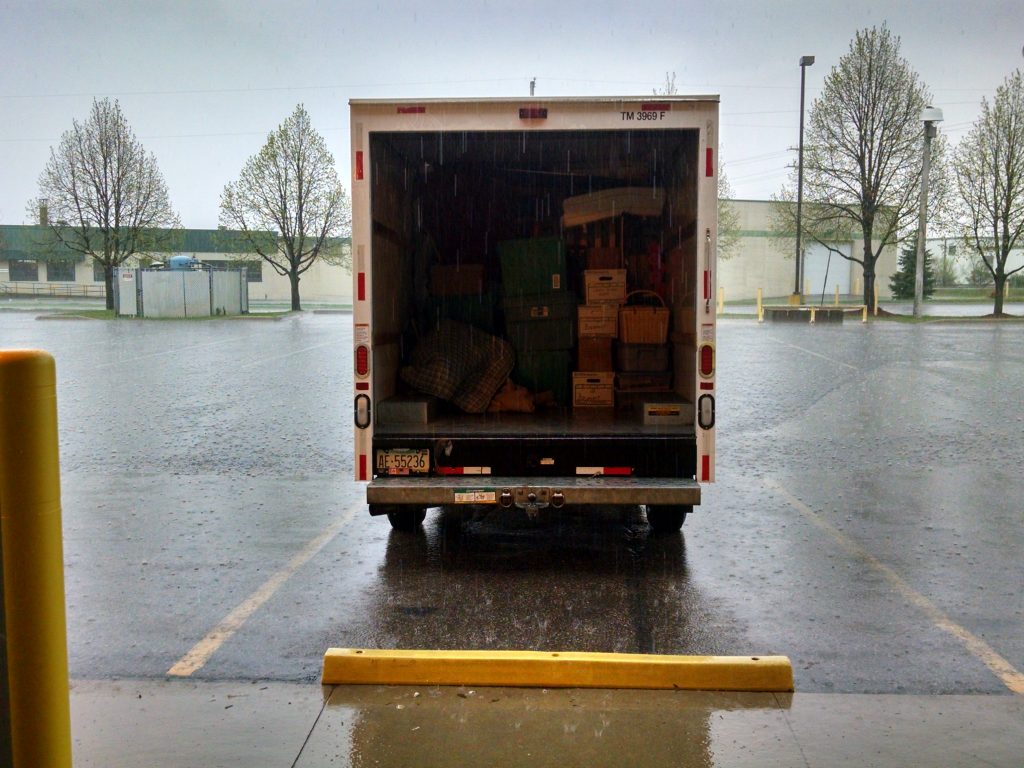
Rain increases the risk of accidents, making fragile belongings even more vulnerable.
Whenever possible, transport sensitive items such as electronics, laptops, artwork, family photographs, passports, and important paperwork in your personal vehicle instead of the moving truck.
For televisions and computer monitors, use their original packaging if available. If not, wrap them with moving blankets followed by waterproof plastic sheeting to create an additional moisture barrier.
Glass decorations, mirrors, and framed artwork should also be wrapped carefully before leaving the house, even if the walk to the truck is short.
Small precautions like these greatly reduce the chance of water damage during a rainy move.
Even the best moving plans sometimes need adjustments when weather conditions change.
Heavy rain may require brief pauses, while lighter showers often allow loading to continue safely with the proper protection in place.
Maintaining open communication with your movers helps everyone stay coordinated and minimizes unnecessary delays.
Keeping your belongings dry is important, but protecting everyone involved should always come first. Rain creates slippery surfaces that increase the risk of falls, especially when carrying heavy furniture or large boxes.
Choose shoes or boots with non-slip soles instead of sandals or smooth-soled sneakers. Good footwear provides better grip on wet driveways, sidewalks, and moving truck ramps.
If you’re helping friends or family with the move, remind them to wear appropriate shoes as well.
It may be tempting to carry multiple boxes at once to finish faster, but doing so can reduce your visibility and make it harder to keep your balance.
Taking smaller, manageable loads is often quicker in the long run because it reduces the chances of dropping items or getting injured.
Rainy weather isn’t the time to rush. Walk carefully, especially when navigating stairs, ramps, or uneven ground. A few extra seconds per trip is well worth avoiding an accident that could delay your entire move.
Rain can make loading more challenging, so staying organized inside the truck becomes even more important.
If any boxes or furniture become damp despite your precautions, avoid placing them directly against dry upholstered furniture or mattresses.
Keeping slightly wet items together allows them to dry more evenly after unloading and prevents moisture from spreading.
Wet roads often mean slower traffic, sudden stops, and longer travel times. Use moving straps, tie-downs, and furniture pads to keep everything secure inside the truck.
Well-secured items are less likely to shift during transport, reducing the risk of damage.
Once you arrive at your new home, don’t leave damp belongings packed for long.
Open plastic coverings, remove wrapping, and allow furniture, blankets, and boxes to air dry as soon as possible.
If weather permits, open windows or use fans to improve airflow. This helps prevent lingering moisture that could lead to unpleasant odors or mold.
Take a few minutes to check boxes, furniture, and electronics before putting everything away.
If you notice any moisture, dry the item completely before storing or assembling it. Catching small issues early can prevent more serious damage later.
Experienced moving companies prepare for all kinds of weather, including rainy days.
Many professional movers bring equipment specifically designed to protect homes and belongings, such as:
Floor runners
Furniture pads
Stretch wrap
Waterproof coverings
Dollies with secure straps
Protective blankets
They also know how to load the truck efficiently to minimize the amount of time items remain outside.
Choosing an experienced moving company can make a noticeable difference when conditions are less than ideal.
If you’re still choosing a mover, learning how to avoid dishonest moving companies can help you hire a team that’s prepared for unexpected weather and committed to protecting your belongings.
Even a well-planned move can become more difficult if you overlook a few key details.
Keep towels, a mop, and cleaning products accessible until you’ve completely finished moving out.
Water and electronics don’t mix. Always wrap computers, televisions, gaming systems, and small appliances with waterproof materials before taking them outside.
Wet sidewalks, driveways, and stairs become hazardous quickly. Keep pathways as clear as possible throughout the move.
Checking the forecast a few days before moving gives you time to prepare instead of reacting at the last minute.
A rainy forecast can feel discouraging, but it doesn’t have to derail your moving plans.
With waterproof coverings, smart packing techniques, safe walking paths, and a little flexibility, you can complete your move without unnecessary stress or damage.
The key is preparation. By planning ahead and protecting both your belongings and your home, you’ll be ready to handle whatever the weather brings.
Remember, rain is temporary—but careful preparation can make your moving day successful from start to finish.
Not usually. Light or moderate rain rarely requires rescheduling. Professional movers are equipped to work safely in wet conditions. Severe storms, flooding, or dangerous weather may require delaying the move.
Yes. Cardboard weakens quickly when exposed to water, which can cause boxes to collapse. Plastic covers or waterproof bins provide much better protection.
Wrap furniture with plastic stretch wrap or waterproof furniture covers before carrying it outside. Towels and moving blankets add cushioning, while plastic keeps moisture out.
Yes, provided they’re properly protected. Use waterproof wrapping, keep electronics sealed until indoors, and transport especially valuable devices in your personal vehicle whenever possible.
Place floor mats at entrances, wipe shoes before coming inside, keep towels nearby, and clean puddles immediately to prevent dirt from spreading throughout the house.
