
Moving Containers
Recommendation
Moving Container Reviews
Recommendation
Truck Rentals Reviews
Storage Recommendations
Storage Review
Junk Removal Recommendations
Junk Removal Reviews
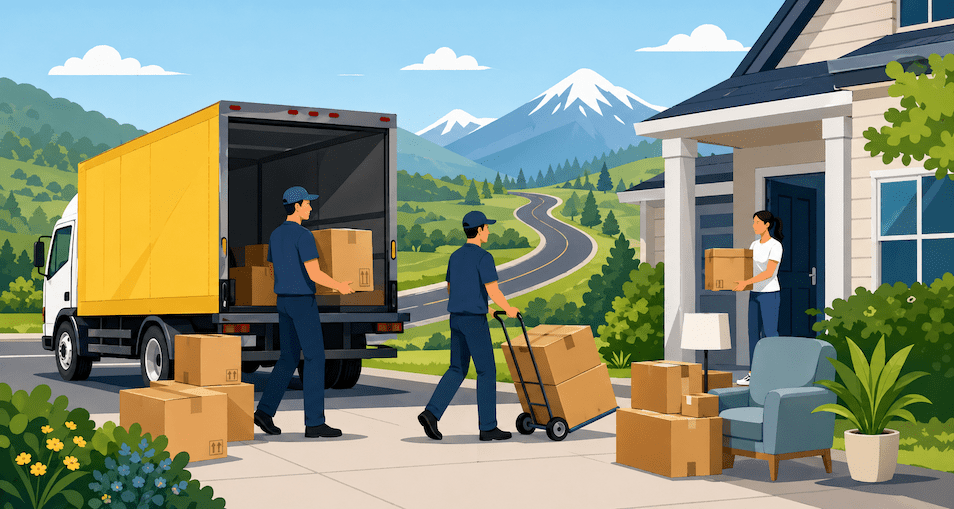

Planning a cross-country move comes with one big question: how long will the entire relocation actually take? Between packing, loading, driving, delivery, and settling into your new home, the timeline can vary more than many people expect.
A simple move with flexible dates may take a week or two. A larger household move across several states can take several weeks, especially when storage, scheduling, or long delivery windows are involved.
The good news is that your timeline becomes much easier to manage when you understand what affects it. From choosing the right movers to preparing your belongings before moving day, every detail can help speed up or slow down the process.
Most cross-country moves take anywhere from one week to several weeks, depending on distance, shipment size, mover availability, weather, and your move-in date.
A shorter long-distance relocation, such as moving from Georgia to Virginia, may move faster because the driving distance is manageable. A coast-to-coast move, such as Georgia to Oregon, naturally requires more travel time, more fuel stops, and more coordination.
Before setting expectations, it helps to know practical long-distance moving tips for planning a smoother relocation so you can prepare early and avoid last-minute delays.
No two moves are exactly alike. Even if two families are moving the same distance, their timelines can be completely different because of how much they own, how much help they need, and when their new home is ready.
The biggest factors include:
How much needs to be packed
How many fragile or bulky items you own
How much space your shipment takes in the truck
The distance between homes
Driver schedules and required breaks
Weather, traffic, and road conditions
Whether storage is needed
Your exact move-in date
Each of these details plays a role in how quickly your belongings can leave your current home and arrive safely at the next one.
Packing is one of the most time-consuming parts of a cross-country move. The timeline depends on whether you pack everything yourself, hire movers to pack for you, or choose a combination of both.
If you are packing on your own, clothing, linens, books, and basic household goods are usually faster to box. Fragile items, electronics, artwork, dishes, mirrors, and collectibles take longer because they require more care.
Professional movers also spend extra time protecting delicate items properly. That may make packing feel slower at first, but it helps prevent damage during a long trip.
Items such as framed photos, wall art, televisions, and mounted décor can also affect timing. The more you remove from walls before movers arrive, the faster the crew can begin wrapping, loading, and organizing the shipment.
For fragile or awkward belongings, it is worth understanding the most difficult household items to pack and move safely before moving day arrives.
The amount of belongings in your home has a direct impact on your moving timeline. A small apartment may be packed and loaded fairly quickly, while a large family home may require a full day or more just for loading.
More belongings also mean more boxes, more furniture wrapping, more inventory checks, and more careful truck organization.
This can also affect cost. Larger shipments often take up more truck space and require more labor. If your move crosses state lines, it helps to understand how shipment size can influence average interstate moving costs for long-distance relocations.
Decluttering before your move can save time and money. If you have items you no longer use, selling, donating, or recycling them before packing can make the entire process more efficient.
Loading is not just about placing boxes into a truck. A good moving crew has to protect furniture, balance weight, secure fragile items, and arrange everything so it can survive a long-distance trip.
Large furniture, appliances, heavy boxes, and oddly shaped items all take more time to load. If stairs, elevators, narrow hallways, or long walking distances are involved, the loading process can take even longer.
Your timeline may also depend on the type of truck used. Different moving trucks are suited for different shipment sizes, and knowing what to consider before renting a moving truck can help you better understand how truck size affects planning.
The better your home is prepared, the faster loading usually goes. Clear walkways, labeled boxes, disassembled furniture, and accessible parking can all make a big difference.
Distance is one of the clearest timeline factors. A move across a few states may take less time than a full coast-to-coast relocation.
However, distance is not the only travel factor. Moving trucks do not travel the same way personal vehicles do. Drivers must follow safety rules, take rest breaks, refuel, navigate traffic, and adjust for road conditions.
Long-distance moving routes may also include multiple shipments, stops, or deliveries. This means your belongings may not travel directly from your old home to your new one without interruption.
A professional moving company can give you a delivery window based on mileage, shipment size, route, and scheduling availability. That window is usually more realistic than trying to estimate the drive time yourself.
Even if your belongings are ready to go, your new home may not be. Closing delays, lease start dates, renovations, utility setup, and travel plans can all affect when delivery can happen.
If your new home is not ready when the truck arrives, storage may be needed. This can extend your timeline but may also prevent unnecessary stress.
The earlier you communicate your move-in date, the easier it is for your relocation consultant or mover to create a workable plan.
A DIY cross-country move can seem faster because you control the schedule. You can pack, drive, and unload at your own pace.
However, DIY moves often take longer than expected. You may need extra time to rent equipment, gather supplies, load safely, drive a large truck, and unload without professional help.
Professional movers may work within delivery windows, but they can often make packing, loading, transportation, and unloading more efficient. A full-service [moving company can also help reduce the physical and logistical burden.
The best choice depends on your budget, timeline, shipment size, and comfort level with managing the move yourself.
You cannot control every delay, but you can control how prepared you are.
Start by sorting your belongings as early as possible. Separate what you want to keep, donate, sell, or discard. This lowers the number of items that need to be packed and loaded.
Next, label boxes clearly by room and priority. A box labeled “Kitchen — Open First” is far more useful than a box labeled “Miscellaneous.”
You should also remove wall décor, disconnect electronics, clean out storage areas, and create a clear path for movers before moving day.
A detailed moving checklist for organizing a smooth relocation can help you stay on track and avoid rushing through important steps.
The earlier, the better. Cross-country movers can book up quickly, especially during peak moving season.
Summer, weekends, and the end of the month are often the busiest times. If you need a specific moving date, try to schedule as soon as your plans are confirmed.
Booking early gives you more flexibility, better scheduling options, and more time to compare services. It also gives the moving company enough time to estimate your shipment, prepare the right truck space, and coordinate delivery.
If you wait until the last minute, you may still find movers, but your timeline could be less flexible.
While every move is different, a typical timeline may look like this:
Begin researching movers, collecting estimates, and decluttering your home. This is also the best time to create a moving budget and decide whether you need packing or storage services.
Start packing nonessential items. Confirm your mover, review your inventory, and begin handling address changes, school records, utilities, and travel plans.
Pack more frequently used items, prepare fragile belongings, and confirm moving dates. If you are using professional movers, stay in touch about pickup and delivery expectations.
Finish packing, clear walkways, prepare appliances, and keep important documents with you. On loading day, review the inventory carefully before the truck leaves.
Be available during the delivery window, check items as they arrive, and begin unpacking essentials first. Focus on bedrooms, bathrooms, and the kitchen before moving into less urgent spaces.
Delivery can take several days to a few weeks, depending on distance, route, shipment size, and mover scheduling. Your moving company should provide a delivery window before the move begins.
Some smaller or shorter long-distance moves may be completed in about a week. Larger or coast-to-coast moves often take longer, especially when packing, storage, or multiple delivery stops are involved.
Packing and transportation usually take the most time. Fragile items, large furniture, long driving distances, and delayed move-in dates can all extend the timeline.
Hiring professional movers can make packing, loading, and transportation more efficient. However, delivery still depends on distance, schedules, road conditions, and the moving company’s route.
Book early, declutter before packing, label boxes clearly, confirm your move-in date, and keep communication open with your mover. Preparing your home before moving day can also reduce loading delays.
A cross-country move can take as little as a week or stretch into several weeks, depending on your distance, shipment size, packing needs, delivery window, and move-in schedule.
The key is to plan early and stay realistic. Packing fragile items, loading the truck, traveling long distances, and coordinating delivery all take time.
With the right moving team and a clear plan, your move can feel far more manageable from start to finish. Instead of guessing how long everything will take, work with your movers to build a timeline that fits your home, belongings, and destination.
