
Moving Containers
Recommendation
Moving Container Reviews
Recommendation
Truck Rentals Reviews
Storage Recommendations
Storage Review
Junk Removal Recommendations
Junk Removal Reviews
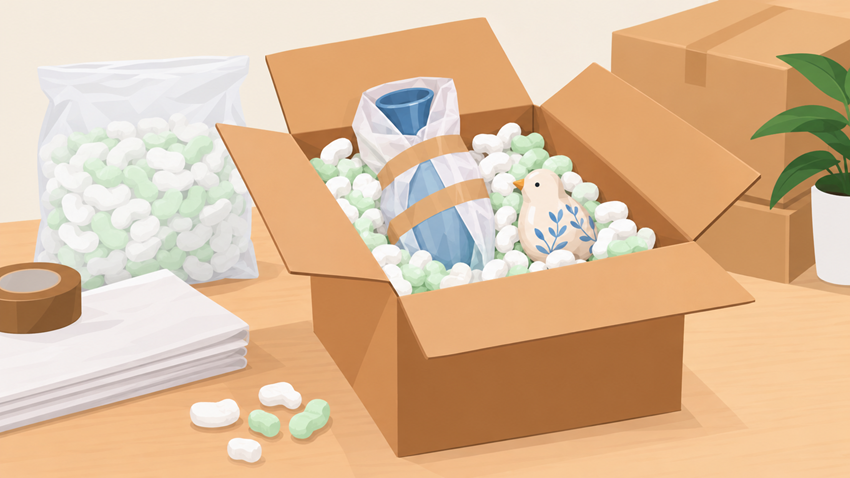

Moving fragile belongings safely requires the right protective supplies. Whether you are packing glassware, electronics, home décor, or collectibles, choosing suitable cushioning can help prevent damage during transportation. But what are packing peanuts, and are they a good choice for your next move? These lightweight fillers occupy empty spaces inside boxes, reduce movement, and provide cushioning around delicate belongings. Understanding their types, benefits, limitations, and disposal options can help you make smarter packing decisions.
Packing peanuts are one type of protective filler used during shipping and relocation. Explore our guide to different types of packaging fillers to compare cushioning options and choose suitable materials for your belongings.
Unlike rigid inserts, these fillers adapt to different shapes, making them useful for items that are difficult to secure with standard packaging. When placed correctly, they create a protective layer that limits shifting and absorbs some impact.
However, they work best as part of a complete packing system. Wrapping delicate belongings first and choosing a sturdy box can provide more reliable protection than relying on loose fillers alone.
Not all loose-fill packaging is made from the same material. Understanding the differences helps you choose a suitable option for your household move.
Traditional fillers are commonly made from expanded polystyrene, a lightweight plastic foam. They are inexpensive, easy to handle, and effective for filling gaps around packaged goods.
This foam packing material is suitable for many general shipping and moving applications. However, it can generate static electricity, scatter easily, and create disposal challenges because many local recycling programs do not accept it.
Plant-based versions are often manufactured from corn or other starches. They resemble conventional foam fillers but can dissolve when exposed to water.
These alternatives may reduce the long-term waste associated with traditional plastic foam. Nevertheless, composting and disposal rules vary by location, so check the manufacturer’s instructions and local waste guidelines before discarding them. Not every product labelled biodegradable is accepted by every composting facility.
Reusable fillers can be a practical choice for households that ship items regularly or move frequently. Clean, undamaged pieces can often be stored in sealed bags and reused for future shipments.
For an ordinary household move, reuse is worth considering before buying new supplies. Keep the fillers dry and free from dirt to preserve their usefulness.
Loose-fill cushioning offers several practical advantages when used appropriately.
Boxes often contain gaps around irregularly shaped belongings. Filling these spaces helps stop objects from sliding into one another when boxes are lifted or transported.
Because the fillers weigh very little, they generally add minimal weight to moving boxes. This can be helpful when packing several cartons of household belongings.
Unlike some rigid inserts, loose-fill pieces settle around objects with unusual contours. This makes them useful for filling spaces around already wrapped items.
Loose fillers can simplify the process of securing small, wrapped belongings inside suitable cartons. They are especially helpful when a box has several gaps that would otherwise allow its contents to move.
The answer depends on the object, its weight, and how it will be transported. Loose fillers can reduce movement, but they are not always the most suitable primary protection for delicate belongings.
For example, glassware should be wrapped individually before being placed in a box. Heavy objects may compress loose fillers, while sensitive electronics may require anti-static protection.
When selecting the best packing material for fragile items, consider the item’s shape, weight, fragility, and susceptibility to scratches. Combine cushioning with appropriate wrapping and a well-fitted carton rather than expecting a single supply to handle every risk.
For delicate ornaments and valuable collections, this practical guide to packing fragile glassware and collectibles offers additional ideas for reducing damage during a move.
Good packing technique matters just as much as the materials you choose. Follow these steps to create a more secure package.
Select a sturdy carton that provides enough room for protective wrapping and cushioning without leaving excessive empty space. Check that the bottom is securely taped.
Use suitable wrapping paper, foam sheets, or another protective layer around delicate objects. Keep sharp edges and fragile surfaces covered.
Place a layer of loose-fill cushioning at the bottom of the carton. This helps create a buffer between the contents and the box.
Place wrapped objects inside the box, leaving enough room for cushioning around them. Avoid placing heavy items directly on delicate ones.
Distribute the fillers around the wrapped belongings and into empty spaces. Aim for a secure arrangement without crushing delicate items under excessive pressure.
Gently move the carton to check whether the contents shift noticeably. Add suitable cushioning where necessary, then seal and label the box clearly.
For more efficient organisation, learn how to use packing cubes for moving. These organisers are useful for grouping clothing and smaller belongings, although they serve a different purpose from protective loose-fill cushioning.
The right supplies depend on your budget, the items being packed, and the quantity required. You can explore local packaging stores, moving supply retailers, online marketplaces, and shipping centres.
People searching for packing peanuts near me may find local shipping shops that sell or accept reusable loose-fill packaging. Availability varies, so contact the shop before making a trip.
You may also encounter staples packing peanuts when comparing retail packaging supplies. Check the product specifications carefully to confirm the material, quantity, and intended use.
When deciding where to buy packing material, compare the total cost, including delivery fees, rather than looking at the package price alone. Buying only what you need and reusing clean supplies can help control moving expenses.
For an economical approach, consider this smart guide to packing without bubble wrap for moving. It explores alternatives that may already be available at home.
Although loose-fill cushioning is convenient, traditional foam creates waste-management challenges. Choosing reusable or recyclable alternatives where practical can reduce the amount of disposable packaging used during a move.
Crumpled packing paper and suitable reused paper can fill some gaps and provide cushioning around wrapped belongings. Paper-based options may also be easier to sort for recycling, depending on local collection rules.
Save clean packaging from previous deliveries, provided it remains in good condition. You can also explore finding reusable packing supplies to reduce the need to purchase new materials.
Do not assume every type of loose-fill packaging belongs in the recycling bin. Traditional polystyrene pieces are often excluded from household recycling, while plant-based versions may have specific composting or disposal requirements. Follow local guidance and the manufacturer’s labelling.
Choosing the right supplies is only one part of a successful move. Finding a reliable moving company can also make packing, transportation, and delivery more manageable.
WowMover is a useful platform for people comparing moving companies and exploring services for their relocation. Instead of choosing a provider without research, use the platform to review available options and identify companies that match your moving requirements.
For a long-distance relocation, start by comparing the best interstate moving companies. Review service details, estimates, and relevant customer feedback before making a decision. Comparing providers can help you understand your options and plan your move with greater confidence.
Whether you are moving across town or across state lines, combining appropriate supplies with a suitable moving service can make the process easier to manage.
Choosing suitable cushioning can help protect household belongings and make packing more organised. The right option depends on what you are moving, how fragile the items are, and how much protection they require.
Use loose-fill cushioning to secure empty spaces, wrap delicate objects individually, and choose sturdy cartons. Whenever possible, reuse suitable supplies and follow local disposal guidance. With thoughtful preparation and a reliable moving company, you can reduce avoidable damage and make your next relocation more manageable.
They fill empty spaces inside boxes, reduce movement, and cushion packaged belongings during shipping or moving.
Some starch-based versions are biodegradable, while traditional polystyrene foam generally does not biodegrade readily.
Yes. Clean, dry, undamaged pieces can often be saved and reused for future packing projects.
They can fill gaps around individually wrapped glassware, but suitable wrapping and a sturdy box are also essential.
Follow the product label and local waste guidance. Reuse suitable pieces first, and do not assume they are accepted in household recycling or composting.
