
Moving Containers
Recommendation
Moving Container Reviews
Recommendation
Truck Rentals Reviews
Storage Recommendations
Storage Review
Junk Removal Recommendations
Junk Removal Reviews
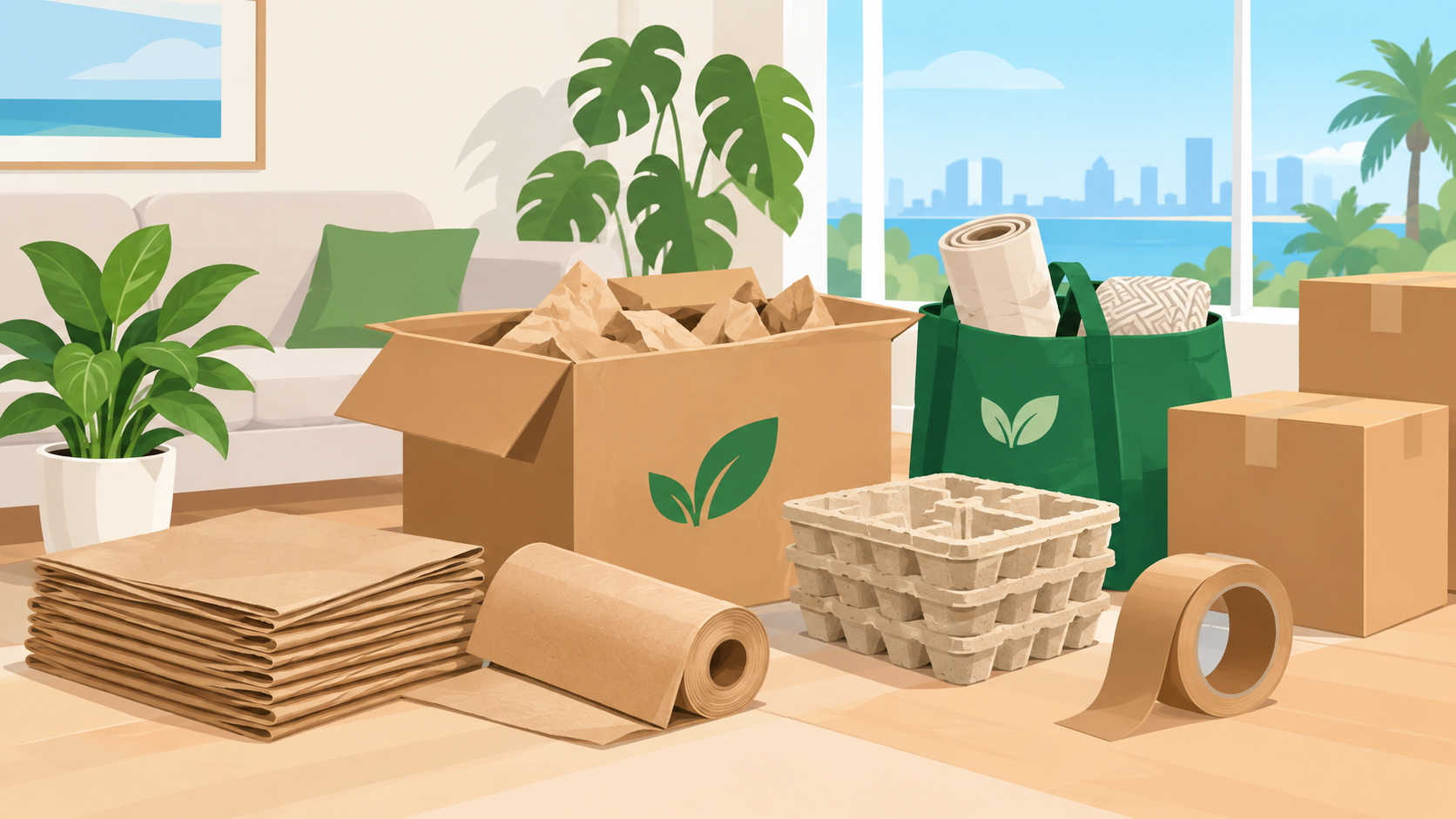

Moving can create a surprising amount of waste, especially when you rely on single-use boxes, plastic wrap, and disposable packing materials. The good news is that you do not need to sacrifice convenience to make your move more environmentally friendly. With a little planning, you can find reusable packing supplies, repurpose household items, and reduce the amount of material that ends up in the trash.
Choosing reusable and recycled moving supplies can also help control your moving costs. Instead of buying every packing item brand new, look around your home, ask friends and family, check local stores, or work with a moving company that offers environmentally conscious packing options.
If you are preparing for a local or long-distance move, planning your packing materials early can make the entire process easier and more organized.
Reusable packing supplies can reduce waste while giving you practical materials that can be used again after your move. Cardboard boxes, plastic bins, fabric bags, blankets, towels, and suitcases can all have a second life beyond moving day.
A move does not have to generate a mountain of disposable packaging. By choosing supplies that can be reused, recycled, donated, or repurposed, you can make more efficient use of the materials you already have.
Reusable packing also gives you more flexibility. Storage bins, for example, can continue to hold seasonal clothing, decorations, documents, or household items long after the move is finished.
Before buying anything, walk through your home and look for items that can protect your belongings during transportation. Many useful packing materials are already sitting in closets, drawers, garages, and storage areas.
This approach can save money and reduce unnecessary purchases.
Plastic storage bins are one of the easiest reusable packing options. They are sturdy, stackable, and useful after the move.
Use them for clothing, books, kitchen supplies, children’s items, tools, and other belongings that do not require special protection. Smaller containers can also keep loose items organized inside larger moving boxes.
Unlike cardboard boxes, durable plastic bins can be used repeatedly for future moves or household storage.
You do not always need specialized protective material to pack fragile belongings. Towels, blankets, sheets, pillowcases, and other soft household fabrics can provide cushioning around dishes, glassware, decorations, and small appliances.
This is particularly useful because the materials serve a purpose during the move and can immediately return to normal household use afterward.
For additional ways to protect belongings without relying heavily on traditional plastic materials, consider these practical ways to pack without bubble wrap.
Old newspapers and other clean paper materials can be useful for wrapping certain household items. Crumpled paper can also fill empty spaces inside boxes and help prevent items from shifting during transportation.
However, make sure the paper is appropriate for the item being packed. Ink can transfer onto some surfaces, so delicate or light-colored belongings may require clean packing paper or another protective layer.
Cardboard boxes remain one of the most common moving supplies, but buying large quantities of new boxes is not always necessary.
Ask friends, family members, neighbors, local businesses, or community groups whether they have clean boxes available. Grocery stores, bookstores, offices, and other businesses may also have sturdy boxes that would otherwise be discarded.
When using previously owned boxes, inspect them carefully. Avoid boxes that are damp, torn, crushed, stained, or showing signs of pests.
You can also look for companies that specialize in reusable moving containers. These containers are designed to be used multiple times and can provide a durable alternative to traditional cardboard boxes.
When comparing moving companies, you can also review options such as reputable interstate moving companies if your relocation involves crossing state lines.
Sometimes reusable household items are not enough. Certain belongings require additional protection, particularly fragile or valuable items.
When purchasing new supplies, look for options made from recycled or biodegradable materials.
Traditional plastic packing tape can be difficult to recycle along with cardboard. Recyclable paper tape can provide an alternative for sealing boxes while keeping the packing process more environmentally conscious.
Make sure the tape is strong enough for the weight of the box. Heavy items still need secure packaging regardless of the type of tape used.
Corrugated paper can provide cushioning for fragile belongings and can often be recycled after use. It can be wrapped around furniture pieces, dishes, artwork, and other items that need additional protection.
Its flexibility makes it useful for packing objects with unusual shapes.
If you need the cushioning effect of bubble wrap, biodegradable alternatives may be worth considering. These products can provide protection for fragile belongings while offering a different end-of-life option from conventional plastic packaging.
Always check the manufacturer’s disposal instructions because biodegradable and compostable materials do not necessarily belong in the same waste stream.
Packing peanuts can fill empty spaces and prevent objects from moving around inside boxes. Biodegradable versions are available as an alternative to traditional foam materials.
Use enough cushioning to prevent movement, but avoid overpacking boxes. Excess material increases the amount of supplies you need and can make boxes unnecessarily difficult to handle.
You may not need a specialized container for every category of belongings.
Suitcases are excellent for clothing, shoes, books, and other heavier items. Duffel bags can hold soft goods, while reusable grocery bags can organize smaller household items.
Vacuum storage bags are useful for compressing blankets, jackets, bedding, and other bulky fabrics. Laundry baskets and hampers can also transport clothing and household goods without requiring additional boxes.
The goal is simple: use what you already own before purchasing something new.
One of the easiest ways to reduce moving expenses is to ask people you know whether they have packing supplies left over from a recent move.
Someone who moved a few months ago may still have boxes, plastic bins, packing paper, or other supplies sitting in storage.
You can also offer to return reusable containers after your move or pass them along to someone else. This creates a simple cycle in which the same supplies can support several moves instead of being used once.
If you have children involved in the move, organizing reusable materials can even become part of the packing process. Simple household supplies can make packing fun and enjoyable for the entire family while giving everyone a small task to complete.
Finding environmentally friendly packing materials does not necessarily require a specialized store. You have several options depending on your budget, location, and moving schedule.
Local businesses may have clean boxes and paper materials they no longer need. Ask before taking anything, and focus on sturdy boxes that are suitable for moving.
Office supply stores, bookstores, furniture stores, and other businesses may have stronger boxes than those typically used for lightweight household goods.
Online retailers offer a wide range of recycled, reusable, and biodegradable packing products. This can be convenient when you need specific supplies or have limited time before moving day.
Ordering online also allows you to compare different materials and quantities before making a purchase.
However, avoid ordering significantly more than you need. Excess packaging can create additional waste, which defeats part of the purpose of choosing environmentally friendly supplies.
Friends, relatives, neighbors, and coworkers can be valuable sources of moving supplies.
If someone you know recently relocated, ask whether they still have boxes, bins, or protective materials. You may be able to borrow or reuse supplies instead of purchasing them.
This is particularly helpful when you only need packing materials for a single move.
A little preparation can prevent unnecessary spending.
Start by creating a list of everything you expect to pack. Then separate your belongings into categories such as clothing, kitchenware, books, electronics, furniture, fragile items, and miscellaneous household goods.
Next, identify what can be packed using materials you already own.
For example, clothing can go into suitcases and reusable bags, while towels can protect dishes and glassware. Books can go into small, sturdy boxes, while blankets can protect furniture.
Once you know what you already have, you can purchase only the supplies you are actually missing.
This approach makes it easier to stay within your moving budget while reducing the amount of unused packing material left over.
Packing does not end when the last box reaches your new home. You also need a plan for what happens to the supplies afterward.
Reusable plastic bins, suitcases, baskets, and storage containers can become part of your home’s organization system.
Use them for seasonal clothing, holiday decorations, paperwork, tools, children’s belongings, or other items that need to be stored.
If you have clean boxes that you no longer need, consider giving them to someone preparing for a move.
Community groups and local networks can be useful places to find people who need free or inexpensive packing supplies.
Durable moving containers and specialty packing products may have resale value.
If you have supplies that are still in excellent condition, selling them can help recover some of your moving expenses while giving another person the opportunity to reuse them.
Cardboard that is no longer usable should generally be prepared for recycling according to your local recycling requirements.
Flatten boxes before recycling them and remove excessive tape or non-cardboard materials when required by your local facility.
Do not recycle wet, heavily contaminated, or damaged cardboard if your local recycling program does not accept it.
Long-distance moves often require more planning because belongings may spend more time in transit.
Sturdy boxes, appropriate cushioning, and secure packing become especially important when items will be transported over a greater distance.
If you are moving with children, consider their clothing, toys, school supplies, and comfort items separately so that essential belongings remain easy to access. Planning ahead can make long-distance moving with kids more manageable for the entire household.
For fragile belongings, do not choose a packing material simply because it is environmentally friendly. The material also needs to provide appropriate protection.
Preventing damage is important because replacing broken items can create additional financial costs and environmental waste.
Eco-friendly packing does not automatically mean expensive packing.
In many cases, the most sustainable option is also the least expensive: use something you already own.
Towels, blankets, suitcases, reusable bags, baskets, and storage containers can eliminate the need to purchase additional packing products.
Even when you need to buy new materials, choosing reusable products can provide value beyond moving day. A durable storage bin, for example, can serve a purpose for years.
The key is to think about the full life of the product rather than its usefulness only during the move.
Start by checking your home for reusable packing supplies before shopping.
Use towels, blankets, sheets, suitcases, bags, and storage bins whenever appropriate.
Look for recycled cardboard, paper tape, corrugated paper, and other lower-waste materials.
Ask friends, family, neighbors, and local businesses about unused moving boxes.
Buy only the supplies you actually need to avoid unnecessary waste.
Choose packing materials based on the protection your belongings require.
Donate, sell, reuse, or properly recycle supplies after the move.
Consider reusable containers that can continue serving a purpose in your new home.
For long-distance moves, prioritize secure packing while still looking for reusable options.
Some of the most practical reusable packing supplies include plastic storage bins, suitcases, reusable bags, laundry baskets, towels, blankets, sheets, and durable cardboard boxes.
The right choice depends on what you are packing. Soft household items can provide cushioning, while sturdy containers are better for heavier belongings.
Yes. Towels, blankets, sheets, clothing, suitcases, baskets, hampers, and reusable bags can all help with packing.
Using household items can reduce the number of new supplies you need to purchase while giving those items a second purpose during the move.
You can ask friends, family members, neighbors, and local businesses for clean boxes they no longer need. Community groups can also be useful for finding people giving away leftover moving supplies.
Always inspect used boxes before using them and avoid containers that are damaged, wet, or contaminated.
Reusable plastic bins can be useful because they are durable and can continue to serve as storage containers after the move.
However, cardboard boxes can also be a practical choice, especially when they are reused and recycled properly. The best option depends on your budget, storage needs, and the type of belongings being packed.
Start by reusing supplies you already have, borrow boxes when possible, purchase only what you need, and choose recyclable or reusable materials when buying new supplies.
After moving, keep useful containers, donate or sell items that are still usable, and recycle cardboard according to local requirements.
You can keep reusable containers for storage, give usable boxes to someone else, sell higher-quality supplies, or recycle cardboard and other accepted materials.
Planning what happens to your packing supplies after the move can help prevent unnecessary waste.
A more sustainable move does not require completely changing the way you pack. Often, the biggest improvement comes from making better use of the materials already around you.
Before buying new supplies, look through your home, ask people you know, and check local sources for reusable boxes and containers. When you do need to purchase something, consider recycled, reusable, or biodegradable alternatives that fit your needs.
Most importantly, focus on protecting your belongings while avoiding unnecessary waste. With a little planning, reusable packing supplies can help you save money, stay organized, and make your move more responsible from start to finish.
