
Moving Containers
Recommendation
Moving Container Reviews
Recommendation
Truck Rentals Reviews
Storage Recommendations
Storage Review
Junk Removal Recommendations
Junk Removal Reviews
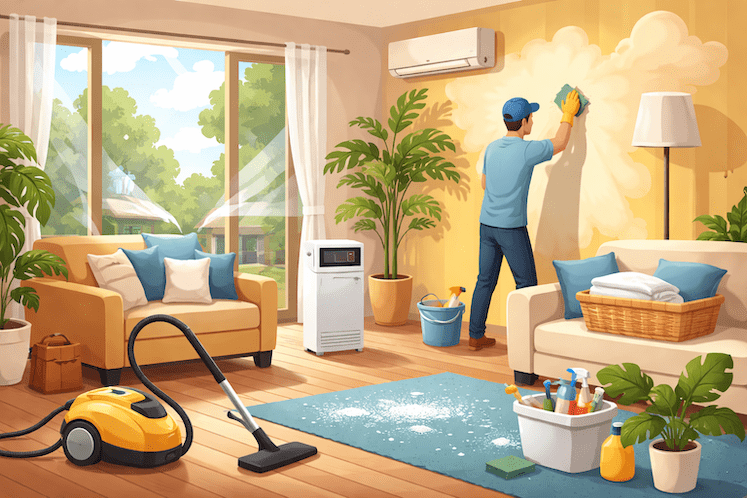

Moving into a new place should feel fresh and exciting, not like stepping into a stale cloud of old cigarette smoke. If you are trying to remove smoke smell after moving into a house, the good news is that the odor can be reduced and often eliminated with the right cleaning plan. Smoke particles cling to walls, ceilings, fabrics, vents, and even floors, which is why the smell can linger long after the previous occupant has left.
That stubborn odor usually comes from third-hand smoke, the residue left behind on indoor surfaces. It does not just stay in the air. It settles into carpets, curtains, upholstery, air ducts, and painted walls, then slowly releases that smell back into the room. If you have recently unpacked and noticed the odor getting stronger, especially in closed rooms or on humid days, you are dealing with residue that needs more than a quick air freshener.
The most effective way to get rid of smoke smell in a house is to combine ventilation, fabric treatment, deep surface cleaning, and air filtration. If the odor is severe, you may also need deodorizing equipment or sealing treatments. Whether you are settling in after moving into a new house and getting everything ready for a clean start, or simply trying to make your new space feel livable, this step-by-step approach will help you clear the smell and make the home feel like yours.
Smoke odor is difficult to remove because it is not only floating in the air. Cigarette smoke leaves behind microscopic particles and sticky residue that cling to nearly every surface it touches. Over time, those particles build up in soft materials and on painted or porous surfaces.
That is why the smell often shows up in places people do not expect. Carpets hold onto it. Curtains absorb it. Cabinet interiors can trap it. Even air vents and light fixtures can carry residue that keeps reintroducing the smell into the room.
The longer someone smoked in the house, the deeper the contamination usually goes. A home with years of indoor smoking will almost always need a more aggressive cleanup than one with occasional exposure. Still, even a strong smoke odor can be treated if you work through the house methodically.
Before you begin deep cleaning, remove anything that could still be actively holding the smell. This includes cigarette butts, ashtrays, empty packs, lighters, and any leftover smoking accessories that may have been missed during move-in.
You should also check drawers, closets, garage shelves, window ledges, and outdoor entry areas. Sometimes the strongest smell is coming from a small forgotten item rather than the room itself.
This first step seems simple, but it matters. There is no point cleaning the rest of the house if the most direct odor sources are still sitting inside it.
One of the fastest first moves is to open every window and exterior door you can. Fresh airflow helps push stale indoor air out and starts reducing that trapped smoke smell immediately.
Cross-ventilation works best. Open windows on opposite sides of the house so air can move through instead of sitting still. If the weather allows it, leave windows open as long as possible during the first few days of cleaning.
Box fans or portable fans can speed up the process. Place one fan inside to circulate indoor air and another facing outward near a window or door to push old air outside.
This will not solve the problem on its own, but it helps lower the concentration of odor while you clean. It also makes it easier to work with stronger cleaning solutions safely.
Soft surfaces are some of the biggest odor traps in a smoke-damaged home. If the house has carpeting, area rugs, fabric chairs, or upholstered sofas, they need focused attention.
Start by sprinkling baking soda generously over carpets and fabric-covered surfaces. Baking soda helps absorb and neutralize odor molecules rather than just covering them up. Leave it in place for several hours, or overnight if possible, before vacuuming thoroughly.
For heavier smoke exposure, steam cleaning may be necessary. A deep carpet cleaner can pull residue out of fibers more effectively than vacuuming alone. If the smell is especially strong, professional carpet cleaning may be worth considering.
Smoke residue often stays trapped in cushion covers, mattress covers, fabric headboards, and even padded dining chairs. Any soft surface that cannot be ignored should be vacuumed, deodorized, or washed based on the material.
If furniture came with the house and still smells strongly after cleaning, you may need to decide whether keeping it is worth the effort. Some heavily saturated pieces continue releasing odor long after treatment.
Wash anything removable and machine-safe as early as possible. Curtains, bedding, pillow covers, sofa covers, throw blankets, and washable cushion covers should all go through a thorough cleaning cycle.
White vinegar can help cut through lingering odor. Many people add it to a wash cycle before running a second cycle with regular detergent. Once washed, air drying is often better than putting items back into a house that is still full of smoke residue.
This step makes a noticeable difference because fabrics tend to hold onto smell in a way that keeps rooms feeling stale, even after hard surfaces have been cleaned.
If the home has central heating or air conditioning, inspect the HVAC system early in the process. Smoke particles often collect in air filters, and every time the system runs, those trapped odors can spread through the house again.
Replace the existing filters with fresh ones. Activated carbon filters or HEPA options can help capture smaller particles and reduce odor more effectively than standard filters.
If the smell is strong throughout the home, air ducts may also need cleaning. Dust and smoke residue inside the duct system can keep the odor circulating even after the house looks clean.
Many homeowners focus only on visible surfaces, then wonder why the smoke smell returns a few days later. In many cases, the HVAC system is part of the reason. If you skip it, the cleanup may feel incomplete.
Once airflow is going and fabrics are being treated, start cleaning all hard surfaces in the house. Smoke residue settles on far more than walls. It can build up on doors, cabinets, countertops, baseboards, shelves, blinds, fan blades, light fixtures, and picture frames.
A simple mixture of warm water and white vinegar is often a strong starting point for general surface cleaning. Use clean cloths and change the water regularly so you are not spreading residue from one area to another.
Work from top to bottom. Start with higher surfaces like shelves, trim, and fixtures, then move down to counters, furniture, and floors. This helps prevent recontaminating areas you have already cleaned.
Walls and ceilings often hold some of the heaviest smoke buildup, especially in rooms where smoking happened regularly. You may even notice yellowing, dull patches, or a slightly greasy film.
These areas usually need more than a quick wipe. A stronger cleaning solution may be necessary to break down the residue. When using stronger products, always follow the product label, wear gloves, and keep windows open.
Not every wall finish responds the same way to moisture or strong cleaners. Test a small hidden section first, especially if the walls are painted with flat paint or have older finishes.
Use a sponge or microfiber cloth and work in sections. Rinse as needed and avoid oversaturating the surface. In some cases, if staining and odor remain after washing, a stain-blocking primer and fresh coat of paint may be the final step that fully seals in any leftover smell.
Smoke residue settles downward over time, so floors need more than a light sweep. Mop hard floors thoroughly, paying attention to corners, under appliances, and behind doors.
Also clean the surfaces people often miss, including:
The inside of cabinets, bathroom vanities, and kitchen drawers can trap stale odor surprisingly well. Wipe them out completely before putting your belongings away.
Blinds collect residue on each slat, while window frames and trim often hold onto a dusty smoke film. Cleaning them helps the whole room feel fresher.
These are high-touch surfaces, but they also collect smoke residue over time. A detailed pass here can make a room smell cleaner faster than expected.
Once the deep cleaning begins, an air purifier can help pull lingering particles out of the air while you work. Choose one with a HEPA filter, and if possible, activated carbon for odor control.
Place it in the room with the strongest smell first. If the home is larger, you may need to move it from room to room or use more than one unit.
Air purifiers are not a substitute for cleaning residue off surfaces, but they are very useful for supporting the process. They help reduce the airborne particles that can keep the smell from fully clearing.
Sometimes standard cleaning is not enough, especially in homes with years of indoor smoking. If the odor still lingers after you have cleaned fabrics, washed surfaces, treated the HVAC system, and improved airflow, stronger deodorizing methods may be needed.
One option people consider is an ozone generator. These machines can neutralize odors by oxidizing smoke molecules. However, they must be used carefully and only according to safety instructions, because ozone can be harmful to people and pets.
Professional odor removal services may also use thermal fogging, specialized sealers, or commercial-grade deodorizing products. If the smell is deeply embedded, bringing in professional help can save time and prevent repeated failed cleanups.
Once the house smells better, a few habits can help keep it that way. Replace air filters on schedule, keep airflow moving when possible, and continue cleaning soft surfaces until the smell is fully gone.
If you are repainting, use odor-blocking primer in the most affected rooms before applying fresh paint. This is especially helpful on walls and ceilings that have visible staining or persistent smell.
It is also smart to avoid masking products that only cover the odor temporarily. Heavy sprays and artificial scents can make the air feel worse rather than cleaner. The goal is to remove the source, not hide it.
If you are wondering how to remove smoke smell after moving into a house, the answer is not one single trick. It takes a layered approach. Start with ventilation, remove obvious odor sources, wash fabrics, deep-clean soft surfaces, wipe down every hard surface, and address your HVAC system. From there, air purifiers and stronger odor-control methods can help finish the job.
The process can feel overwhelming at first, especially when you have just moved in and want the house to feel comfortable right away. But once you tackle the smell step by step, the improvement is usually noticeable. A clean, smoke-free home does not happen by accident. It happens with the right plan and a little persistence.
