
Moving Containers
Recommendation
Moving Container Reviews
Recommendation
Truck Rentals Reviews
Storage Recommendations
Storage Review
Junk Removal Recommendations
Junk Removal Reviews
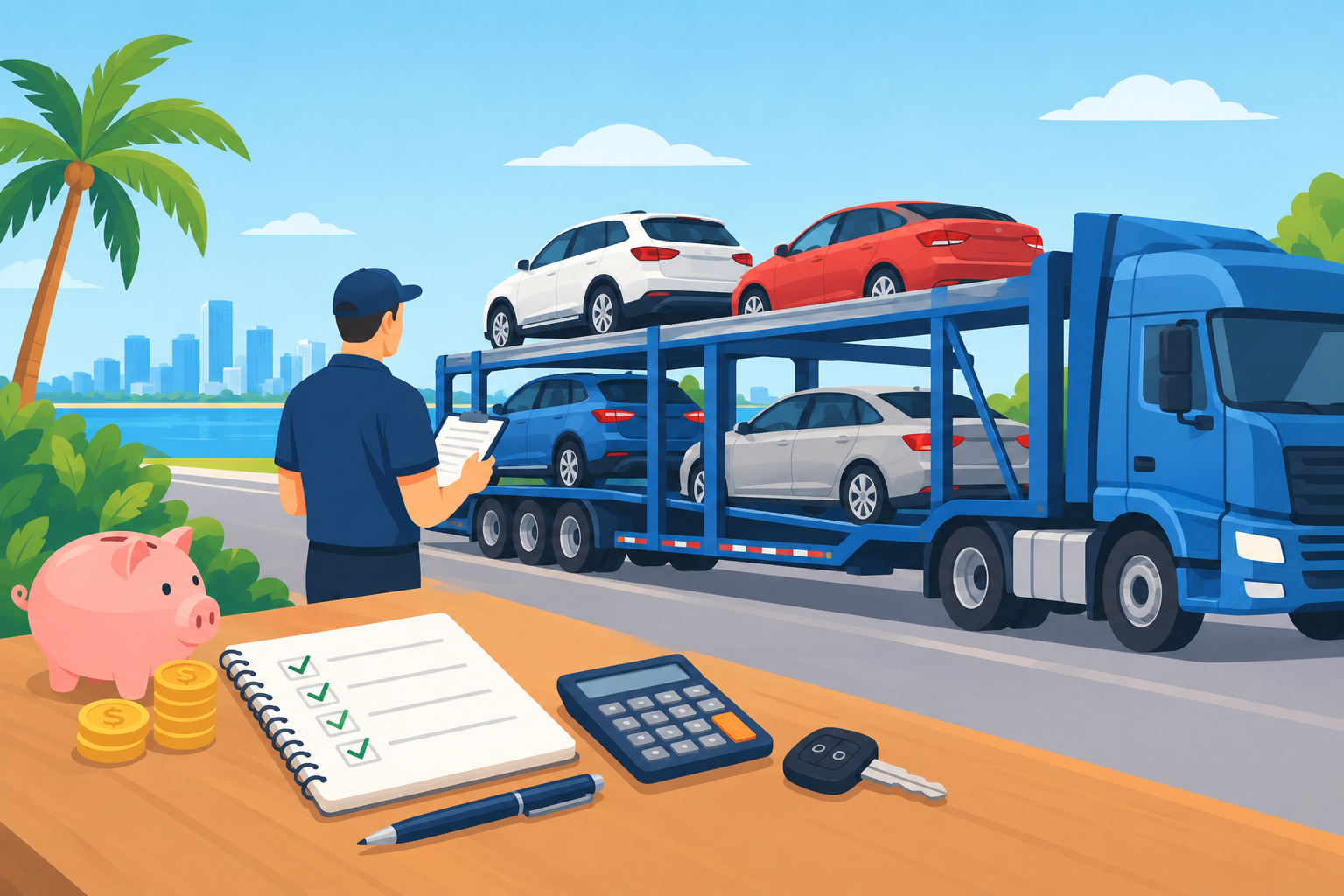

Shipping a car during a long-distance move does not have to be expensive or stressful. With the right planning, you can lower your car shipping costs, avoid unnecessary fees, and choose a transport option that fits your moving budget.
For many people, shipping a vehicle can be more practical than driving it across several states. A long road trip can add fuel, hotel stays, meals, tolls, maintenance, and vehicle wear to the cost of moving. Car shipping gives you another option: have your vehicle transported while you focus on the rest of your relocation.
The key is knowing what affects auto transport pricing and which choices can reduce your final bill. From choosing open transport to comparing quotes and adjusting your pickup location, several small decisions can make a meaningful difference.
Car shipping prices depend on factors such as distance, vehicle size, transport type, route, timing, and pickup and delivery locations. Understanding these factors makes it easier to identify where you can save money.
A longer route will generally cost more than a shorter one, but distance is not the only consideration. A popular interstate route with many carriers may be less expensive than a shorter route that has limited carrier availability.
Other common factors include:
Because these factors can change from one shipment to another, getting multiple quotes is one of the simplest ways to understand what you should reasonably expect to pay.
Comparing several auto transport companies can help you identify competitive pricing while avoiding providers with unclear fees or questionable service practices.
Do not choose a carrier based solely on the first price you see. A quote that looks inexpensive may not include all applicable charges, while a slightly higher quote may include services that make the overall value better.
Start by checking the company’s reputation, service details, insurance information, and customer feedback. You should also verify exactly what the quoted price includes before committing.
If you’re already coordinating a larger interstate move, researching reliable interstate moving companies for a long-distance relocation can help you compare moving services alongside your vehicle transportation plans.
When reviewing quotes, look beyond the final dollar amount.
Compare:
A simple comparison spreadsheet can make these differences much easier to spot.
The goal is not necessarily to find the lowest quote. The goal is to understand what you are paying for and avoid unexpected costs later.
Open auto transport is usually the most affordable option for standard vehicles and is the transport method most people use when trying to keep shipping costs under control.
Open carriers transport multiple vehicles on an exposed trailer. Because the carrier can move several vehicles at once, the cost is generally lower than enclosed transportation.
Enclosed transport provides additional protection from weather and road debris, but it typically costs more. It may make sense for luxury, classic, exotic, antique, or highly valuable vehicles.
For an everyday sedan, SUV, pickup truck, or similar vehicle, open transport can provide a practical balance between cost and protection.
Enclosed shipping may be worth considering when protecting the vehicle’s exterior is a priority.
For example, owners of collector cars or high-value vehicles may prefer the additional protection offered by an enclosed trailer.
However, paying for premium transportation is not always necessary. If your primary objective is affordable vehicle relocation and you own a standard daily driver, open transport may be the more budget-conscious choice.
Terminal-to-terminal shipping can reduce transportation costs because carriers have more flexibility when collecting and delivering vehicles at designated locations.
Door-to-door service is convenient because the carrier attempts to pick up and deliver the vehicle as close to your addresses as practical. However, navigating residential streets, crowded neighborhoods, restricted roads, or difficult access points can make transportation more complicated.
Terminal shipping can provide carriers with easier access and more predictable routing.
Before choosing this option, check where the available terminals are located and whether the savings justify the additional travel required to drop off or collect your vehicle.
If a terminal is far from your home, the extra driving may eliminate some of the savings.
Flexibility can make car shipping more affordable because carriers have more opportunities to match your vehicle with an existing route.
If you require a vehicle to be picked up on one specific day, your transportation options may be more limited. A flexible pickup window gives carriers additional opportunities to coordinate your shipment with other vehicles traveling in the same direction.
When possible, provide a reasonable pickup window rather than insisting on one exact date.
This is particularly useful for long-distance moves where the carrier may already have scheduled stops along your route.
Planning ahead can make your move easier and give you more time to compare transportation options.
Waiting until the last minute can limit your choices, particularly during busy moving periods. You may have fewer available carriers or need to pay more for expedited arrangements.
Once you know your moving date, start researching car shipping providers early enough to compare quotes and understand your options.
Your pickup and delivery locations can influence the cost of transporting your vehicle, especially when the carrier must navigate congested or difficult-to-access areas.
Urban centers, narrow residential streets, construction zones, low-clearance roads, and areas with parking restrictions can create challenges for large vehicle carriers.
If your carrier cannot safely access your exact address, you may be asked to meet at a nearby accessible location.
Rather than viewing this only as an inconvenience, you can sometimes use it to your advantage. Meeting a carrier at an easily accessible location near a major road may make scheduling easier and reduce unnecessary routing complications.
Always confirm the pickup location with the carrier before the appointment.
Preparing your vehicle correctly can help prevent delays, loading problems, and unexpected charges during transportation.
Before the carrier arrives, make sure the vehicle is in suitable operating condition unless you have specifically arranged transportation for an inoperable vehicle.
Check the following:
If a vehicle cannot start, steer, or brake properly, the carrier may require additional equipment or handling procedures.
Those services can result in additional charges, so preparing the vehicle beforehand can help keep the original quote closer to the final cost.
Removing personal belongings from your vehicle is an important part of preparing for auto transport and can help you avoid complications during pickup.
Many car carriers restrict or prohibit personal items inside vehicles because of insurance, weight, and liability considerations.
Before handing over your car, remove:
Do not assume that items left inside the vehicle will be covered if they are lost or damaged.
The safest approach is to transport your personal belongings separately and leave the vehicle as empty as required by the carrier’s terms.
Taking photographs before pickup gives you a clear record of your vehicle’s condition before transportation begins.
Walk around the vehicle and photograph each side. Take close-up pictures of existing scratches, dents, chips, or other visible damage.
It is also useful to photograph:
Good documentation can make it easier to compare the vehicle’s condition when it arrives.
Make sure the condition report provided by the carrier accurately reflects any existing damage before you sign it.
Requesting several auto transport quotes is one of the easiest ways to compare pricing and identify unusual charges.
Try to obtain quotes from multiple providers rather than relying on a single estimate.
When comparing them, look at both price and service.
Important pricing factors include:
A quote that is dramatically lower than the others deserves additional scrutiny.
Ask whether the price is a firm estimate, what circumstances could change the final amount, and whether any additional fees may apply.
The time of year can influence auto transport pricing because carrier demand and vehicle movement change throughout the year.
Certain periods can be busier than others, including popular moving seasons and times when large numbers of people relocate between states.
If your moving schedule is flexible, ask providers whether changing your transportation dates could affect pricing.
You should not delay an important move solely to save a small amount on vehicle shipping, but understanding seasonal demand can help you make a more informed decision.
One of the simplest ways to save money is to choose only the transportation services that match your vehicle and moving requirements.
Premium services can be useful, but not every vehicle needs them.
For example, you may not need:
Before agreeing to extras, determine whether the service solves an actual problem for your move.
A basic transportation plan can often meet your needs without adding unnecessary expenses.
Understanding insurance coverage before your vehicle is shipped can help you avoid unexpected financial problems if damage occurs during transportation.
Ask the provider what coverage applies during transit and what documentation is required if damage is discovered.
You should also understand whether the company arranging your shipment is a carrier, a broker, or another type of transportation provider.
Do not hesitate to ask questions about:
A clear understanding of these details can be just as important as getting a competitive price.
The cheaper option depends on your route, schedule, vehicle, and total travel expenses, so compare the full cost of driving against the shipping quote.
Driving your vehicle may initially appear less expensive because you are not paying a carrier. However, a long-distance road trip can involve several additional expenses.
Consider:
For a short interstate move, driving may be practical.
For a cross-country relocation, however, shipping the vehicle can allow you to avoid several days of driving and reduce the amount of time spent on the road.
A useful way to compare the two options is to calculate the complete cost of driving rather than looking only at fuel.
A realistic car shipping budget should include the transportation quote as well as potential costs associated with pickup, delivery, timing, and vehicle preparation.
Start with the base shipping estimate and then consider any additional expenses.
Your budget may include:
Once you have this figure, compare it with the estimated cost of driving the vehicle yourself.
This gives you a much clearer picture of which option makes financial sense for your particular move.
Many unexpected car shipping expenses come from rushed decisions, unclear quotes, or inadequate preparation rather than the transportation itself.
Avoid these common mistakes:
An unusually low price can be attractive, but it should not automatically be considered the best deal.
Check what the quote includes and research the company’s reputation before making a decision.
Last-minute transportation can reduce your available choices and make scheduling more difficult.
Planning ahead gives you more time to compare providers.
Make sure you understand cancellation policies, payment requirements, delivery estimates, insurance coverage, and potential additional charges.
Personal belongings can create insurance and liability issues. Follow the carrier’s requirements and remove unnecessary items before pickup.
Photographs and a detailed condition report provide useful documentation before the vehicle leaves your possession.
The most effective approach combines several small savings decisions instead of relying on one cheap quote.
Use this checklist before booking:
This approach can help you reduce unnecessary expenses without sacrificing the reliability of your move.
Open transport and flexible scheduling are generally among the most cost-conscious choices for standard vehicles. Comparing several quotes and considering terminal service can also help reduce the total cost.
It depends on the distance and your total driving expenses. When comparing the options, include fuel, hotels, meals, tolls, maintenance, additional mileage, and the value of your time.
Yes, open transport is generally less expensive than enclosed transport. It is commonly used for everyday vehicles that do not require specialized protection.
It can. Terminal service may reduce transportation costs because carriers can work with more predictable pickup and delivery locations. However, you should factor in your own transportation costs to and from the terminals.
Booking in advance gives you more time to compare providers and transportation options. It can also help when your move falls during a busy relocation period.
You should not assume that personal belongings are permitted. Many carriers restrict items inside transported vehicles because of weight, insurance, and liability considerations. Always follow the specific carrier’s requirements.
Ask for a detailed quote and confirm what is included before booking. Discuss pickup and delivery locations, vehicle condition, transport type, insurance, payment terms, cancellation policies, and circumstances that could change the final price.
Enclosed transport can be worthwhile for luxury, exotic, classic, antique, or highly valuable vehicles. For many standard vehicles, open transport provides a more budget-friendly option.
Clean out the vehicle, remove personal belongings, check that it operates properly, document existing damage, and confirm the pickup details with the carrier.
It can. Carrier demand, relocation patterns, fuel costs, and route availability can influence pricing at different times of the year.
Saving money on car shipping does not mean choosing the cheapest company you can find. The better approach is to understand what affects pricing and make decisions that reduce unnecessary costs while maintaining reliable service.
Open transport, flexible scheduling, accessible pickup locations, and terminal service can all help lower your transportation expenses. Comparing multiple quotes also gives you a better understanding of the market and makes it easier to identify fees that may not be obvious at first.
Most importantly, compare the cost of shipping with the true cost of driving. A long-distance road trip can quickly become more expensive once fuel, lodging, meals, vehicle wear, and your time are included.
With some advance planning and careful comparison, you can arrange reliable vehicle transportation without letting car shipping become an unnecessary strain on your moving budget.
