
Moving Containers
Recommendation
Moving Container Reviews
Recommendation
Truck Rentals Reviews
Storage Recommendations
Storage Review
Junk Removal Recommendations
Junk Removal Reviews
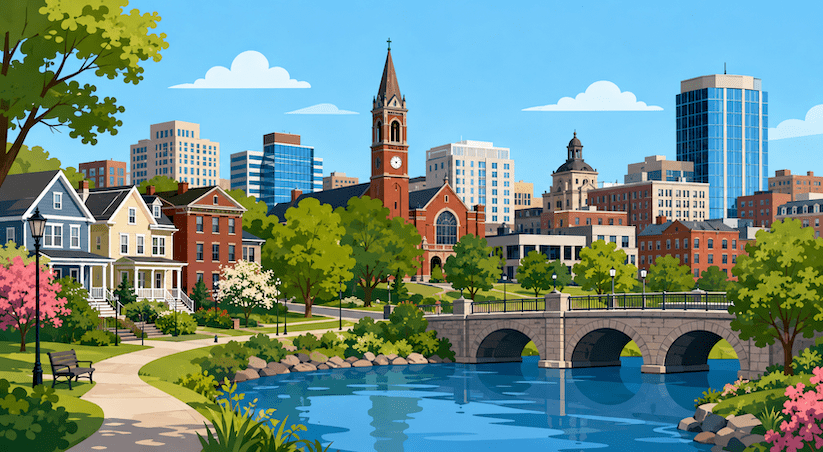

Moving to Worcester, MA is becoming a smart option for people looking for a balance between city convenience, career opportunities, and a more manageable cost of living compared to Boston. Located in central Massachusetts, Worcester combines historic New England charm with a growing economy, respected universities, strong healthcare systems, and a steadily expanding housing market.
Once known primarily as a manufacturing city, Worcester has transformed into one of the most attractive places for professionals, students, families, and remote workers in the Northeast. Its location also makes it ideal for commuters who want access to Boston without paying Boston-level housing costs.
Whether you are relocating for work, education, healthcare careers, or simply looking for a fresh start in New England, Worcester offers a practical and welcoming environment with long-term potential.
Worcester is the second-largest city in New England, with a population of more than 200,000 residents. Over the last several years, the city has seen major growth in healthcare, education, technology, and real estate development.
People moving here often appreciate the combination of urban amenities and a more relaxed pace of life. Worcester has restaurants, entertainment venues, museums, sports facilities, and growing business districts, while still feeling less crowded and stressful than Boston.
The city also continues to attract younger professionals and entrepreneurs because of its expanding startup culture and lower operating costs compared to larger metropolitan areas in Massachusetts.
Another major advantage is location. Worcester sits roughly an hour from Boston and Providence, giving residents access to major job markets while maintaining more affordable housing options.
Life in Worcester feels distinctly New England. Residents experience all four seasons, from snowy winters to warm summers and colorful autumns.
The city has a strong sense of local pride, helped by its long history and diverse population. Worcester blends historic neighborhoods with modern developments, creating a mix of old and new throughout the city.
Compared to Boston, daily traffic is generally easier to manage. While rush hour still exists, commuting inside Worcester tends to be far less overwhelming than navigating larger East Coast cities.
Residents also enjoy access to parks, lakes, hiking areas, local breweries, coffee shops, and a growing food scene. Worcester has gradually become more active culturally, with concerts, college events, festivals, and local markets happening throughout the year.
Many people relocating from larger cities appreciate the improved work-life balance Worcester can provide.
The Worcester housing market has continued to grow as more buyers search for alternatives outside Boston. Home values have steadily increased over the past several years, but prices remain more accessible than many surrounding Massachusetts communities.
For buyers looking for long-term value, Worcester continues to present strong opportunities. Neighborhoods across the city offer a mix of historic homes, multi-family properties, condos, and newly renovated residences.
Areas farther from downtown often provide quieter neighborhoods and more affordable pricing while still maintaining convenient access to schools, shopping, and major roads.
Rental demand remains strong due to the large student population and growing workforce. Apartments near universities and medical centers tend to lease quickly, especially during peak moving seasons.
While rent prices have increased in recent years, Worcester still offers better value compared to Boston, Cambridge, and several eastern Massachusetts suburbs.
New residents can find a variety of rental options, including:
Downtown apartments
Multi-family homes
Student housing
Luxury developments
Suburban-style apartment communities
The rental market can move quickly, so many people begin apartment searches several weeks before their planned relocation date.
The cost of living in Worcester is slightly above the national average, though significantly lower than many parts of Massachusetts.
Housing remains one of the biggest monthly expenses, but utilities, transportation, and healthcare costs are often more manageable than larger Northeastern cities.
For many professionals and families, Worcester strikes a practical balance between affordability and access to opportunity.
Downtown Worcester has experienced major revitalization. New restaurants, entertainment venues, apartment buildings, and office developments have brought more energy into the city center.
Residents living downtown enjoy walkable access to nightlife, dining, public transportation, and entertainment facilities.
This area is especially popular among younger professionals and students.
The West Side is one of Worcester’s more established residential areas. It features tree-lined streets, historic homes, and proximity to several colleges and universities.
Families often prefer this part of the city because of its quieter atmosphere and residential feel.
North Worcester tends to offer more affordable housing opportunities compared to some central neighborhoods.
Residents here appreciate easier highway access and a more suburban environment while remaining close to the city.
This area is widely known for its restaurants and local dining scene. People who enjoy nightlife, cafes, and walkable neighborhoods often gravitate toward this section of Worcester.
The location also provides quick access to major roads and healthcare facilities.
Healthcare remains one of Worcester’s largest industries. The city is home to major hospitals, research centers, and healthcare institutions connected to UMass Memorial Health and UMass Chan Medical School.
Medical professionals, researchers, technicians, and administrative workers continue to find strong career opportunities throughout the region.
The growing healthcare sector has also increased demand for housing and supporting local businesses.
Worcester has multiple respected colleges and universities, including:
Worcester Polytechnic Institute (WPI)
Clark University
College of the Holy Cross
Assumption University
UMass Chan Medical School
These institutions contribute heavily to the city’s economy and attract students, educators, researchers, and international professionals.
Many families relocating for academic opportunities coordinate their move with experienced cross-country relocation planning specialists to simplify interstate transitions before school semesters begin.
Worcester’s startup and technology scene continues to expand. Entrepreneurs and remote workers are increasingly choosing Worcester because operating costs are lower than Boston while still offering access to highly educated talent.
Coworking spaces, startup incubators, and technology-focused businesses have helped diversify the local economy.
Although Worcester has evolved beyond its manufacturing roots, industrial operations still remain an important part of the local economy.
The city has a long history of innovation, and several companies in advanced manufacturing and logistics continue to operate in the region today.
Families moving to Worcester often consider education a major advantage of the area.
The city offers:
Public schools
Charter schools
Private academies
Technical programs
Higher education institutions
Several surrounding suburbs also provide highly rated school districts for families looking at nearby residential communities.
Access to colleges and universities gives students opportunities for internships, networking, and career development without leaving the region.
Worcester’s transportation system is manageable compared to larger metropolitan areas.
Residents commonly use:
Interstate 90 (Mass Pike)
Interstate 290
Route 9
MBTA commuter rail to Boston
Regional bus systems
Commuting to Boston is possible for many professionals, though travel times vary depending on traffic and weather conditions.
The MBTA commuter rail has become a valuable option for residents who work in Boston but prefer Worcester housing costs and lifestyle.
New residents should prepare for traditional weather patterns.
Winters can be cold and snowy. Snowstorms are common between December and March, and temperatures frequently drop below freezing.
Proper winter clothing and vehicle preparation are essential.
Spring and fall are often considered the most enjoyable seasons in Worcester. Temperatures are comfortable, and autumn foliage throughout Massachusetts creates beautiful scenery.
Summers are generally warm but milder than many southern states. Outdoor festivals, parks, and recreational activities become very popular during this season.
People moving from warmer climates may need time to adjust to New England winters, but many residents enjoy experiencing all four seasons.
Worcester offers a growing variety of attractions and entertainment options.
Popular activities include:
Visiting the Worcester Art Museum
Attending concerts at the DCU Center
Exploring Green Hill Park
Watching Worcester Red Sox games
Dining along Shrewsbury Street
Visiting local breweries and coffee shops
Exploring nearby hiking trails and lakes
The city also benefits from its proximity to Boston, Cape Cod, Providence, and other New England destinations.
Weekend trips throughout the Northeast are easy to plan from Worcester’s central location.
For many people, Worcester offers a strong combination of career opportunity, education, affordability, and accessibility.
The city continues to grow while maintaining a more manageable lifestyle than larger metropolitan areas. Residents benefit from strong healthcare systems, respected universities, improving infrastructure, and expanding entertainment options.
Whether you are relocating for work, school, family, or a lifestyle change, Worcester has become one of the most practical and promising cities in Massachusetts for long-term living.
Preparing early can make relocation significantly less stressful. Planning your housing, utilities, transportation, and moving timeline ahead of time helps avoid unnecessary delays.
Working with experienced movers can also simplify long-distance relocations, especially when coordinating schedules, packing services, or interstate transportation logistics.
Yes. Worcester is generally much more affordable than Boston when it comes to housing, rent, and overall living expenses.
Many families choose Worcester because of its schools, healthcare access, residential neighborhoods, and growing community resources.
Healthcare, education, technology, manufacturing, and research industries are among Worcester’s largest employment sectors.
Yes. Worcester experiences regular snowfall during winter months, and residents should prepare for cold temperatures and seasonal storms.
Yes. Many residents commute to Boston by car or MBTA commuter rail, although travel times depend on traffic and schedules.
Yes. Worcester has experienced continued economic development, population growth, housing expansion, and increased business investment over the last several years.
