
Moving Containers
Recommendation
Moving Container Reviews
Recommendation
Truck Rentals Reviews
Storage Recommendations
Storage Review
Junk Removal Recommendations
Junk Removal Reviews
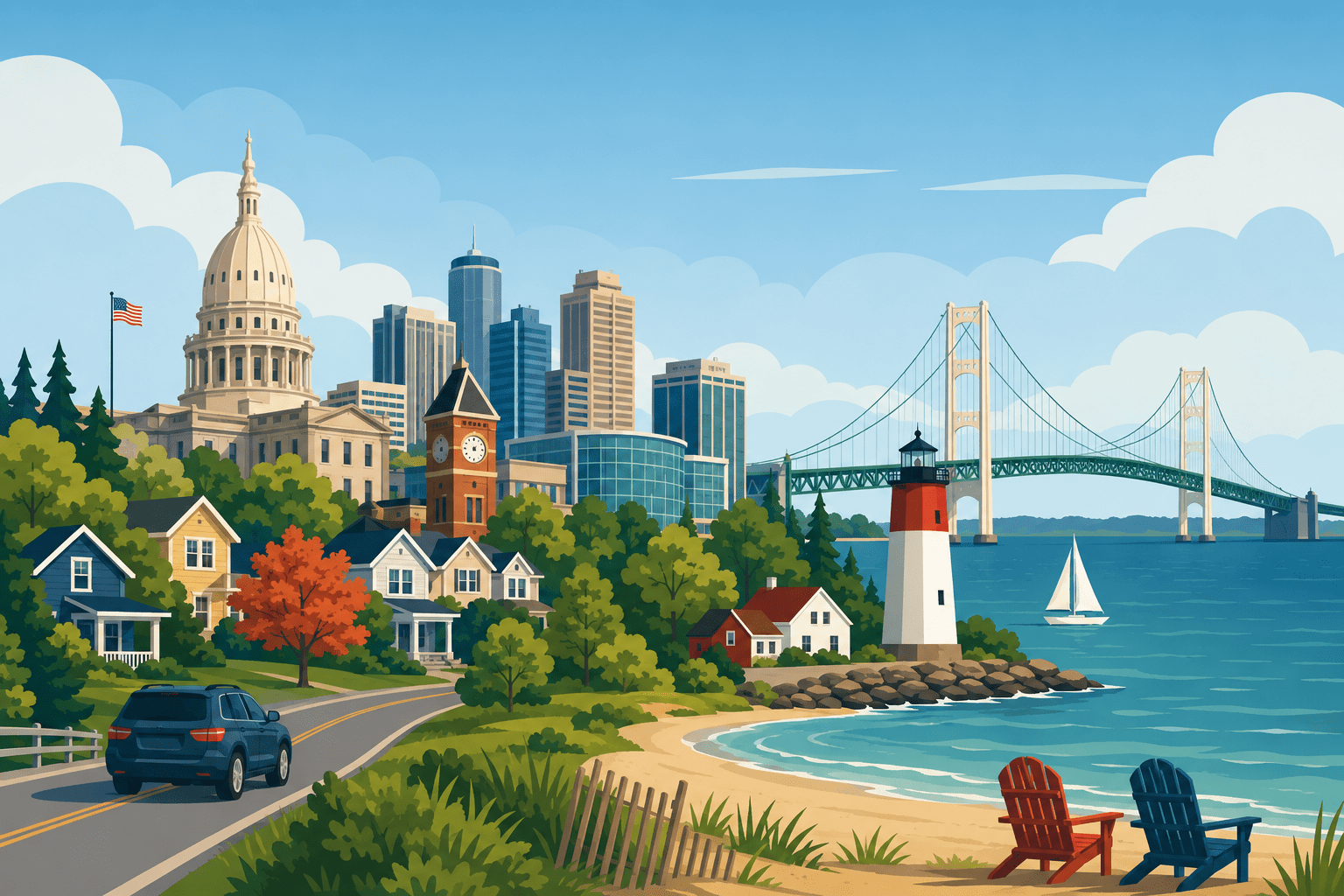

Planning a move to Michigan? From affordable housing and scenic waterfront towns to thriving sports culture and top-ranked universities, the Great Lakes State offers a lifestyle that appeals to families, young professionals, retirees, and remote workers alike.
Michigan combines major city living with access to nature, making it one of the most unique states in the Midwest. Whether you are relocating for work, school, retirement, or a fresh start, understanding the state’s climate, economy, housing market, transportation, and culture can help make your transition smoother.
Michigan is home to nearly 10 million residents and features two distinct peninsulas surrounded by four of the five Great Lakes. Cities like Detroit, Grand Rapids, Ann Arbor, and Lansing each offer something different, from career opportunities and nightlife to quieter suburban communities and outdoor recreation.
If you are considering moving to Michigan, here are the most important things to know before making the move.
Michigan continues to attract new residents because of its balanced lifestyle. Compared to many coastal states, the cost of living remains relatively affordable while still offering strong career markets, quality education, and access to nature.
The state also appeals to people who want four distinct seasons, waterfront living, and a lower housing cost than cities like Chicago, New York, or Los Angeles.
Some of the biggest reasons people relocate to Michigan include:
Affordable home prices
Expanding healthcare and manufacturing industries
Strong college towns
Access to lakes and outdoor recreation
Lower overall living expenses
Family-friendly suburbs
Growing remote work communities
Michigan offers both urban energy and quiet rural living depending on where you choose to settle.
One of the first things new residents notice is that Michigan is divided into two separate land masses: the Lower Peninsula and the Upper Peninsula.
The Lower Peninsula is the more populated region and includes cities such as Detroit, Lansing, Grand Rapids, Ann Arbor, and Traverse City. Most major businesses, universities, and suburbs are located here.
The Upper Peninsula, often called the “U.P.,” is known for forests, lakes, small towns, and outdoor recreation. Life moves slower in this part of the state, and winters are often harsher due to lake-effect snow.
The Mackinac Bridge connects the two peninsulas and remains one of Michigan’s most iconic landmarks.
Michigan experiences all four seasons, which many residents enjoy. Summers are warm and ideal for outdoor activities, while autumn brings colorful foliage across the state.
Winter, however, can be intense depending on where you live.
Northern Michigan and areas near the Great Lakes often receive heavy snowfall because of lake-effect weather patterns. Residents should prepare for:
Snowy roads
Freezing temperatures
Longer winters
Seasonal driving challenges
Investing in winter tires, insulated clothing, and proper home heating becomes important for long-term comfort.
Michigan summers are one of the state’s biggest attractions. Temperatures are usually comfortable, and residents spend time boating, swimming, hiking, camping, and visiting lakeside towns.
Popular summer destinations include:
Traverse City
Grand Haven
Holland
Mackinac Island
Sleeping Bear Dunes
Michigan borders four Great Lakes, giving residents access to thousands of miles of shoreline. In fact, the state has more freshwater coastline than any other state in the country.
Many newcomers are surprised by how many beaches, marinas, and lakefront parks Michigan offers.
Some of the most visited beach destinations include:
Empire Beach
Grand Haven State Park
Orchard Beach State Park
Sleeping Bear Dunes National Lakeshore
Manistique Beach
Silver Lake Sand Dunes
The state’s lake culture becomes a major part of daily life during warmer months.
Michigan’s Upper Peninsula occasionally provides opportunities to see the Northern Lights, also known as the Aurora Borealis.
The best viewing conditions typically occur in remote northern areas with minimal light pollution, especially near Lake Superior.
While sightings are not guaranteed, many residents travel north during peak viewing seasons for a chance to experience this natural phenomenon.
One of the strongest advantages of moving to Michigan is affordability.
Compared to many major metropolitan areas across the United States, Michigan offers lower home prices and more accessible rent costs.
Although prices have risen in recent years, many cities still provide affordable housing opportunities for first-time buyers and families.
Popular affordable housing markets include:
Grand Rapids
Lansing
Kalamazoo
Flint suburbs
Warren
Dearborn
Detroit’s real estate market has also continued to evolve as redevelopment projects and business investments reshape parts of the city.
Many renters relocating from higher-cost states find Michigan’s rental market easier to manage financially.
Costs vary significantly depending on location, but many communities still offer apartments and homes at prices below the national average.
People preparing for interstate relocation often organize household transportation, packing schedules, and storage before settling into a new Michigan community.
Sports are deeply connected to Michigan culture.
Whether you prefer professional teams or college athletics, sports remain a major source of entertainment and community identity throughout the state.
Michigan is home to several major league franchises, including:
Detroit Lions (NFL)
Detroit Tigers (MLB)
Detroit Pistons (NBA)
Detroit Red Wings (NHL)
College sports are also extremely popular, especially football rivalries involving the University of Michigan and Michigan State University.
Game days often become major social events throughout the state.
Education plays a major role in Michigan’s economy and reputation.
The state features several nationally recognized colleges and universities that attract students from around the world.
Located in Ann Arbor, the University of Michigan consistently ranks among the top public universities in the United States.
The school is known for:
Engineering programs
Medical research
Business education
Athletics
Innovation and technology
Michigan also includes:
Michigan State University
Wayne State University
Western Michigan University
Central Michigan University
Grand Valley State University
Residents may qualify for reduced in-state tuition after establishing residency requirements.
Michigan has developed one of the strongest craft beer scenes in the country.
Cities such as Grand Rapids, Kalamazoo, and Detroit feature breweries, beer festivals, and local taprooms that attract both residents and tourists.
Grand Rapids has even earned recognition as one of America’s leading beer destinations.
The craft beverage industry also contributes to tourism and local economic growth across the state.
Because Michigan is surrounded by large bodies of water, lighthouses have played an important role throughout the state’s history.
Today, many of these historic structures remain preserved and open to visitors.
Some well-known lighthouse destinations include:
Big Sable Point Lighthouse
Holland Harbor Lighthouse
Point Betsie Lighthouse
Whitefish Point Lighthouse
Several lighthouse communities also offer museums, tours, waterfront dining, and seasonal lodging.
Outdoor recreation is one of the biggest lifestyle benefits of living in Michigan.
Residents enjoy activities year-round, including:
Fishing
Hiking
Camping
Boating
Snowmobiling
Skiing
Hunting
Kayaking
The state’s natural beauty creates opportunities for weekend trips and outdoor adventures without traveling far from home.
Michigan features numerous protected natural areas, including:
Isle Royale National Park
Hiawatha National Forest
Sleeping Bear Dunes
Porcupine Mountains Wilderness State Park
Nature lovers often find Michigan especially appealing because of the balance between city access and outdoor recreation.
Michigan’s economy has diversified significantly over the past decade.
While automotive manufacturing remains important, industries such as healthcare, technology, logistics, engineering, and education continue to grow.
Top industries in Michigan include:
Automotive manufacturing
Healthcare
Technology
Aerospace
Finance
Agriculture
Tourism
Detroit, Ann Arbor, and Grand Rapids have seen increasing startup activity and business development in recent years.
Remote workers are also relocating to Michigan because of lower living costs and improved work-life balance.
Public transportation options vary depending on location.
In major cities like Detroit and Ann Arbor, residents may have access to buses, rideshare services, and limited rail systems. However, most Michigan residents rely heavily on personal vehicles.
If you are relocating from a warmer climate, winter driving may take adjustment.
Important winter driving tips include:
Keep emergency supplies in your car
Monitor weather forecasts closely
Use snow tires when possible
Leave extra braking distance
Prepare for icy roads
Many residents also invest in all-wheel-drive vehicles for easier winter commuting.
While Detroit often receives the most attention nationally, many people move to Michigan specifically for smaller communities and suburban living.
Popular small-town and suburban areas include:
Rochester Hills
Novi
Troy
Midland
Petoskey
Traverse City
Holland
These communities often offer quieter neighborhoods, quality schools, and access to outdoor recreation.
Overall, Michigan’s cost of living is considered moderate compared to national averages.
Residents may spend less on:
Housing
Property taxes in certain regions
Utilities
Transportation
Groceries in suburban areas
However, heating expenses during winter can increase utility bills significantly.
Carefully researching your target city remains important before relocating.
For many people, the answer is yes.
Michigan offers a combination of affordability, recreation, education, and community that appeals to a wide range of lifestyles.
Whether you want waterfront living, a growing job market, a quieter suburban environment, or access to outdoor adventure, Michigan provides options across many different regions.
Families, retirees, young professionals, and remote workers continue to choose Michigan because it delivers a balanced lifestyle without the extremely high costs found in larger coastal states.
Households coordinating a cross-country relocation frequently compare moving costs, truck availability, and interstate moving cost before finalizing their relocation plans.
Michigan is generally more affordable than many states on the East Coast and West Coast. Housing costs, especially outside major metro areas, remain relatively reasonable.
The best city depends on your lifestyle and goals. Ann Arbor is popular for education and technology, Grand Rapids for affordability and business growth, and Traverse City for outdoor living.
Yes, many parts of Michigan receive significant snowfall during winter, especially northern regions and areas near the Great Lakes.
Many Michigan suburbs and smaller communities are considered family-friendly because of schools, parks, sports culture, and outdoor recreation opportunities.
Healthcare, automotive manufacturing, engineering, education, technology, and logistics are among the largest employment sectors.
In most parts of the state, having a vehicle is highly recommended due to limited public transportation outside major urban areas.
