
Moving Containers
Recommendation
Moving Container Reviews
Recommendation
Truck Rentals Reviews
Storage Recommendations
Storage Review
Junk Removal Recommendations
Junk Removal Reviews


Choosing a new place to call home is about much more than finding a beautiful neighborhood. Housing expenses, grocery bills, and public safety all influence your quality of life and long-term financial stability. Whether you’re relocating for work, retirement, or a fresh start, comparing everyday living expenses with local safety statistics can help you make a smarter decision.
This guide highlights the best cities to live in USA by focusing on four practical factors that affect daily life: monthly food expenses, median rent, violent crime, and property crime. Instead of relying on popularity alone, we’ve ranked cities that offer a strong balance between affordability and peace of mind.
For a interstate moving, working with the best interstate moving companies can simplify planning, transportation, and settling into your new community.
Finding the right city means looking beyond home prices. Our ranking considers the expenses and safety concerns that impact residents throughout the year.
The overall rankings are based on the following weighted factors:
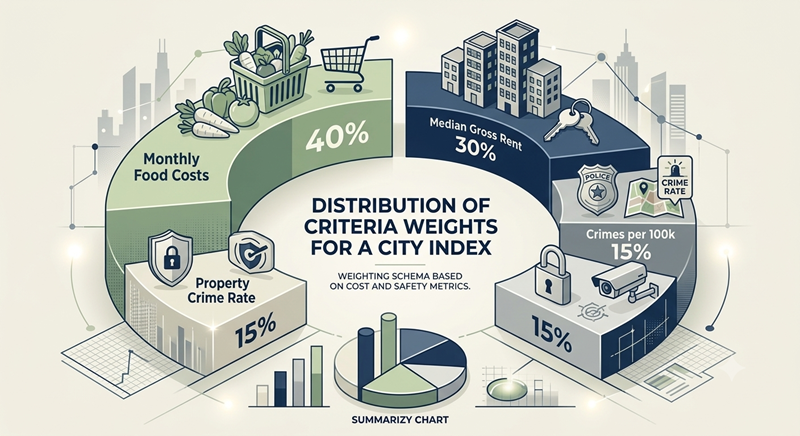
This balanced approach highlights cities where residents can enjoy reasonable living expenses without sacrificing safety.
The following metro areas continue to stand out for offering affordable rent, manageable grocery budgets, and comparatively lower crime rates.
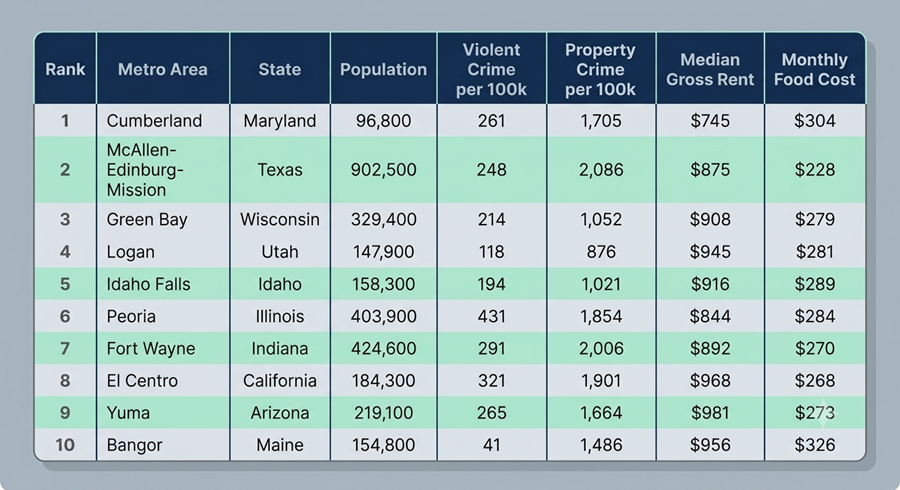
Note: Figures represent the latest available estimates for cost of living and crime metrics used for comparison and may vary slightly as local agencies update their reports.
Cumberland consistently ranks among the most affordable metro areas in the country. Residents benefit from one of the lowest rent levels on this list while maintaining access to healthcare, outdoor recreation, and a welcoming small-city atmosphere.
Its relatively low crime levels and modest grocery expenses make it particularly attractive for retirees, young professionals, and families seeking predictable monthly expenses.
Among the best cities to live in Texas, this metro area continues to attract new residents thanks to its exceptionally affordable grocery bills and favorable housing market.
Healthcare, education, and international business continue to support the regional economy, while the warm climate appeals to retirees and remote professionals alike.
Comparing different regions before relocating, our guide on east coast vs west coast living provides additional insights into lifestyle differences across the country.
Green Bay offers an appealing mix of affordability, stable employment opportunities, and a strong sense of community. Rent remains below the national average, while grocery prices stay reasonable throughout the year.
Outdoor recreation, quality schools, and dependable healthcare contribute to its reputation as one of the Midwest’s most livable destinations.
Logan continues to perform well due to its remarkably low rate of crimes and high quality of life. Home to Utah State University, the city blends educational opportunities with easy access to hiking, skiing, and national parks.
Its growing economy, family-friendly neighborhoods, and relatively affordable rental market make it an increasingly popular relocation destination.
Idaho Falls combines affordable housing with a slower pace of life. The city’s expanding technology, healthcare, and energy sectors have created steady employment while preserving its small-town character.
Residents also enjoy outdoor activities throughout the year, including fishing, hiking, camping, and nearby access to Yellowstone National Park.
Peoria remains an attractive option for households looking to stretch their monthly budget. Although crime levels are higher than several other cities on this list, affordable housing and healthcare access continue to make it a practical choice.
Its diverse economy and ongoing downtown revitalization efforts have also helped strengthen employment opportunities for new residents.
Fort Wayne continues to earn recognition for its affordable housing market and growing job opportunities. The city has invested heavily in downtown redevelopment, creating a vibrant mix of restaurants, entertainment venues, parks, and family-friendly attractions.
With rental prices remaining below the national average and steady employment across healthcare, manufacturing, and logistics, Fort Wayne offers a balanced lifestyle for first-time homebuyers and young families. Residents also benefit from reasonable average food costs per month, helping households maintain a comfortable budget without sacrificing everyday convenience.
For those considering best cities to live in california, El Centro offers a more affordable alternative to the state’s larger metropolitan areas. While California is often associated with expensive housing, this Imperial Valley community provides comparatively lower rental costs alongside year-round sunshine.
Agriculture remains the backbone of the local economy, while healthcare and retail continue to expand. Its proximity to outdoor recreation areas and the Mexican border also creates unique cultural and recreational opportunities for residents.
Before you planning on moving to California, exploring smaller cities like El Centro can help you enjoy the state’s lifestyle without the exceptionally high costs found in Los Angeles or San Francisco.
Yuma has become increasingly popular thanks to its warm climate, affordable rentals, and slower pace of life. The city attracts retirees, military families, and remote workers looking for lower living expenses while still enjoying modern amenities.
Local parks, golf courses, and nearby desert recreation provide plenty of outdoor activities throughout the year. Combined with steady grocery prices and reasonable housing, Yuma remains one of the Southwest’s most practical relocation options.
Bangor rounds out our rankings by offering one of the lowest violent crime rates among all featured metro areas. Although grocery expenses are slightly higher than in several southern cities, residents enjoy excellent healthcare, scenic surroundings, and a relaxed lifestyle.
The city’s historic downtown, thriving arts community, and proximity to forests, lakes, and the Atlantic coast make Bangor an appealing destination for retirees and professionals seeking a quieter environment.
Finding your ideal location involves much more than comparing rankings. Before making a final decision, evaluate several important factors:
Research industries that are growing in your preferred city and compare average salaries with local living expenses. A lower cost of living can significantly increase your purchasing power.
Compare rental prices and home values alongside your monthly income. Affordable housing often provides greater financial flexibility for savings and long-term investments.
Schools, healthcare facilities, transportation, parks, and recreational opportunities all contribute to everyday quality of life. Visiting a city before relocating can help you determine whether it matches your lifestyle.
Growing communities often provide stronger employment markets and increasing property values. If you’re exploring emerging destinations, our guide covering the top 5 fastest-growing cities for remote workers offers additional insights into locations gaining popularity across the country.
Choosing where to live is one of the biggest financial and lifestyle decisions you’ll make. While affordability matters, balancing housing costs, safety, and everyday expenses creates a much clearer picture of long-term value.
The cities featured above demonstrate that you don’t have to move to a major metropolitan area to enjoy a comfortable lifestyle. Whether you prefer the Midwest, the South, or New England, there are excellent communities that offer affordable rent, manageable grocery budgets, and welcoming neighborhoods.
While comparing larger metropolitan areas, our guide to the top 10 cities in the USA to live comfortably can help expand your options before making your final decision.
Affordable cities typically have reasonable housing costs, lower grocery expenses, and manageable utility and transportation costs.
Cumberland, Maryland, continues to offer one of the lowest median rental costs on the list.
Safety data helps evaluate neighborhood security and overall quality of life before relocating.
Smaller cities often provide lower living expenses, less traffic, and a stronger sense of community.
Annual updates are recommended since housing costs, economic conditions, and local statistics change regularly.
