
Moving Containers
Recommendation
Moving Container Reviews
Recommendation
Truck Rentals Reviews
Storage Recommendations
Storage Review
Junk Removal Recommendations
Junk Removal Reviews
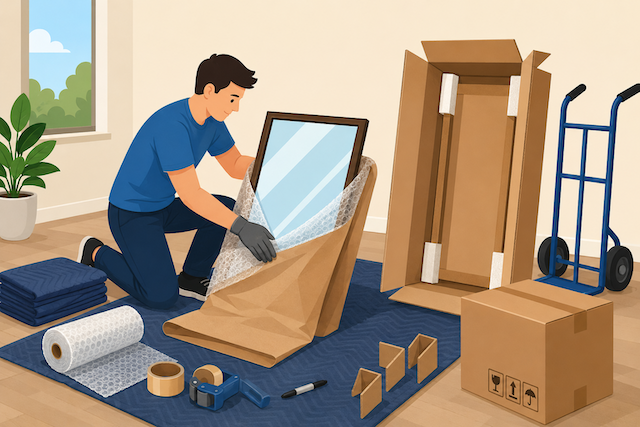

Moving a mirror can be one of the most stressful parts of packing for a move. Whether it’s a full-length bedroom mirror, a decorative wall mirror, or an expensive antique piece, glass is fragile and unforgiving. One wrong move can lead to cracks, shattered glass, and an expensive replacement.
If you’re preparing for a move, learning how to safely move a mirror can save you time, money, and frustration. While many homeowners successfully pack mirrors themselves, larger or valuable pieces require extra care and the right materials.
If you’re already planning your relocation, it’s worth understanding the essentials of packing fragile items alongside your overall moving checklist. And if you’re still preparing for the big day, these practical tips for getting ready before moving into a new home can help you stay organized from start to finish.
In this guide, you’ll learn exactly how professional movers protect mirrors during transport, the supplies you’ll need, common mistakes to avoid, and when it’s worth hiring professionals instead.
Unlike many household items, mirrors are especially vulnerable because they’re both heavy and fragile. Even a small amount of pressure, vibration, or twisting during transportation can cause the glass to crack.
Common reasons mirrors break during a move include:
Using thin or low-quality boxes
Packing without proper cushioning
Laying mirrors flat inside the moving truck
Allowing mirrors to shift during transport
Carrying oversized mirrors without assistance
The larger the mirror, the greater the risk. That’s why professional movers use specialized mirror cartons, protective wrapping, and careful loading techniques to reduce the chance of damage.
Quality packing materials make a significant difference when transporting delicate glass. While cheaper supplies may seem like a way to save money, they often provide less protection and increase the risk of damage.
Before packing your mirror, gather the following materials:
Mirror moving box or adjustable mirror carton
Heavy-duty packing tape
Bubble wrap
Brown packing paper
Furniture blanket or moving blanket
Cardboard corner protectors (optional but recommended)
Permanent marker
Screwdriver or pliers (for removing wall hardware)
If your mirror measures more than three feet in length, adjustable four-piece mirror boxes are generally the safest option because they can be customized to fit the mirror securely.
Creating a proper workspace makes the entire packing process safer and more efficient.
Choose an area that offers:
Plenty of open space
A clean floor free of obstacles
Good lighting
A carpeted surface or padded blanket underneath
Remove chairs, plants, small tables, and anything that could accidentally bump into the mirror while you’re working.
If you’re moving from a large multi-story home, consider creating a packing station on each floor instead of carrying mirrors around the house multiple times.
Before wrapping anything, inspect the mirror carefully.
Check for:
Existing cracks
Loose frames
Weak corners
Damaged hanging hardware
If the mirror is attached to the wall, remove it slowly using the appropriate tools. Keep screws, brackets, and mounting hardware together inside a labeled plastic bag so they’re easy to find when unpacking.
Professional movers always protect the glass before wrapping the entire mirror.
Start by removing watches, rings, belts, or jewelry that could accidentally scratch or crack the glass.
Lay a large sheet of brown packing paper or a moving blanket on your workspace, then place the mirror face down.
Wrap the mirror by:
Folding the top of the paper over the mirror.
Folding each side inward.
Folding the bottom upward.
Securing everything with packing tape.
For particularly valuable mirrors, place a flat piece of cardboard over the wrapped glass before adding bubble wrap. This creates another protective layer that helps absorb impacts during transportation.
After covering the mirror with packing paper, wrap it completely using one or two layers of bubble wrap.
Pay extra attention to:
Corners
Edges
Decorative frames
Secure the bubble wrap with packing tape without placing tape directly on the mirror’s frame or glass.
If your mirror has an ornate or antique frame, consider wrapping the frame separately with additional padding to prevent chips and scratches.
Once the mirror is fully wrapped, carefully slide it into the mirror carton.
Choose a box that’s only slightly larger than the mirror itself. Too much empty space allows the mirror to shift while moving, increasing the risk of breakage.
If there are small gaps inside the box, fill them with:
Crumpled packing paper
Foam sheets
Additional bubble wrap
Avoid using Styrofoam packing peanuts. They tend to shift during transport and don’t provide reliable support for heavy glass. They’re also less environmentally friendly than recyclable paper alternatives.
After placing the mirror inside, seal every opening with heavy-duty packing tape.
Reinforce:
Bottom seams
Side seams
Top flaps
Adding a second layer of tape to the bottom of the box provides extra support for heavier mirrors.
Shake the box gently before moving it. If you hear or feel movement inside, reopen the box and add more padding until the mirror fits securely.
Proper labeling helps everyone involved in the move handle fragile items more carefully.
Write large, easy-to-read labels on every side of the box, including:
FRAGILE
HANDLE WITH CARE
GLASS
DO NOT LAY FLAT
THIS SIDE UP
These labels reduce the likelihood of someone stacking heavy boxes on top of your mirror.
Packing the mirror correctly is only half the job. Loading it safely is equally important.
Always transport mirrors:
Standing upright
Between mattresses or upholstered furniture
Against a flat wall inside the truck
Secured with moving straps
Never place heavy boxes against the glass, even if it’s inside a mirror carton.
Large mirrors should always be carried by two people to reduce stress on the frame and prevent accidental drops.
Some mirrors are simply too valuable or too large to risk moving on your own.
You may want to consider professional packing services if you’re moving:
Antique mirrors
Custom-built mirrors
Floor-to-ceiling mirrors
Oversized decorative mirrors
Heavy framed mirrors
Professional movers use commercial-grade packing materials and have experience handling delicate items throughout long-distance moves.
If you’re comparing relocation companies, choosing one from a list of trusted interstate moving companies with verified customer reviews can provide additional peace of mind when transporting valuable household items.
Even experienced DIY movers occasionally make mistakes that lead to broken glass.
Avoid these common errors:
Using oversized boxes
Skipping bubble wrap
Packing mirrors with loose items
Laying mirrors flat during transport
Using low-quality packing tape
Carrying large mirrors alone
Forgetting to label fragile boxes
Taking a few extra minutes to pack correctly is far less expensive than replacing a damaged mirror.
Learning how to move a mirror safely isn’t difficult, but it does require patience, quality packing materials, and careful handling.
By protecting the glass, using the right mirror box, filling empty spaces, and transporting the mirror upright, you’ll dramatically reduce the chances of damage during your move.
For valuable, oversized, or antique mirrors, hiring experienced movers can be a worthwhile investment that provides added protection and peace of mind.
Whether you’re moving across town or across the country, taking the time to pack your mirrors properly helps ensure they arrive at your new home in perfect condition.
Yes, but it’s not recommended for large mirrors. If a mirror box isn’t available, use multiple layers of cardboard, bubble wrap, and moving blankets to create as much protection as possible.
Mirrors should always be transported upright. Laying them flat increases pressure across the glass and makes them more likely to crack during transportation.
Start with brown packing paper, then add one or two layers of bubble wrap. Finish by placing the mirror inside a properly sized mirror carton.
Professional movers typically use adjustable mirror cartons, corner protectors, furniture blankets, moving straps, and secure upright placement inside the moving truck.
No. Packing peanuts shift during transport and don’t provide stable support for heavy glass. Packing paper or foam sheets are much more effective.
