
Moving Containers
Recommendation
Moving Container Reviews
Recommendation
Truck Rentals Reviews
Storage Recommendations
Storage Review
Junk Removal Recommendations
Junk Removal Reviews
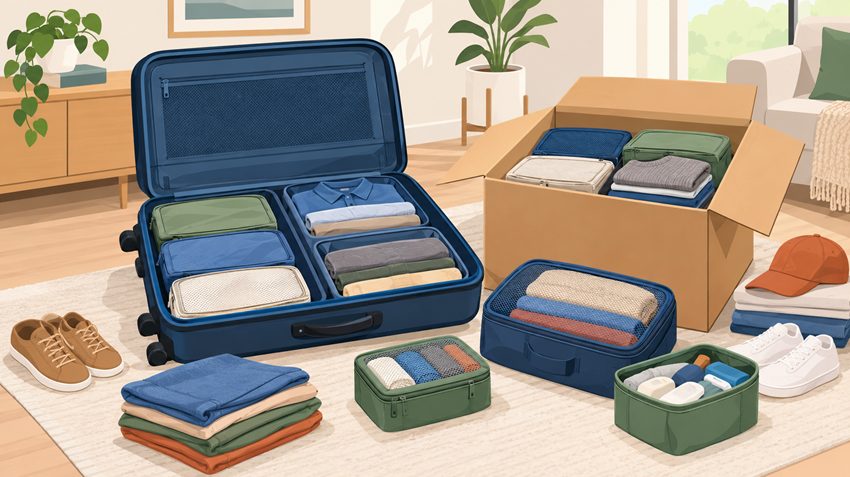

Moving to a new home involves more than putting clothes into boxes. You need to keep your belongings organized, protect delicate items, and make unpacking as simple as possible. Learning how to use packing cubes for moving can help you sort clothing, group everyday essentials, and make better use of the space inside suitcases and moving containers.
Unlike traditional packing methods, packing cubes create separate compartments for different types of belongings. They are especially useful for organizing seasonal clothing, children’s outfits, accessories, and essentials you want to find quickly after arriving at your new home.
Packing cubes are lightweight fabric organizers, usually rectangular, with zippered compartments designed to hold clothing and other soft belongings. They are commonly used in luggage, but they can also simplify household moves by keeping similar items together.
The biggest advantage of packing cubes is organization. Instead of searching through a large suitcase or opening several cartons to find a shirt, you can locate a specific category of clothing quickly.
They also help create consistent bundles that are easy to transfer between suitcases, drawers, shelves, and storage containers. While they do not replace protective moving materials, they can make the packing process more efficient.
Better organization: Keep shirts, trousers, undergarments, and accessories in separate compartments.
Faster unpacking: Transfer organized clothing directly into drawers or closets instead of sorting through mixed piles.
Improved space management: Arrange folded clothing into compact groups that fit neatly inside luggage and cartons.
Easy identification: Assign different colors or labels to family members, rooms, or clothing categories.
Convenient essentials storage: Keep a few days of clothing accessible while the rest of your belongings remain packed.
Before packing, consider the amount and type of clothing you need to transport. A few small organizers may be enough for a studio apartment, while a family moving from a larger home may benefit from a combination of sizes.
Small cubes work well for socks, underwear, belts, and accessories. Medium sizes suit shirts, casual wear, and children’s clothing. Large organizers are useful for sweaters, trousers, and other bulky garments.
Look for durable zippers, breathable fabric, reinforced seams, and handles that make lifting easier. Lightweight designs are generally preferable because the weight of the container matters during a move.
Standard organizers are suitable for everyday clothing and items that should retain their shape. Compression packing cubes use an additional zipper or compression panel to reduce the volume of soft garments.
Compression can help with bulky clothing, but it does not reduce the actual weight of your belongings. Avoid forcing delicate fabrics, structured garments, or heavily wrinkled clothing into tightly compressed compartments.
For most moves, a combination of standard and compression designs offers a practical balance between accessibility and space efficiency.
Start by separating your clothing into categories. Packing everything directly into organizers without sorting first can make unpacking almost as time-consuming as the original packing process.
Create separate groups for everyday clothing, workwear, formal outfits, seasonal garments, sleepwear, and accessories. Set aside anything you no longer wear for donation or resale.
Next, consider which clothes you will need immediately after moving. Keep a few outfits, sleepwear, toiletries, and basic personal items separate from the belongings you can unpack later.
This is also a good time to prepare a how to packing alone that helps you track essential belongings and plan your packing tasks when preparing for a move on your own.
The way you fold clothing affects how efficiently it fits inside each organizer. Flat folding works well for structured garments, while rolling can be effective for casual clothing and lightweight fabrics.
Avoid packing cubes so tightly that the zipper strains or clothing becomes difficult to remove. Leave enough room to close each compartment without forcing the fabric.
For more efficient organization, explore these packing hacks and space-saving strategies for ideas that can help you use limited storage space effectively.
One of the easiest ways to use organizers during a move is to assign each one a specific purpose. This prevents clothing from different rooms or family members from getting mixed together.
For example, dedicate one cube to everyday shirts, another to workout clothes, and another to seasonal garments. Families can assign separate colors to each person, making it easier to identify belongings without opening every container.
Attach a reusable label to each organizer with information such as the owner’s name, destination room, and general contents. For example, a label might read “Bedroom — Winter Clothes” or “Guest Room — Bedding Accessories.”
When placing the organizers into moving cartons, make sure the outer box also identifies the destination room. This extra step helps movers position each carton correctly and makes unpacking more systematic.
Keep a record of any organizers containing valuable accessories or items that need special handling.
Packing cubes work best when used as part of a larger moving system. Place them inside suitcases, duffel bags, plastic storage containers, or appropriately sized cartons.
Suitcases are convenient for clothing you want to keep accessible. Moving boxes work well for organizers containing items that will remain packed until later.
When using cartons, place heavier cubes near the bottom and lighter ones above them. Fill large empty spaces with suitable soft materials so that organizers do not shift excessively during transport.
Avoid overloading cartons, even when the clothing inside is lightweight. Boxes should remain easy to lift and stable when stacked.
For additional guidance on protecting belongings with alternatives to conventional cushioning, read this smart guide to packing without bubble wrap.
The first night in a new home can be tiring, especially when most of your belongings are still packed. An essentials organizer can save time by keeping frequently needed items together.
Include a change of clothes, pajamas, socks, basic toiletries, and other personal necessities. Depending on your household, you might also prepare separate organizers for children’s clothing, workout gear, or work outfits.
Keep these items in a clearly labeled bag or suitcase that travels with you rather than disappearing into a stack of cartons.
You can also maintain a small organizer for the first few days of clothing. This reduces the pressure to unpack every bedroom immediately and lets you settle into your new home at a manageable pace.
Not every garment should be packed in the same way. Delicate fabrics, formal outfits, and bulky winter clothing may need additional attention.
Use garment bags for suits, dresses, and other pieces that require hanging or extra protection. Place clean, completely dry clothing inside your organizers to prevent moisture and unpleasant odors from becoming trapped.
For seasonal clothing, label each organizer clearly. Winter sweaters, coats, and scarves can be packed separately from lightweight summer outfits, especially when you do not expect to use them immediately.
For items going into long-term storage, choose a clean, dry environment and follow the garment manufacturer’s care recommendations. Fabric organizers help with sorting, but they are not necessarily waterproof or pest-proof.
Organizers are useful for clothing, but a successful move still requires the right supplies for different types of belongings.
Use sturdy cartons for books and household goods, appropriate cushioning for fragile items, and separate containers for shoes or accessories. Avoid placing damp footwear or unwashed clothing alongside clean garments.
Consider how to find eco-friendly packing supplies for moving if you want to reduce disposable materials and reuse suitable containers from previous moves.
You can also apply these smart packing tips to coordinate labels, inventory records, and packing tools throughout the process.
For a large household or a move involving heavy furniture, professional packing services may be worth considering. Experienced movers can help manage fragile belongings, bulky items, and complicated packing requirements while you organize your personal essentials.
When comparing providers for a long-distance relocation, review the best interstate moving companies to understand which options may suit your moving requirements.
Even a useful organizing system can become inconvenient when it is not planned properly. Avoid these common mistakes:
Overfilling every compartment: Excessive compression can strain zippers, create wrinkles, and make clothing difficult to access.
Mixing unrelated items: Combining clothes, accessories, and miscellaneous household objects can undermine the organizational benefits.
Leaving organizers unlabeled: Similar-looking cubes become harder to identify when several family members are moving together.
Packing essentials too deeply: Keep daily necessities separate from belongings that can remain packed for several days.
Ignoring weight limits: A well-organized suitcase can still become too heavy to lift safely.
Assuming cubes provide full protection: Fabric organizers do not replace waterproof packaging, fragile-item cushioning, or secure cartons when those protections are necessary.
A clear packing system should make unpacking easier, not simply make your belongings look tidy during transport.
Begin with the essentials organizer, then move to everyday clothing and items needed for work, school, or family routines. Transfer the contents of each cube directly into the appropriate drawer or closet.
Unpack by room instead of opening every carton at once. Keep seasonal clothing and rarely used accessories packed until your immediate needs are met.
Once the move is complete, clean and store the organizers for future travel, seasonal wardrobe changes, or another relocation. Choosing reusable products can make them a practical long-term addition to your household organization system.
Learning how to use packing cubes for moving can make relocation more organized, reduce the time spent searching for clothing, and simplify the first few days in your new home.
Start by sorting your wardrobe, selecting appropriate organizer sizes, labeling each compartment, and keeping essential items accessible. Combine that system with sturdy cartons and suitable protective materials for a practical approach to packing.
With a little planning, your clothing can stay organized throughout the move and be ready to put away when you arrive.
Yes. They keep clothing and small soft belongings organized inside suitcases, storage containers, and moving boxes.
They can improve how clothing fits into available space, especially when folding and compression are used appropriately.
Clothing, underwear, socks, pajamas, accessories, and other lightweight belongings are suitable choices.
They are generally more reusable and structured, while plastic bags may offer different levels of moisture protection depending on their design.
The number depends on your wardrobe, household size, available luggage, and how you plan to organize your belongings.
