
Moving Containers
Recommendation
Moving Container Reviews
Recommendation
Truck Rentals Reviews
Storage Recommendations
Storage Review
Junk Removal Recommendations
Junk Removal Reviews
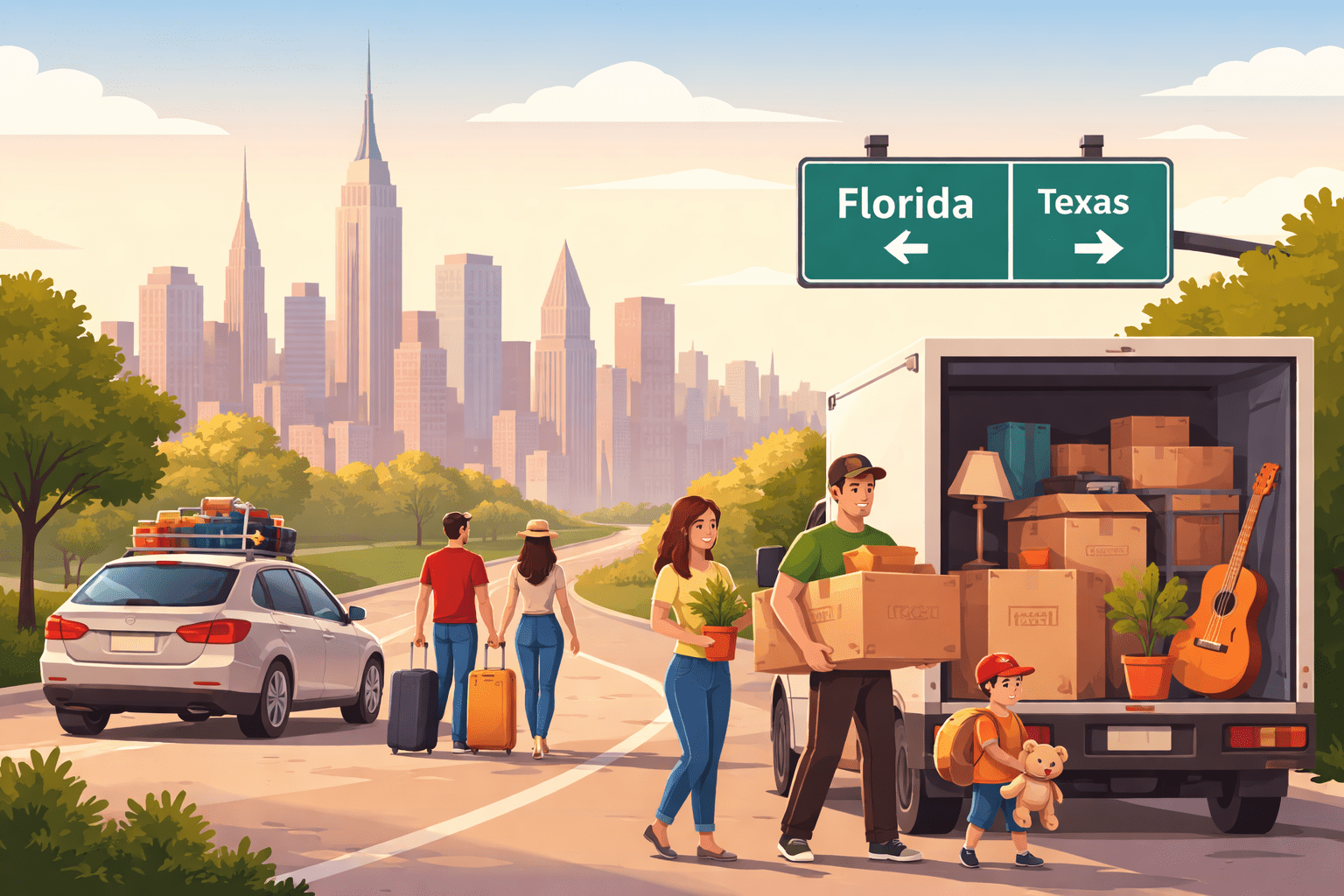

New York City has long been a magnet for ambition, opportunity, and culture. But in recent years, a noticeable shift has emerged—more people are choosing to leave than stay. From rising living costs to lifestyle changes, the reasons behind this migration trend are layered and worth understanding.
According to multiple relocation reports and moving industry data, hundreds of residents continue to move out of New York daily. While the city still attracts newcomers, the outflow has become significant enough to reshape housing markets, job distribution, and even regional economies.
If you’re considering relocating—or simply curious about why so many are making the move—this guide breaks down the real reasons behind the trend and what it means for your next step.
There isn’t just one reason driving people out of New York. Instead, it’s a combination of financial pressure, lifestyle preferences, and long-term planning.
Below are the most common factors influencing relocation decisions.
Living in New York City comes at a premium. Housing alone can consume a large portion of income, even for middle- to high-earning professionals. Rent, utilities, groceries, transportation, and taxes all stack up quickly.
Even those with stable careers often find it difficult to build savings or invest in long-term goals.
Many residents realize that despite earning more in New York, they’re able to save less compared to living in other states. This financial imbalance pushes individuals and families to explore cities where their income stretches further.
New York remains one of the most competitive job markets in the country. While opportunities are abundant, so is the talent pool. Landing a well-paying role often requires strong connections, experience, and persistence.
Starting or running a business in New York can be particularly challenging. High rent, licensing requirements, and heavy competition make it difficult for small businesses to survive.
In many cases, entrepreneurs find better success in smaller cities with lower overhead and less saturated markets.
New York’s energy is part of its appeal—but it can also be exhausting. Constant noise, crowded streets, and limited personal space can take a toll over time.
For many residents, especially those transitioning into different life stages, the fast-paced lifestyle becomes less attractive.
More people are prioritizing quieter neighborhoods, larger living spaces, and access to nature. Suburban and smaller urban areas offer a slower pace without sacrificing essential amenities.
While New York offers excellent schools and cultural exposure, raising a family in the city comes with challenges. High childcare costs, limited space, and safety concerns are common considerations.
Families often relocate to areas where they can afford larger homes, better school districts, and a safer environment—all at a lower overall cost.
For many, it’s about creating a more balanced lifestyle for their children.
New York is known for having some of the highest state and local taxes in the U.S. High-income earners, in particular, feel the impact significantly.
States like Florida and Texas attract former New York residents due to their lower tax burden—especially the absence of state income tax. This allows individuals to retain more of their earnings and improve their financial outlook.
A significant portion of those leaving includes high-income individuals seeking tax relief, as well as retirees looking for a more affordable and relaxed lifestyle.
Young couples and families are also relocating in search of better living conditions, more space, and improved quality of life.
Interestingly, moving data suggests that a large portion of those leaving are over the age of 55, indicating a strong retirement-driven migration trend.
Florida and Texas consistently rank among the top destinations for former New York residents. These states offer:
Lower cost of living
No state income tax
Warmer climate
Expanding job markets
Florida, in particular, stands out for its year-round sunshine and lifestyle appeal. Residents enjoy outdoor living, diverse communities, and lower overall expenses.
Beyond major states, many are choosing suburban areas or smaller cities across the U.S. These locations provide a balance between affordability and accessibility.
Relocating from New York requires careful planning, especially if you’re moving long-distance.
Begin by organizing your timeline, budget, and destination details. Knowing your priorities—whether it’s cost, space, or job opportunities—will guide your decisions.
There are several ways to handle your move:
Full-service moving companies
DIY moves with rental trucks
Moving container services
Each option comes with its own cost and convenience level. For many, container-based solutions strike a balance between affordability and ease.
Packing is often the most time-consuming part of moving. Start early and declutter as much as possible. The fewer items you bring, the more you save on transportation costs.
If you’re moving with a family or relocating across states, hiring professionals can significantly reduce stress. Experienced movers can handle logistics while you focus on settling into your new environment.
Leaving New York isn’t necessarily about dissatisfaction—it’s often about alignment. As priorities change, so do location preferences.
For some, New York will always be the ideal place to build a career or experience city life. For others, the rising costs and lifestyle demands make it less sustainable long-term.
The key is to evaluate what matters most to you:
Financial stability
Career opportunities
Lifestyle preferences
Family needs
Once you have clarity, making the right move—literally and figuratively—becomes much easier.
The migration away from New York City reflects broader changes in how people define success, comfort, and quality of life. It’s no longer just about being in the center of everything—it’s about finding a place that supports your long-term goals.
Whether you’re planning to leave or simply exploring your options, understanding these trends gives you a clearer perspective on what’s driving one of the most talked-about relocation shifts in recent years.
