
Moving Containers
Recommendation
Moving Container Reviews
Recommendation
Truck Rentals Reviews
Storage Recommendations
Storage Review
Junk Removal Recommendations
Junk Removal Reviews
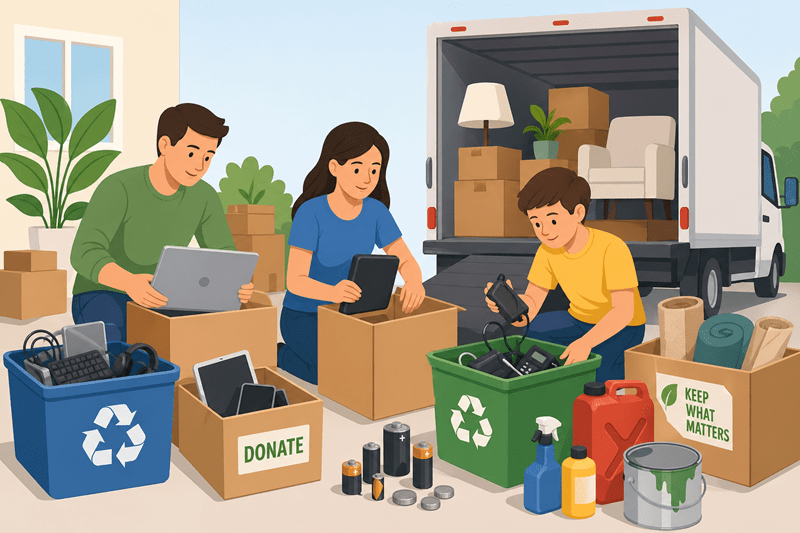

Moving into a new home or office is the perfect time to declutter, organize, and rethink what you really need. But while most people focus on packing boxes and scheduling movers, they often overlook one important issue: what happens to old electronics, batteries, paint cans, and other hazardous materials during the move?
A zero-waste move is about reducing landfill waste while making relocation cleaner, safer, and more efficient. From outdated laptops to leaking batteries, properly disposing of unwanted items protects the environment and helps create a healthier moving experience. Whether you are relocating locally or working with long distance movers for a cross-country transition, understanding how to manage electronic and hazardous waste responsibly can make a major difference.
In this guide, you’ll learn practical ways to sort, donate, recycle, and safely dispose of electronics and household chemicals while keeping your move organized and environmentally conscious.
Traditional moving often creates a surprising amount of waste. Cardboard, plastic wrap, broken furniture, expired cleaning supplies, and outdated electronics frequently end up in dumpsters. Unfortunately, many of these materials contain substances that can harm the environment when dumped improperly.
Electronics, for example, contain metals like lead, mercury, and cadmium. Batteries can leak chemicals into soil and water systems. Even everyday products such as aerosol cans and paint require careful disposal.
A zero-waste approach helps you:
The best part is that responsible disposal is easier than most people think when planned ahead of time.
Before packing begins, walk through every room and separate items into categories:
This step prevents you from wasting money moving items you no longer need.
Old electronics are often hidden in drawers, closets, garages, and storage bins. Gather all unused or outdated devices in one place, including:
Many people hold onto broken devices because they are unsure how to dispose of them properly. A move creates the ideal opportunity to finally clear them out.
If your relocation includes office equipment or digital infrastructure, reviewing proper storage for IT equipment can also help protect sensitive electronics during the transition.
Throwing electronics into regular trash bins is never recommended. Most states and municipalities have recycling programs specifically designed for e-waste.
Search for certified facilities that safely dismantle and process electronics. These centers recover reusable metals and components while keeping toxic materials out of landfills.
Many retailers also offer take-back programs for electronics, including:
When people search phrases like recycle old electronics near me or recycle electronics near me, they are usually looking for local collection programs or drop-off facilities. Planning this step early helps avoid last-minute disposal problems during moving week.
Before donating or recycling devices:
Protecting personal and financial information should always come before recycling electronics.
Batteries are one of the most overlooked hazards during a move. Improper storage or disposal can create fire risks and environmental damage.
Never place loose batteries directly into household trash.
Instead:
If you are packing electronics for transportation, separate spare lithium batteries from moving boxes whenever possible.
Many common household products become hazardous waste during relocation. These items require specialized disposal methods because they may be flammable, corrosive, or toxic.
Professional movers often cannot transport certain hazardous items due to safety regulations. Checking disposal rules in advance prevents delays on moving day.
Not every outdated device belongs in a recycling center. If electronics still function properly, consider donating them.
Organizations often accept:
Schools, nonprofits, and community programs frequently refurbish devices for educational or charitable use.
Donation also extends the product lifecycle and reduces unnecessary manufacturing waste.
Zero-waste moving is not only about disposal. It also includes reducing the waste generated during packing and transportation.
Instead of relying heavily on single-use materials, consider:
These small adjustments significantly reduce overall moving waste.
For businesses planning relocation projects, following an organized office move checklist can also minimize unnecessary disposal and operational disruption.
One common mistake people make is waiting until the final days before the move to deal with unwanted items. That often leads to rushed decisions and improper disposal.
A structured schedule makes the entire process less overwhelming and supports a stress free move from start to finish.
Sometimes large amounts of waste require outside help, especially after years in one property.
Professional hauling companies can simplify disposal for:
Before hiring a service, ask how they handle recycling and hazardous waste. Some companies prioritize landfill dumping, while others partner with recycling facilities.
Reading a reliable junk removal guide can help you choose services that align with sustainable moving goals.
When homeowners search for junk removal near me, they should also verify whether companies follow eco-friendly disposal practices rather than simply hauling everything away.
Commercial moves often involve much larger volumes of electronic equipment and confidential data.
Track:
Label what will be reused, donated, recycled, or securely destroyed.
Businesses should work with certified e-waste recyclers that comply with data destruction and environmental regulations.
This is especially important for companies handling customer records, financial data, or sensitive information.
Many people are surprised to learn that movers may refuse certain items.
If you are working with professional interstate moving and storage companies , ask for their restricted-items list well in advance. Regulations may vary depending on state laws and transportation requirements.
Knowing these rules early helps avoid moving-day complications.
A sustainable move should not end once the boxes are unpacked.
After relocating:
The habits developed during a zero-waste move often lead to more organized and environmentally conscious living overall.
Moving is already a major life event, so it makes sense to use the opportunity to reduce waste and clear out harmful clutter responsibly. Electronics, batteries, and hazardous materials require extra attention, but the process becomes manageable with proper planning.
By recycling outdated devices, donating usable electronics, safely disposing of chemicals, and reducing unnecessary packing waste, you can create a cleaner and more efficient relocation experience.
Whether you are moving a small apartment or coordinating a large commercial relocation, sustainable moving practices benefit both your household and the environment. A zero-waste move is not about perfection — it is about making smarter choices that reduce unnecessary waste one step at a time.
Use certified e-waste recycling centers or retailer take-back programs that process electronics responsibly.
Many movers restrict certain batteries due to fire and transportation safety regulations.
Take unused paint to a local hazardous waste disposal facility instead of placing it in regular trash.
In many cases, donations to qualified nonprofit organizations may be tax deductible.
Electronics contain toxic materials that can contaminate soil and water when improperly discarded.
