
Moving Containers
Recommendation
Moving Container Reviews
Recommendation
Truck Rentals Reviews
Storage Recommendations
Storage Review
Junk Removal Recommendations
Junk Removal Reviews
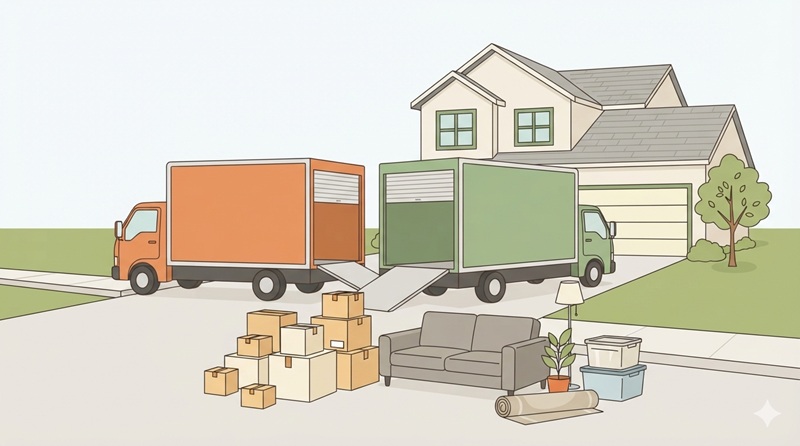

Moving on a budget means comparing more than the advertised rental price. The question of uhaul vs home depot truck rental comes down to mileage charges, rental duration, truck size, fuel expenses, and how far your belongings need to travel. Home Depot can be an affordable choice for local moves, while U-Haul may offer more flexibility for longer journeys and one-way relocations.
Both companies serve different moving needs, so the cheapest option depends on your specific trip. Understanding their pricing structures before booking helps you avoid unexpected expenses and choose a truck that fits your budget.
The main difference between these rental services is how they price and structure their rentals. Home Depot is known for local truck rentals, including hourly options on eligible vehicles, while U-Haul offers local rentals and one-way services across a broad network.
For a short move across town, Home Depot may provide better value, particularly when the rental period is brief and the truck is available nearby. U-Haul may be the better choice for a move between cities, where a one-way rental can eliminate the need to return the vehicle to its starting location.
Neither company is automatically cheaper for every move. Availability, location, vehicle type, rental dates, and local pricing can change the outcome.
Home Depot offers different vehicle types for moving furniture, appliances, and household belongings. Depending on the vehicle and location, rental options may include hourly, multi-hour, or daily arrangements.
The advertised starting price is only one part of the calculation. Confirm the included rental period, mileage policy, fuel requirements, deposit, insurance options, and return conditions before reserving.
For example, a low hourly rate can be attractive for a small apartment move that takes only a few hours. A full-day rental may make more sense when loading, driving, unloading, and making multiple trips require additional time.
U-Haul offers pickup trucks, cargo vans, and moving trucks in different sizes. Local rentals commonly involve a base charge and mileage fees, while one-way rentals are priced according to factors such as distance, equipment, route, and availability.
The total expense may also include fuel, optional coverage, equipment rentals, and other applicable charges. A longer reservation does not necessarily mean a proportionately higher price, because the quoted rate depends on the rental arrangement.
Review the specific reservation details instead of assuming that every U-Haul location follows an identical pricing structure.
A fair comparison uses the same moving requirements for both providers. Start with the vehicle size, pickup location, rental date, estimated mileage, and time needed.
The following table summarizes the typical differences. Exact terms and prices vary by location and vehicle.
| Cost Factor | Home Depot | U-Haul |
| Short local moves | Often competitive | Can be competitive |
| Hourly rentals | Available on eligible vehicles | Depends on local rental terms |
| Mileage charges | Depends on vehicle and rental terms | Common for local rentals |
| One-way moves | Availability and terms vary | Broad one-way rental network |
| Vehicle selection | Trucks and vans, depending on location | Multiple truck and van sizes |
| Best comparison method | Check the complete local quote | Check the complete local quote |
Four major expenses can change which company offers the better deal.
Rental duration: A quick move may favor a short rental, while a full day can be more economical than extending an hourly reservation.
Mileage: The distance between your current home, storage facility, and new address matters. Multiple trips can increase costs, particularly when mileage charges apply.
Fuel: Larger trucks typically consume more fuel than smaller vehicles. Estimate fuel costs using the actual route and the vehicle’s expected consumption.
Additional fees: Optional protection plans, moving equipment, deposits, late returns, and other charges can affect your final total. Check which amounts are refundable and which are not.
The best choice depends on how much time you need, how far you are traveling, and whether you need to return the truck to its original location.
For a local move involving a short drive, Home Depot may offer a lower overall cost when an eligible hourly rental covers the time required. This can work well for moving a sofa, bedroom furniture, or the contents of a small apartment.
Compare the full rental period and mileage policy before deciding. A low starting rate may lose its advantage when the job takes longer than expected.
A larger truck can reduce the number of trips required, saving time and potentially reducing fuel and mileage expenses. Both companies offer different vehicle sizes, but availability varies by location.
When comparing options, prioritize usable cargo space, loading access, and the ability to transport bulky items safely. Renting a truck that is too small can make an inexpensive reservation costly once extra trips are necessary.
For interstate or long-distance moves, U-Haul may be more convenient because it offers established one-way rental options. Home Depot rentals are generally geared toward local use, and availability of longer-distance arrangements depends on the specific vehicle and location.
The most affordable solution may also involve hiring professionals. Compare the rental quote with estimates from the best interstate moving companies when a long journey, heavy furniture, or limited driving time makes a do-it-yourself move less attractive.
Appliance moves require enough cargo space, suitable loading equipment, and secure transportation. A truck’s daily rate is only one consideration when moving a refrigerator, washer, dryer, or other heavy item.
For a single appliance purchase, professional delivery may be more practical than renting a vehicle. Review the Home Depot appliance delivery cost to compare the delivery service with the expense of collecting and transporting the item yourself.
The most useful comparison is based on your actual moving plan rather than a national average. Rental prices can vary significantly by market, date, vehicle, and demand, so a universal dollar figure may be misleading.
Use the following approach to estimate the total.
A simple calculation can help:
Total moving truck expense = rental charge + mileage fees + fuel + optional extras + applicable taxes and fees.
Deposits should be considered separately because a refundable deposit is not necessarily a permanent expense. However, you may still need enough money available to cover it at pickup.
A few practical steps can help keep moving costs under control.
For more ways to reduce the bill, this guide explains how to get the cheapest moving truck rental, including the factors worth checking before making a reservation.
Before paying, read the rental agreement carefully. Verify the permitted travel area, mileage allowance, return location, fuel policy, insurance options, and requirements for returning the vehicle.
Home Depot may be convenient for a local job, but the exact return requirements depend on the rental arrangement. U-Haul may offer greater flexibility for one-way trips, although its quoted price can be higher or lower depending on the route.
It is also worth checking the company’s vehicle inspection process. Photograph existing damage, confirm the fuel level, and report any mechanical concerns before leaving the lot. These simple steps help prevent disputes when you return the truck.
For a closer look at the rental experience, read this Home Depot truck rental review before choosing a vehicle.
Also, confirm return logistics before booking. The answer to whether you can you return a home depot truck to a different location depends on the specific rental terms; do not assume a one-way return is permitted.
Home Depot can be cheaper for some short local moves, while U-Haul may offer better value for certain long-distance or one-way trips. Compare complete quotes.
Hourly rental options are available for eligible vehicles and locations. Confirm the current rate, included time, and rental conditions before booking.
Local U-Haul rentals commonly include mileage charges. Check your reservation for the applicable rate and any included mileage.
U-Haul is often more convenient for long-distance moves because it offers one-way rentals. Availability and pricing depend on the route and reservation.
Choose an appropriately sized vehicle, compare complete quotes, minimize unnecessary trips, and account for mileage, fuel, rental time, and additional fees.
The answer to uhaul vs home depot truck rental depends on the type of move rather than the advertised starting price.
For a short local move, Home Depot may be the more economical option when its rental terms suit your schedule. For an interstate relocation or a move that requires dropping the truck at another city, U-Haul may be more practical.
The best decision comes from comparing the complete cost for the same trip. Check the truck size, mileage, fuel, rental duration, additional fees, and return requirements before booking. A few minutes spent comparing quotes can help you avoid unnecessary expenses and make your move easier to manage.
