
Moving Containers
Recommendation
Moving Container Reviews
Recommendation
Truck Rentals Reviews
Storage Recommendations
Storage Review
Junk Removal Recommendations
Junk Removal Reviews
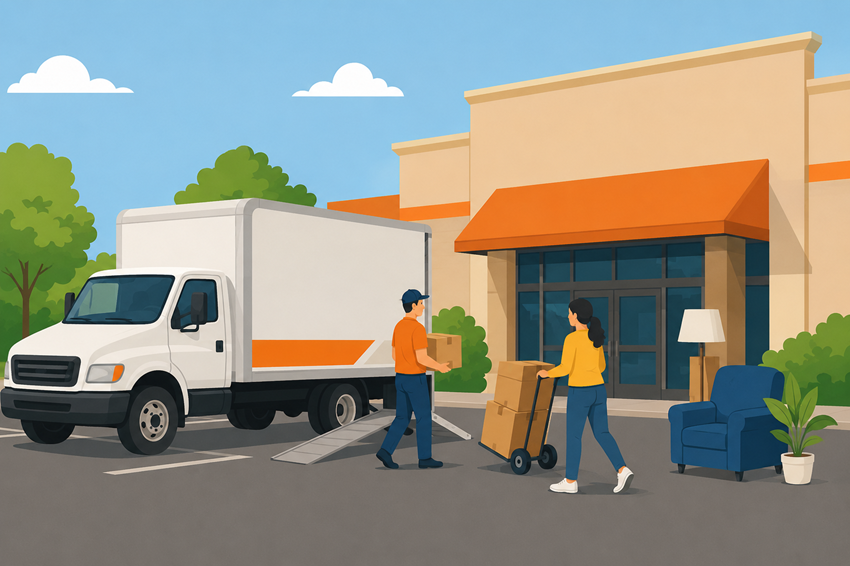

Long-distance move can quickly become complicated when your rental truck needs to end up somewhere other than where you picked it up. If you’re considering a Home Depot vehicle for your move, one question matters before you book: can you return a Home Depot truck to a different location?
A Home Depot truck may be convenient for short-distance moves, furniture pickups, and local transportation. However, if you need to drive to another city or state, the rental process works differently from traditional one-way moving truck services. Here’s what you should know before reserving a vehicle.
In most cases, you cannot return a Home Depot truck to a different store location. Home Depot truck rentals are typically intended to be picked up and returned to the same participating store.
This means that if you rent a vehicle in one city and drive it to another, you will generally need to bring it back to the original rental location. The availability of one-way rentals depends on the specific vehicle and rental provider, but standard Home Depot rental options are primarily designed for local use.
Before booking, it can also help to read a detailed home depot truck rental review to understand the rental experience, vehicle options, and factors that may affect your decision.
Home Depot offers several rental vehicle options for customers who need to transport furniture, appliances, building materials, or household items. Depending on availability, you may find pickup trucks, cargo vans, or larger moving vehicles.
The typical process is straightforward:
If you are specifically searching for a home depot truck, check the exact vehicle type available at your preferred store before making plans. A pickup truck may work well for a few large items, while a cargo van or box-style vehicle may be better for a complete apartment move.
The home depot truck rental price depends on several factors, including the vehicle type, rental duration, mileage, location, and additional charges. A short local rental may cost significantly less than keeping the vehicle for an extended period.
When comparing the home depot truck rental cost, look beyond the advertised base rate. You may also need to consider mileage charges, fuel, insurance options, taxes, and late-return fees.
The home depot truck rental rates can also vary between locations and vehicle types. For that reason, it is best to get a specific quote before assuming a rental will fit your moving budget.

For a detailed breakdown of typical expenses, check this guide on the cheapest truck rental options and costs.
For most standard rentals, Home Depot vehicles are not structured like traditional one-way moving truck services. With a one-way rental, you pick up a vehicle at one location and return it to another city or branch.
That arrangement is common with national moving truck providers, but it is not typically the standard setup for Home Depot rentals. If your move involves a long-distance drive, confirm the return policy before signing the agreement.
If you are relocating across state lines, comparing the best interstate moving companies may be more practical than using a local rental vehicle that must be returned to its original store.
If your plans change during the move, do not simply leave the vehicle at another store. Returning it to an unauthorized location could result in additional charges or problems with the rental agreement.
Instead, contact the rental location as soon as possible and explain your situation. The store may tell you whether an alternative arrangement is available or direct you to the appropriate rental provider.
For a local move, returning the vehicle to its original location is usually the safest option. If that is not practical, a different type of rental may be a better choice from the beginning.
The best option depends on the distance and size of your move. A Home Depot rental can be convenient for a short trip, a small apartment move, or transporting a large purchase.
For a larger relocation, however, you may need a vehicle with more cargo space, flexible mileage, and a one-way return option. Comparing affordable moving truck rental companies can help you find alternatives that better match your route and budget.
If you decide to use a local rental, planning ahead can also help reduce the total cost. These tips on how to score the best deal on a rental truck can help you compare rates and avoid unnecessary charges.
Before you pick up the vehicle, confirm the following details:
Ask exactly where the vehicle must be returned and whether a different branch is permitted. Do not assume another Home Depot location will accept the vehicle.
Late returns can lead to additional fees or availability issues. Keep your schedule realistic, especially if you are moving furniture or driving during busy traffic periods.
Take photos of the truck before and after the rental. Document existing damage and confirm the fuel or mileage requirements in your agreement.
Understand the rental terms, including mileage, fuel, insurance, deposits, and late-return policies. Knowing the complete agreement can make budgeting easier.
So, can you return a Home Depot truck to a different location? In most situations, you should expect to return the vehicle to the same location where you picked it up. While a Home Depot truck rental can be useful for local transportation, it may not be the best fit for a long-distance or interstate move requiring a one-way drop-off.
The key is to confirm the return location, understand the full rental terms, and compare alternatives before booking. A little planning can help you choose the right vehicle and avoid unnecessary costs.
Usually, no; most Home Depot rentals must be returned to the original rental location.
Standard Home Depot rentals are generally designed for local, same-location returns.
The cost varies by vehicle, rental duration, mileage, location, and additional fees.
You may be able to drive the vehicle long distances, but you should confirm the return requirements before booking.
It can be a convenient choice for short local moves, furniture pickups, and smaller transportation needs.
