
Moving Containers
Recommendation
Moving Container Reviews
Recommendation
Truck Rentals Reviews
Storage Recommendations
Storage Review
Junk Removal Recommendations
Junk Removal Reviews


Moving to another state is exciting, but it can also feel overwhelming once the details start piling up. Between packing boxes, updating records, comparing movers, preparing your family, and arranging travel, an interstate move takes more planning than a local relocation.
A well-organized interstate moving checklist helps you stay ahead of deadlines, avoid last-minute stress, and make sure nothing important gets missed. Whether you are relocating for work, family, lifestyle, or a fresh start, the right preparation can make the entire process smoother from the first packed box to the first night in your new home.
At WowMover, we help families and individuals connect with verified local and long-distance moving partners. After helping thousands of people compare movers and prepare for relocation, we know that a successful move usually comes down to planning early, staying organized, and handling the small details before they become big problems.
Use this interstate moving checklist to plan your move with confidence.
Before you begin packing, take time to map out your moving timeline. Interstate moving involves more steps than moving across town because you may need to coordinate state regulations, long-distance transportation, vehicle shipping, school transfers, utility changes, and travel schedules.
Start by choosing your ideal moving date. Then work backward and create weekly tasks. This gives you a realistic view of what needs to happen before moving day.
For most interstate moves, it helps to begin planning at least eight weeks ahead. If you are moving during peak season, such as summer or the end of the month, start even earlier. Moving companies and storage units often book quickly during busy periods.
You should also decide early whether you want a full-service moving company, a moving container, a truck rental, or a mix of services. If you are comparing professional options, working with verified long-distance moving companies for interstate relocations can help you narrow down companies that fit your budget, timeline, and service needs.
One of the first administrative tasks on your interstate moving checklist is updating your mailing address. It may seem simple, but forgetting this step can lead to missed bills, delayed documents, and important mail being sent to your old home.
You can begin by submitting a change-of-address request through the postal service. Choose a forwarding start date that matches your move schedule. If you do not yet have a permanent address, consider using a temporary forwarding address until your housing is finalized.
You should also notify important accounts directly instead of relying only on mail forwarding. This includes banks, credit card companies, loan providers, insurance companies, healthcare offices, tax agencies, employers, subscription services, and online shopping accounts.
It is also smart to update your address with voter registration offices, professional licensing boards, and any government agencies connected to your benefits or records. These updates are especially important when moving across state lines because each state may have different residency rules.
Choosing the right moving company is one of the most important decisions you will make during an interstate move. Long-distance relocation requires coordination, proper licensing, clear communication, and reliable scheduling.
Do not wait until the last minute to compare movers. Ideally, start requesting quotes six to eight weeks before your move. This gives you time to review pricing, understand services, and avoid rushed decisions.
When comparing interstate movers, look beyond the lowest price. A very low estimate can sometimes lead to unexpected fees later. Instead, focus on transparent pricing, verified reviews, service options, availability, and whether the mover can handle your specific needs.
Ask each company what is included in the quote. Find out whether packing, loading, unloading, furniture disassembly, fuel charges, mileage, and insurance coverage are part of the estimate. A clear written quote helps prevent confusion when moving day arrives.
You should also ask about delivery windows. Interstate moving rarely works like a same-day local move. Depending on distance, route, shipment size, and schedule, your belongings may arrive several days after pickup.
Arriving at your new home without electricity, water, or internet can make an already tiring move feel even more stressful. Before moving day, contact utility providers in your new area and schedule activation dates.
Common services to arrange include electricity, gas, water, trash collection, sewer service, cable, phone, and internet. If your new home requires service appointments, book them early so you are not waiting days after arrival.
You should also schedule shutoff dates for your old home. Try to keep essential utilities active until the day after you move out, especially electricity and water. This gives you enough time to clean, inspect the property, and handle any final tasks.
If you work from home, study online, or rely heavily on streaming and smart devices, arrange your home internet connection before moving into a new stateas early as possible. Internet installation slots can fill up quickly, especially in busy cities and suburban areas.
Keep confirmation numbers, account details, and appointment times in one folder or digital note. If there is a delay or issue, you will have the information ready.
Not every interstate move lines up perfectly. Sometimes your new home is not ready yet, your closing date changes, or you need time to downsize before unpacking everything. In these cases, temporary storage can make the move much easier.
A storage unit gives you extra breathing room while you decide what to keep, sell, donate, or move into your new space. It is especially useful if you are moving into a smaller home, relocating temporarily, or waiting for furniture delivery.
Look for a facility with secure access, surveillance, climate control, pest control, flexible contracts, and convenient payment options. If you are storing furniture, electronics, artwork, documents, or seasonal items, climate control can help protect your belongings from humidity and temperature changes.
Booking early is important. During peak moving months, storage units can fill quickly. Reserving a unit at least two weeks ahead can help you avoid limited availability.
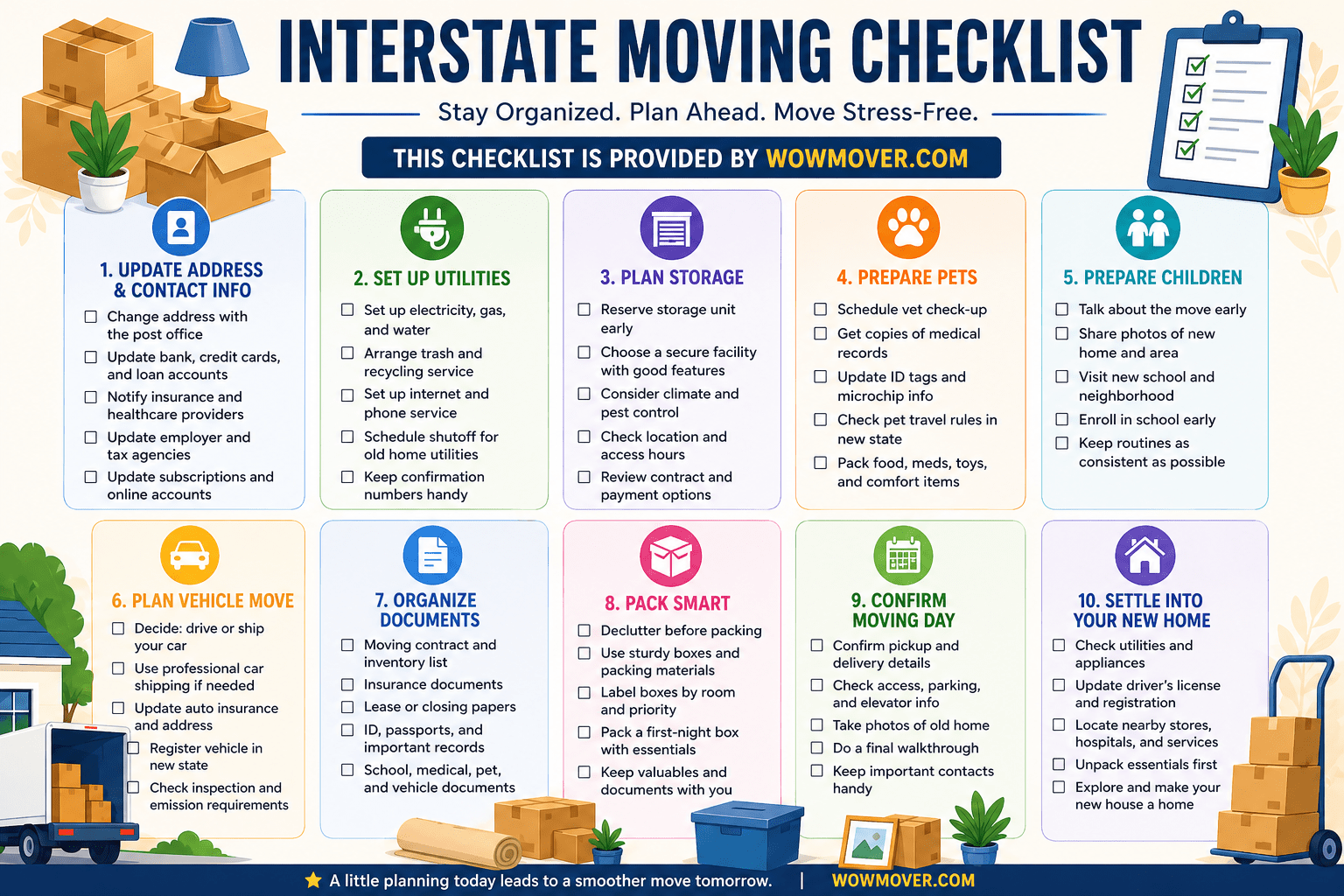
Download FREE Printable – Interstate Moving Checklist
The more you move, the more you may pay. Interstate moving costs are often based on distance, shipment weight, labor, and services. Decluttering before packing can reduce your load and make unpacking easier.
Go room by room and sort items into four groups: keep, donate, sell, and discard. Be honest about what you actually use. If something has been sitting untouched for years, it may not be worth paying to move it across state lines.
Start with storage areas, closets, garages, and spare rooms. These spaces often contain items people forget about until packing becomes urgent.
You can sell valuable items through online marketplaces, donate usable goods to local charities, and recycle or dispose of broken items properly. Decluttering takes time, but it can make your move lighter, cheaper, and more organized.
Packing for an interstate move requires more care than packing for a short local move. Your belongings may travel hundreds or thousands of miles, so they need to be protected from shifting, stacking, and long hours in transit.
Use sturdy boxes, packing paper, bubble wrap, furniture blankets, and strong tape. Avoid overloading boxes, especially with books, dishes, or tools. Heavy boxes are harder to lift and more likely to break.
Label every box by room and priority. Instead of writing only “kitchen,” use labels such as “Kitchen – everyday dishes” or “Bedroom – first-night bedding.” This makes unpacking faster and helps movers place boxes in the right rooms.
Create a first-night box with essentials you will need immediately. Include toiletries, chargers, medications, snacks, basic cleaning supplies, paper towels, a change of clothes, towels, pet food, and important documents.
Keep valuables and personal records with you during travel. This includes passports, birth certificates, medical records, insurance documents, jewelry, laptops, financial paperwork, and moving contracts.
Pets can sense changes in the home, and moving can make them anxious. Preparing early helps reduce stress and keeps them safe during the transition.
Schedule a vet appointment before your move. Ask for updated vaccination records, prescription refills, and travel recommendations. If your pet has anxiety, motion sickness, or health concerns, your vet may suggest ways to make the trip more comfortable.
Update ID tags and microchip information with your new address and phone number. Research pet registration requirements in your new city or state, especially if you own a dog or an exotic pet.
During the move, keep pets in a quiet, secure area away from open doors and heavy foot traffic. On travel day, bring familiar items such as blankets, toys, bowls, food, treats, and medications.
Once you arrive, introduce your pet to the new home slowly. Let them explore one area at a time instead of giving them access to the entire house right away. The transition can feel easier when you follow a calm routine and use familiar scents.
You can make the adjustment smoother with practical ways to introduce pets to a new home after moving
Moving to another state can be emotional for children. They may feel excited, nervous, sad, or unsure about leaving friends, school, and familiar routines behind.
Start the conversation early. Explain why the family is moving, what will change, and what they can look forward to. Give them space to ask questions and share their feelings.
Visuals can help children understand the move better. Show them photos of the new home, neighborhood, school, parks, libraries, and nearby attractions. If possible, visit the area before moving day.
Let children participate in age-appropriate decisions. They can help choose room colors, pack their favorite items, or create a moving-day backpack. Giving them small responsibilities can help them feel more involved.
School planning is also important. Gather transcripts, report cards, immunization records, and special education documents if needed. Contact the new school district as early as possible so enrollment is ready before arrival.
If you are moving far away, decide whether you will drive your vehicle or ship it. Driving may seem simple, but it can add fuel costs, hotel stays, meals, mileage, and time away from work.
Shipping your vehicle may be more convenient, especially if you have multiple cars, a tight schedule, young children, pets, or a long route. When comparing options, ask about open transport, enclosed transport, pickup windows, delivery timing, insurance coverage, and inspection procedures.
Using professional car shipping service options for long-distance moves can make the process easier if you prefer not to drive across multiple states.
Before the vehicle is picked up, remove personal belongings, take photos of the car, check fluid levels, and confirm pickup details. Keep a copy of all shipping documents.
After relocating, update your driver’s license, vehicle registration, and auto insurance. Many states require new residents to complete these updates within a specific timeframe. You may also need a vehicle inspection or emissions test.
Before making a decision, review important things to remember when shipping a car so you know what to expect before pickup and delivery.
Interstate moving often requires more paperwork than people expect. Keeping documents organized can save time during travel, school enrollment, home setup, and state registration.
Create a physical folder or digital file for essential records. Include your moving contract, inventory list, insurance documents, lease or closing papers, utility confirmations, birth certificates, passports, medical records, school records, pet records, vehicle documents, and financial paperwork.
Keep this folder with you instead of packing it on the moving truck. If you need a document during travel or shortly after arrival, you will not have to search through boxes.
It is also wise to back up digital files before packing computers or hard drives. Store copies in a secure cloud account or external drive that travels with you.
As moving day gets closer, confirm every important detail with your mover, landlord, building manager, or property owner.
Confirm the pickup date, arrival window, destination address, contact number, parking access, elevator reservations, gate codes, and any building restrictions. If your old or new property has narrow streets or limited parking, tell the moving company ahead of time.
Take photos of your old home before leaving, especially if you are renting. Document the condition of floors, walls, appliances, and fixtures. These photos can help protect your deposit if there are questions later.
Walk through every room, closet, cabinet, garage, attic, and outdoor storage space before locking up. It is easy to leave behind small items when you are tired or rushing.
The move does not end when the truck arrives. Your first week in a new state is when you begin turning the house into a home.
Start by unpacking essentials first. Focus on bedrooms, bathrooms, the kitchen, and work or school areas. You do not have to unpack everything immediately. Prioritize the spaces that help your household function.
Check that utilities are working properly. Test lights, water, appliances, heating, cooling, internet, locks, smoke detectors, and security systems. Report problems quickly if you are renting or working with a property manager.
Locate nearby grocery stores, pharmacies, urgent care centers, gas stations, schools, parks, and public offices. Save important local numbers in your phone.
You should also update your records with state agencies, register your vehicle, transfer your driver’s license, and review local rules for trash pickup, parking, pets, and permits.
Even a well-planned move can become stressful if key details are overlooked. One common mistake is waiting too long to book movers. Interstate movers often have limited availability, especially during summer and weekends.
Another mistake is accepting a quote without understanding what it includes. Always ask about fees, insurance, delivery windows, packing services, and possible extra charges.
Many people also underestimate how long packing takes. Start earlier than you think you need to. Packing one room at a time is far easier than trying to finish the entire house in a few days.
Do not forget to measure furniture and doorways in your new home. Large sofas, beds, and dining tables may not fit through tight spaces.
Finally, avoid packing essentials on the moving truck. Medications, documents, chargers, clothing, pet supplies, and first-night items should stay with you.
An interstate move comes with a lot of moving parts, but you do not have to manage everything alone. The right moving company can help reduce stress, protect your belongings, and keep your relocation on schedule.
At WowMover, we are not a moving company. We are a connection platform that helps you compare trusted moving companies based on your needs, schedule, and budget.
Whether you are moving to a nearby state or across the country, WowMover can help you review options, compare quotes, and find movers that fit your relocation plans.
Start planning at least eight weeks before moving day if possible. This gives you time to compare movers, gather documents, update your address, arrange utilities, declutter, and pack without rushing.
Start with items you use least often, such as seasonal decor, extra linens, books, rarely used kitchenware, and storage items. Save daily essentials, clothing, toiletries, and important documents for last.
A DIY move may cost less upfront, but it can involve truck rental, fuel, lodging, equipment, insurance, and physical labor. Professional movers may cost more, but they can save time and reduce stress during a long-distance relocation.
Keep important documents, medications, valuables, chargers, basic toiletries, a change of clothes, snacks, pet supplies, and first-night essentials with you. Do not place these items on the moving truck.
Yes. Most states require new residents to update their driver’s license and vehicle registration within a specific period after moving. Check your new state’s requirements soon after arrival.
Keep routines as consistent as possible, prepare familiar comfort items, explain the move early, and introduce the new home gradually. Children and pets adjust better when they feel safe, included, and supported.
Interstate moving can feel like a major life project, but a clear checklist makes the process much easier to manage. When you plan early, compare movers carefully, update important records, prepare your family, and organize your first week, you can avoid many of the common problems that make long-distance moves stressful.
The key is to handle each task one step at a time. With the right preparation and the right moving partners, your relocation can feel less chaotic and more like the fresh start it is meant to be.
