
Moving Containers
Recommendation
Moving Container Reviews
Recommendation
Truck Rentals Reviews
Storage Recommendations
Storage Review
Junk Removal Recommendations
Junk Removal Reviews
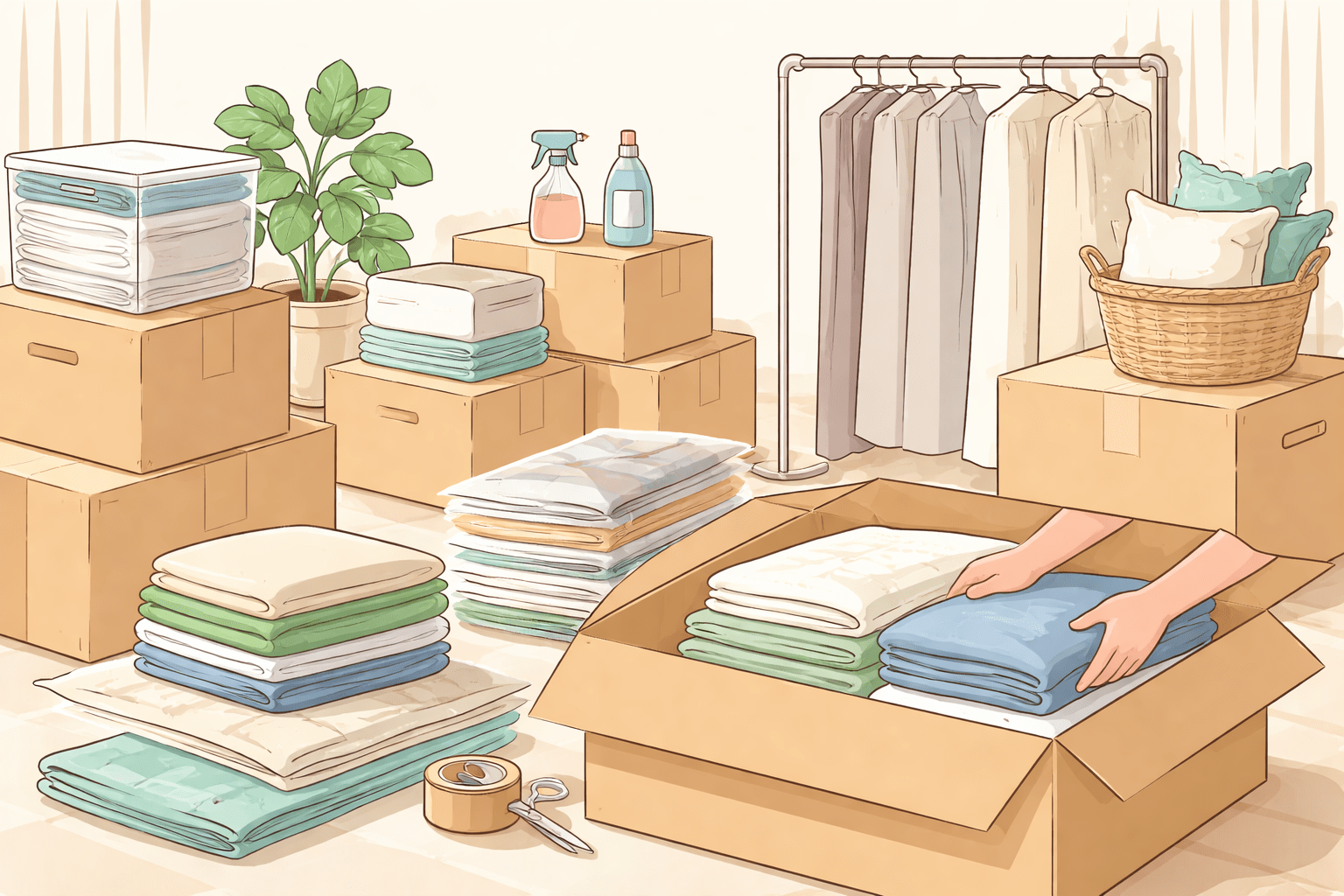

Packing blankets, sheets, and linens might seem simple, but doing it the right way makes a noticeable difference when you unpack. These soft household items can easily absorb moisture, collect dust, or develop odors if not packed properly.
Whether you’re preparing for a local move or a long-distance relocation, using the right materials and methods ensures your bedding stays clean, fresh, and ready to use. If you’re unsure what supplies to use, understanding the difference between choosing packing box materials can help you get started the right way.
Below, you’ll find practical, step-by-step strategies to pack blankets and linens efficiently while maximizing space and protection.
Linens and blankets may not be fragile, but they are highly susceptible to environmental damage. Moisture, dust, and pests can easily ruin fabrics if they’re not stored correctly.
Proper packing helps you:
Taking a few extra minutes to pack these items correctly can save you from unnecessary cleaning or replacements later.
Before you begin, gather the right supplies to make the process smoother and more efficient.
If you’re trying to reduce costs or waste, finding reusable packing materials are both eco-friendly and practical.
Preparation is just as important as packing itself. Clean and well-prepped linens stay fresher during transit.
Always wash your blankets, sheets, and towels before packing. Even slightly damp items can develop mold or unpleasant odors when sealed in boxes.
Group items based on where they belong:
This makes unpacking faster and more organized.
Moving is the perfect opportunity to let go of old or unused linens. Donate or discard items that are worn out or no longer needed.
Packing soft items properly helps maintain their quality while optimizing space inside your boxes.
Line the bottom of each box with packing paper to create a protective barrier against dust and moisture.
Fold sheets, blankets, and towels into compact, uniform shapes. This helps maximize space and keeps boxes organized.
Place heavier items like blankets at the bottom and lighter linens on top. Avoid overstuffing to prevent wrinkles and damage.
Before closing the box:
Write the room and contents on each box. If linens are used to cushion fragile items, make sure to indicate that clearly.
Maximizing space is key when packing bulky items like blankets.
Vacuum-sealed bags significantly reduce the volume of bulky bedding. This is especially helpful for comforters and winter blankets.
Soft items can be used as padding for fragile objects or to fill gaps in boxes. For example, wrapping delicate items can complement techniques used in packing kitchen appliances safely.
While it’s tempting to fill every inch, overpacking can damage fabrics and make boxes difficult to carry.
Curtains and drapes require special handling to prevent wrinkles and fabric damage.
Wardrobe boxes allow you to hang curtains, keeping them wrinkle-free during the move.
If wardrobe boxes aren’t available:
Rugs require a different approach compared to linens due to their size and structure.
Vacuum thoroughly and ensure the rug is completely dry.
Always roll rugs tightly from one end to the other. Folding can damage the fibers and backing.
Use plastic wrap or heavy-duty paper to protect the rug from dirt and moisture during transport.
Avoid these common errors to keep your items in top condition:
Even slight moisture can lead to mildew. Always ensure everything is completely dry.
Boxes with dust or residue can transfer odors and stains to your linens.
Unlabeled boxes slow down unpacking and increase the risk of misplacing items.
While saving space is important, excessive compression can damage fibers over time.
A few extra strategies can make your packing process more efficient:
Set aside one box with fresh sheets, pillows, and towels for immediate use after moving.
Store matching pillowcases, sheets, and covers together to avoid searching later.
For longer relocations or humid climates, plastic bins offer better protection than cardboard.
Packing blankets and linens properly is one of the easiest ways to stay organized and stress-free during a move. With the right preparation, materials, and techniques, you can keep your bedding clean, protected, and ready to use in your new home.
By following these steps, you not only protect your belongings but also make unpacking quicker and more efficient.
