
Moving Containers
Recommendation
Moving Container Reviews
Recommendation
Truck Rentals Reviews
Storage Recommendations
Storage Review
Junk Removal Recommendations
Junk Removal Reviews
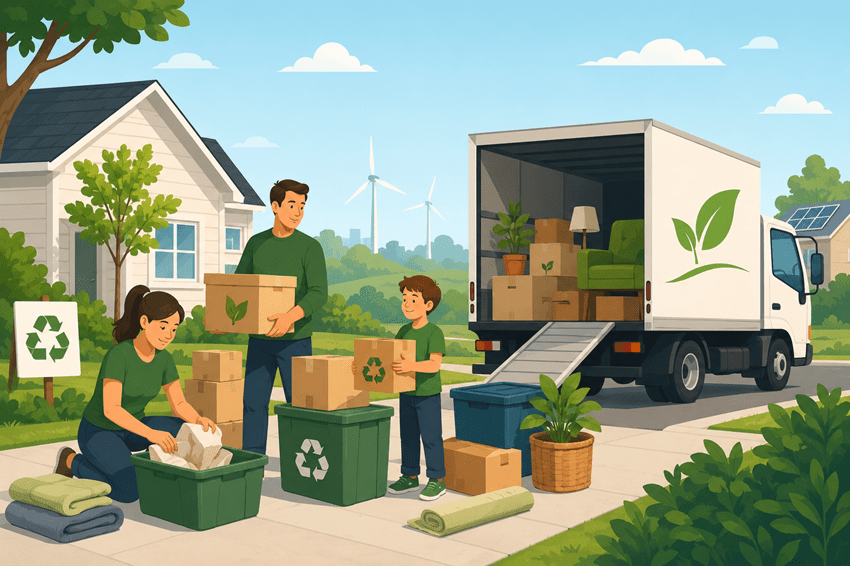

Moving across states can be exciting, but it also comes with a hidden environmental cost. From fuel-heavy transportation to piles of discarded packing materials, long-distance relocations can generate far more waste and emissions than most people realize. The good news is that making your move more sustainable doesn’t require drastic sacrifices or a complicated plan.
By choosing smarter packing methods, reducing waste, and planning transportation efficiently, you can significantly lower the environmental impact of your relocation. Whether you’re hiring movers or handling part of the process yourself, there are practical strategies that make a real difference.
In this guide, you’ll learn five realistic and effective ways to make your next move cleaner, more efficient, and easier on the planet without adding unnecessary stress to your schedule or budget.
Relocation trends continue to grow across the United States, especially as remote work and lifestyle changes encourage people to move between cities and states. If you’ve ever wondered why americans move so often, the answer usually comes down to career opportunities, affordability, family changes, and lifestyle preferences.
The downside is that long-distance moves often involve large trucks, excess packaging, single-use supplies, and unnecessary waste. Every extra mile traveled and every discarded material contributes to your overall carbon footprint.
A more thoughtful approach helps reduce landfill waste, lowers fuel consumption, and creates a more organized moving experience overall.
One of the easiest ways to reduce emissions during a move is to transport fewer items.
Every extra box increases truck weight, which leads to higher fuel usage over long distances. Before packing, go through each room carefully and decide what truly deserves to come with you.
Instead of throwing unwanted belongings away, consider:
This step reduces waste while making your move simpler and more affordable.
Ask yourself whether each item adds value to your new home. Many people discover they’ve been storing unused belongings for years. Downsizing before relocating can dramatically cut transportation needs.
Understanding the real cost of relocating also helps people realize how much unnecessary weight increases both expenses and environmental impact.
Packing materials create a surprising amount of waste during a move. Traditional supplies like bubble wrap, foam peanuts, and excessive cardboard often end up in landfills immediately after unpacking.
Choosing reusable alternatives can reduce waste significantly while keeping your belongings protected.
Instead of relying entirely on new boxes and plastic materials, try:
You can also ask local businesses for gently used boxes rather than buying new ones.
Once the move is complete, many people are left wondering what to do with piles of moving boxes. Reusing, donating, or recycling them properly prevents unnecessary waste and keeps usable materials in circulation longer.
Overpacking is common during relocations. Instead of using excessive layers of plastic or oversized containers, pack strategically and securely. Efficient packing minimizes both material waste and truck space usage.
Transportation is one of the biggest environmental factors in any long-distance move. Better planning can help lower emissions while saving time and money.
If possible, consolidate everything into a single move rather than making repeated trips back and forth. Careful scheduling and organized packing help maximize truck space and reduce fuel usage.
Planning the shortest and most fuel-efficient route can reduce unnecessary mileage. Avoiding heavy traffic areas and peak driving hours also improves fuel efficiency.
For smaller moves, consider consolidated freight services where your belongings share truck space with other shipments. This reduces partially empty truck travel and minimizes environmental impact.
Working with one of the best interstate moving and storage companies can also help streamline logistics and improve transportation efficiency during cross-country relocations.
Not all movers operate the same way. Some companies actively work to reduce waste, lower fuel consumption, and improve operational efficiency.
Finding an eco-conscious mover can make a major difference during a long-distance relocation.
When researching movers, ask whether they:
A responsible eco-friendly moving company should be transparent about its sustainability efforts and operational practices.
Modern trucks with updated fuel systems produce fewer emissions than older fleets. Companies that maintain their vehicles properly often consume less fuel during transportation.
Some movers advertise green services without meaningful action behind them. Ask detailed questions about their sustainability practices before booking.
You can also explore additional eco-friendly moving practices that help reduce waste and improve relocation efficiency from start to finish.
Many people overlook the environmental impact of utilities during relocation. Electricity, water, and heating systems left running unnecessarily can add avoidable waste.
Schedule utility shutoffs carefully so services end shortly after you leave rather than remaining active for days or weeks.
At your new home, set up utilities only when needed to avoid unnecessary energy use.
Moving is the perfect time to upgrade older appliances, switch to LED lighting, or improve insulation in your new space.
Small upgrades can create long-term reductions in household emissions and energy bills.
Items like paint, batteries, cleaning chemicals, and electronics should never be dumped casually during a move. Use approved recycling centers or hazardous waste facilities whenever possible.
Sustainable moving doesn’t require perfection. Even small adjustments can create meaningful environmental benefits over time.
Here are a few additional eco-friendly moving tips that can make your relocation even cleaner and more efficient:
The goal isn’t to create a completely waste-free move. It’s about making smarter decisions that reduce unnecessary consumption.
Many long-distance moves become less efficient because of avoidable habits.
Disorganized packing often leads to damaged items, excessive supplies, and wasted space inside moving trucks.
Low-quality packing supplies frequently tear or fail during transport, creating more waste and replacement costs.
Last-minute moves often force rushed decisions, including excess packaging, multiple trips, and poor transportation planning.
Creating a timeline early helps avoid unnecessary environmental impact.
Sustainable relocation strategies don’t just help the environment. They also improve the overall moving experience.
Benefits often include:
Many people also discover that learning how to reduce carbon footprint during a move naturally leads to more sustainable household habits afterward.
Simple adjustments during relocation can influence future purchasing, recycling, and organizational choices for years to come.
Relocating long distance will always require energy, transportation, and resources. But thoughtful planning can dramatically reduce unnecessary waste and emissions.
Choosing reusable materials, downsizing before packing, and working with responsible movers all contribute to more efficient relocation practices.
There are many practical ways to reduce carbon footprint without making your move more difficult or expensive. In fact, sustainable planning often simplifies the process while lowering costs at the same time.
As more households prioritize eco-friendly moving, the industry itself continues shifting toward cleaner, more efficient solutions. Every smarter decision contributes to a more responsible moving experience for both your household and the environment.
Transportation fuel consumption usually creates the largest environmental impact.
Yes, reusable materials significantly reduce landfill waste from moving supplies.
Not always; many sustainable movers offer competitive pricing and efficient services.
Start planning at least 6–8 weeks before moving day.
Electronics, batteries, paint, and chemicals should be recycled properly.
