
Moving Containers
Recommendation
Moving Container Reviews
Recommendation
Truck Rentals Reviews
Storage Recommendations
Storage Review
Junk Removal Recommendations
Junk Removal Reviews
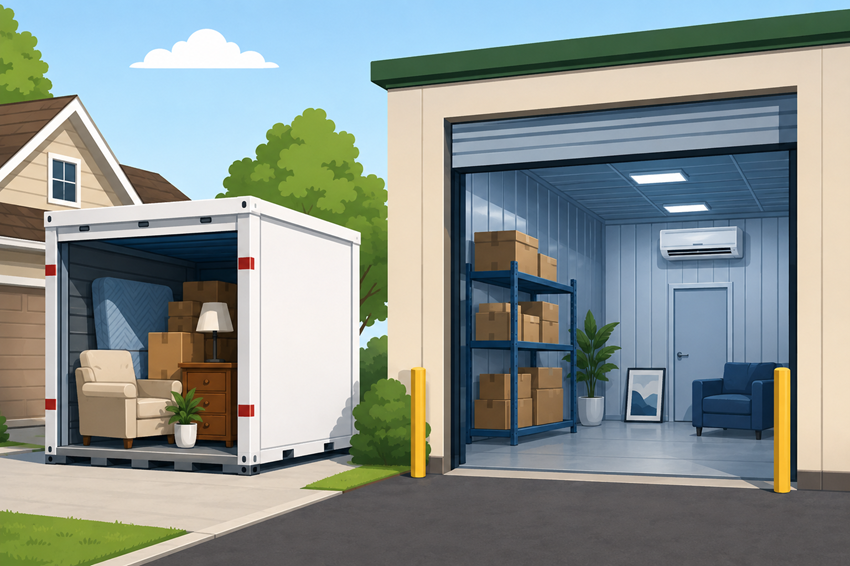

When planning a move or looking for temporary storage, climate control can be an important consideration. Many people wonder whether pods storage units are climate controlled and whether they can safely protect furniture, electronics, clothing, documents, and other belongings from changing temperatures and humidity.
The answer depends on where your PODS container is stored and the type of facility involved. PODS containers are designed for flexible storage and moving, but they are not automatically the same as a traditional climate-controlled storage room.
Generally,PODS storage units are not individually temperature controlled. A PODS container is a portable steel storage container designed to hold your belongings at your home, during a move, or at a storage facility.
When a container is kept at a customer’s property, it is exposed to the surrounding outdoor environment. This means temperatures inside the container can change with the weather.
However, there is an important distinction when PODS containers are stored at a dedicated facility. Depending on the service and location, the container may be kept in a secure storage facility rather than sitting in your driveway.
That can provide additional protection from direct outdoor exposure, but it should not automatically be considered equivalent to a traditional climate-controlled storage unit.
Temperature changes can affect certain household belongings more than others. Wood furniture, leather goods, electronics, artwork, musical instruments, photographs, and important documents may be sensitive to excessive heat, cold, or humidity.
For ordinary household items, PODS storage units can be a practical option, especially when the storage period is relatively short and the belongings are properly packed.
The biggest concern is usually not simply temperature. Humidity and condensation can also create problems for materials that are vulnerable to moisture.
High temperatures can cause certain materials to expand, warp, soften, or deteriorate. Humidity may also encourage mold or mildew when moisture becomes trapped inside poorly protected items.
This is particularly important if you are storing belongings through a hot or humid season.
Cold weather can affect some electronics, liquids, adhesives, and delicate materials. If items repeatedly move between cold and warmer environments, condensation may become another concern.
Before placing valuable or temperature-sensitive possessions inside PODS storage units, check whether they have specific storage requirements.
PODS containers are designed around convenience and flexibility. Instead of transporting everything to a traditional storage facility yourself, the container can be delivered to your property.
You can load your belongings at your own pace, which can make the moving process easier when you need additional time.
The construction of the container also provides a solid barrier against ordinary outdoor conditions. Proper packing is still essential because weather resistance does not mean that every item is protected from temperature and humidity changes.
For many households, PODS storage units work well for furniture, household goods, seasonal belongings, moving boxes, and other everyday possessions.
If you are unfamiliar with the container concept, you can learn more about pods containers before deciding whether this type of storage fits your needs.
One advantage of portable storage is that pricing can vary according to factors such as container size, storage duration, transportation, location, and whether the container remains at your home or is moved to a storage facility.
When comparing PODS storage units, look beyond the basic monthly price. Delivery, pickup, transportation, and additional services can affect the overall expense.
It is also useful to compare your expected storage period with traditional storage options. A lower monthly rate may not always mean a lower total cost if you need transportation or additional services.
If you are planning a smaller move, understanding why pods pricing works well for short moves can help you evaluate whether portable storage makes financial sense.
For many common household belongings, PODS storage units can be a convenient solution. Furniture, boxed household items, appliances, clothing, decorations, and seasonal items can generally be stored when properly prepared.
However, some possessions deserve extra consideration.
Avoid placing highly temperature-sensitive or moisture-sensitive belongings in a non-climate-controlled environment unless you have confirmed that the storage conditions are appropriate.
Important documents, irreplaceable photographs, valuable artwork, certain musical instruments, and delicate collectibles may benefit from specialized indoor storage.
If you are uncertain, ask the storage provider what environmental protections are available at the specific facility.
Even when using PODS storage units, preparation can make a significant difference in how well your belongings hold up during storage.
Use sturdy boxes and appropriate protective materials for fragile possessions. Avoid packing items while they are damp, as trapped moisture can become a problem during storage.
Where appropriate, place furniture on pallets or another suitable surface rather than directly against a potentially damp floor. This can provide an additional layer of protection.
Wrap delicate furniture and belongings with appropriate protective materials. For items that are particularly vulnerable to humidity or temperature changes, consider specialized storage instead.
Leave enough room to organize the container safely. Overpacking can make it difficult to access belongings and may increase the chance of damage during loading and unloading.
Searching for PODS storage near me can be a useful starting point when comparing local availability. However, availability and storage conditions can differ by location.
Before booking, confirm where your container will be stored and whether it will remain at your property or be transported to a storage facility.
Ask specifically about environmental conditions rather than assuming that a storage facility provides climate control simply because the container is stored indoors.
Traditional storage facilities often provide multiple options, including outdoor drive-up units, indoor units, and dedicated climate-controlled spaces.
Portable storage offers a different advantage: convenience. You can load the container at home instead of making repeated trips to a storage facility.
The right option depends on what you are storing, how long you need storage, how often you need access, and whether climate control is essential.
For a broader comparison of moving providers, researching the best interstate moving companies can also help if your storage needs are part of a larger long-distance relocation.
For long-term storage, PODS storage units can be useful when the belongings are suitable for the environmental conditions and the container is properly packed.
The longer you store items, however, the more important environmental conditions become. A few weeks of storage may be very different from keeping belongings for several months or longer.
If your possessions are valuable, delicate, or especially sensitive to temperature and humidity, ask about climate-controlled alternatives before making a long-term decision.
You can also review independent pods reviews to understand how other customers evaluate the service and storage experience.
The total expense depends on the size of the container, distance, storage duration, delivery requirements, and other services.
When comparing PODS storage units, it is useful to calculate the complete cost rather than focusing only on the advertised storage rate.
Understanding pods moving cost can help you identify the factors that may influence your final bill.
For long-distance relocations, your destination can also influence your storage strategy. Some people choose locations based on affordability, lifestyle, weather, and other practical considerations. Understanding why climate havens are reshaping long-distance moves can provide additional context when planning a major relocation.
Choosing the appropriate container size matters because too much unused space can increase costs, while a container that is too small can make loading difficult.
Available pods sizes can vary depending on the provider and location, so confirm current options before booking.
Think about your inventory first. Make a list of large furniture, appliances, boxes, and specialty belongings, then discuss your estimated requirements with the provider.
So, are PODS storage units climate controlled? Not in the same way as a traditional climate-controlled indoor storage room. The container itself is not designed to maintain a consistent temperature and humidity level.
However, portable storage can still be an excellent choice for many household belongings. The key is understanding where your container will be stored and whether your possessions require controlled environmental conditions.
For ordinary household items, PODS storage units offer a convenient combination of flexible loading, transportation, and storage. For highly sensitive possessions, a dedicated climate-controlled facility may be the safer choice.
Before booking, confirm the storage environment, ask about protection from weather and moisture, and consider the value and sensitivity of everything you plan to store.
No, PODS containers are not designed to maintain a constant temperature or humidity level like dedicated climate-controlled storage rooms.
Yes, most household furniture can be stored when it is properly cleaned, wrapped, packed, and protected from moisture.
Yes, but sensitive belongings may require climate-controlled storage for extended periods.
PODS provides portable storage solutions, including options where containers can be stored at designated storage facilities depending on location and availability.
Avoid storing highly temperature-sensitive, moisture-sensitive, hazardous, or irreplaceable items unless you have confirmed that the storage conditions are appropriate.
