
Moving Containers
Recommendation
Moving Container Reviews
Recommendation
Truck Rentals Reviews
Storage Recommendations
Storage Review
Junk Removal Recommendations
Junk Removal Reviews
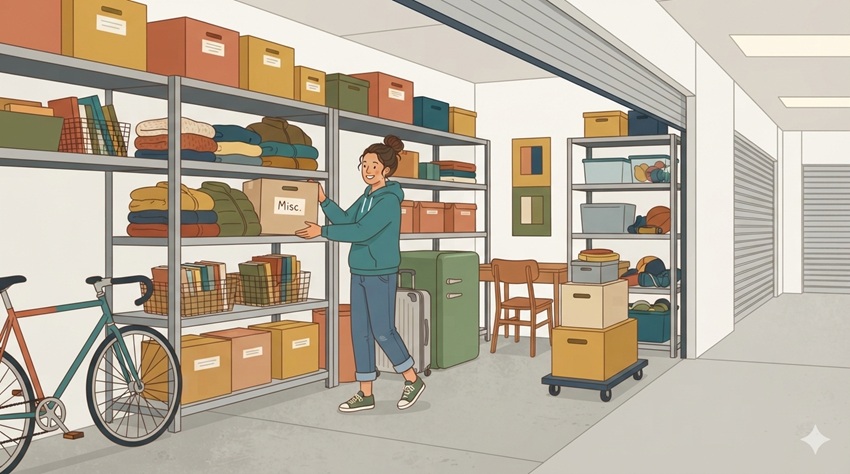

College life often means learning how to live with less space. Dorm rooms are compact, apartments are shared, and belongings tend to accumulate throughout the academic year. A student self storage unit can provide a practical way to keep important possessions without allowing them to overwhelm a living space.
This updated guide expands the ideas with practical advice on choosing, packing, budgeting, and using storage efficiently.
College living rarely provides the same amount of space students had at home. Dorm rooms are compact, roommates share closets and common areas, and off-campus leases can change from one academic year to another.
A student self storage unit gives students a separate place for seasonal clothing, furniture, appliances, sports equipment, books, and other belongings they want to keep but do not need every day.
The goal is not to store everything. Instead, storage should remove nonessential possessions from the living area while keeping them organized and available when needed.
A dorm room may look manageable on move-in day, but belongings can multiply quickly. Extra bedding, winter clothing, bicycles, school supplies, decorations, and small appliances can soon take over closets and floor space.
A student self storage unit creates additional breathing room without forcing students to throw away useful possessions. Limited dorm and apartment space is one of the most common reasons college students turn to self-storage.
The benefit becomes even more noticeable when two or more students share one room. Moving rarely used possessions elsewhere can make the room easier to organize, clean, and use for studying.
Summer is one of the most practical times to use a student self storage unit. Many students do not want to transport every box, appliance, bicycle, and piece of furniture back to their family home.
Instead, belongings can remain near campus until the next semester. Student-focused storage services commonly support summer storage, while traditional self-storage can also provide a nearby place for items that students do not need during the break.
This can reduce the amount of packing and loading required during move-out. Recent college move-out guidance also recommends planning ahead because students may face strict deadlines, crowded elevators, parking restrictions, and high demand for moving equipment.
A semester or year abroad creates another storage challenge. Students may need to leave their current dorm or apartment but have no reason to take every possession overseas.
A student self storage unit can hold furniture, seasonal clothing, books, and other belongings during the time away. That allows students to focus on coursework, travel arrangements, and other preparations instead of finding a temporary home for everything they own.
Student-oriented services can also combine pickup, storage, and later delivery for students who prefer a more convenient solution.
College is a period of constant change, and possessions often accumulate. Students may purchase desks, kitchen equipment, seasonal clothing, sports gear, textbooks, or furniture for a future apartment.
A student self storage unit can keep these items out of the way until they become useful. This is particularly helpful after moving from a dorm into an apartment, when some belongings may be valuable but are not immediately needed.
This is also where college student storage can become useful for students who need more room without giving up belongings they expect to use later.
College students often move more frequently than they expect. A lease may end before the next apartment becomes available, roommates can change, or an internship can require relocation.
A student self storage unit can act as a temporary bridge between two living situations. Rather than coordinating one large move around a strict deadline, students can store nonessential possessions and move their everyday essentials separately.
Students planning a longer-distance move can also compare the best interstate moving companies before deciding how larger belongings should be transported.
Every additional box adds work on moving day. More belongings mean more vehicle space, more loading, more trips, and more time.
A student self storage unit allows students to separate everyday essentials from items needed later. That can make a move considerably more manageable, particularly when traveling by car, public transportation, or air.
Students moving away from home for the first time can also benefit from practical college moving tips for out-of-state students when deciding what to pack, ship, donate, or store.
Storage needs rarely remain identical throughout college. A freshman may need only a few boxes, while an upperclassman living in an apartment may eventually need space for furniture and appliances.
A student self storage unit can be selected around the current need rather than treated as a permanent arrangement. Facilities may offer different unit sizes and rental terms, while student-focused programs can be structured around semester and summer schedules.
The best items for student storage units are possessions that are useful but not required every day.
Common examples include:
Avoid placing prohibited, perishable, hazardous, or highly sensitive items into storage. Always review the facility’s rules before packing.
Choosing storage is about more than finding the lowest advertised price. A student storage solution should match the student’s belongings, schedule, location, access needs, and length of stay.
Start by estimating how much space is actually required. A smaller unit can be more economical and easier to organize, while an oversized unit may leave students paying for unused space.
Location is important as well. A facility close to campus can make retrieval easier during the semester. A facility near a family home may be more practical for belongings that will remain there for a longer period.
Students should compare access hours, security features, rental terms, payment policies, insurance requirements, and moving assistance. Climate control may also be worth considering for electronics, documents, wooden furniture, instruments, and other belongings sensitive to temperature or humidity. Current summer-storage guidance recommends climate-controlled space for heat- or humidity-sensitive belongings.
For a broader comparison, students can also explore best moving & storage solutions for college students before choosing a service.
The question how much does student storage cost depends on factors such as location, unit size, rental duration, climate control, access features, and whether pickup or transportation is included.
A useful budget comparison should consider the total expense rather than only the monthly rent. Students may also need to account for transportation, packing supplies, insurance, deposits, or administrative fees.
A student self storage unit can sometimes reduce indirect moving expenses by limiting long-distance trips and reducing the amount of equipment needed for a move. The cheapest unit is not necessarily the most economical choice when convenience and transportation are considered.
Good packing can make a student self storage unit much easier to use.
Start by sorting belongings into four groups: keep, store, donate, and discard. Then create an inventory of everything going into storage. A simple list with box numbers and item descriptions can save considerable time later.
Pack heavier items in smaller boxes and lighter belongings in larger ones. Label boxes on multiple sides so their contents can be identified without moving an entire stack.
Leave a walkway toward the back of the unit. Frequently needed belongings should stay near the entrance, while less frequently used items can be placed farther inside.
Before storing electronics, clothing, and furniture, make sure everything is clean and completely dry. Current summer-storage guidance also recommends removing batteries from electronics, protecting belongings from moisture, and leaving room for airflow.
A detailed student moving cheklist can also help students determine what should be stored before move-out day.
Storage does not become irrelevant once college ends. Many graduates need time to find housing, start a job, relocate, or move in with roommates.
A student self storage unit can provide a temporary home for belongings during that transition. Instead of rushing into a larger apartment simply because there is nowhere else to keep furniture, graduates can store nonessential possessions while finalizing their next move.
This can be particularly useful for graduates beginning internships, seasonal employment, or entry-level positions in another city.
Taking everything home may seem like the easiest option, but it is not always practical. Long driving distances, limited vehicle space, airfare, shipping expenses, or limited room at home can make the process costly and inconvenient.
A student self storage unit provides another option: keep belongings near campus while transporting only the items genuinely needed during the break.
The right choice depends on distance, transportation costs, available family space, the length of the break, and how soon the possessions will be needed again.
Some students can handle a small move with friends or family. Larger moves may be easier with professional help, particularly when furniture or long-distance transportation is involved.
Students comparing providers can research Two Men and a Truck for student moving alongside other moving options, then compare pricing, availability, services, and reviews.
Professional moving help can be especially valuable when a student has heavy furniture, limited transportation, a long-distance move, or a tight move-out schedule.
Summer is a busy period for student storage. Planning ahead can provide more choices in unit sizes, locations, and access options.
Do not pay to store belongings that no longer have value. Donate, sell, recycle, or discard unwanted items before packing.
Uniform boxes are easier to stack securely and can make the available space easier to organize.
Maintain a basic list or photograph of stored possessions. It can make retrieval easier and help with planning for the next move.
Clean and dry everything before storage. Climate-controlled space may be appropriate for possessions that are particularly sensitive to heat or humidity.
A student self storage unit can be a practical part of college life rather than simply a place to hide extra belongings. It can create more room in a dorm, simplify summer move-out, support study-abroad plans, reduce the size of a move, and provide breathing room during the transition after graduation.
The best approach is to identify what genuinely needs to be stored, choose a unit based on actual volume and access requirements, pack systematically, and plan before peak moving periods.
With those steps in place, student self storage unit use becomes less about storing clutter and more about making college moves organized, flexible, and manageable.
Yes, it keeps dorm and apartment belongings near campus instead of requiring students to transport everything home.
Seasonal clothing, furniture, bicycles, extra bedding, appliances, books, and other nonessential belongings are common choices.
It can be useful for belongings sensitive to heat or humidity, including electronics, documents, and some furniture.
Students should start comparing options several weeks before move-out because summer demand can be high.
Yes, it can bridge the gap while graduates search for housing, relocate, or begin a new job.
