
Moving Containers
Recommendation
Moving Container Reviews
Recommendation
Truck Rentals Reviews
Storage Recommendations
Storage Review
Junk Removal Recommendations
Junk Removal Reviews
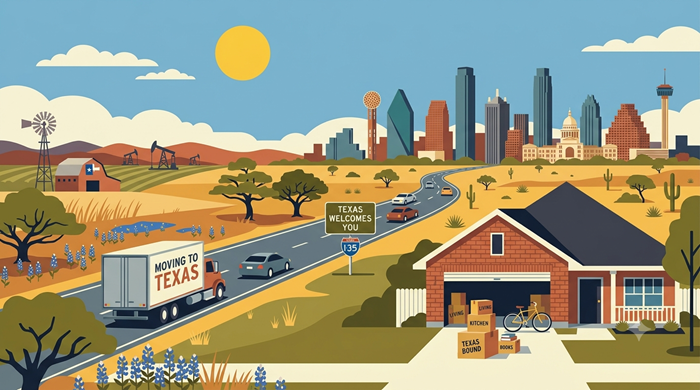

Texas attracts residents with large job markets, varied communities, housing choices, and a distinctive lifestyle. Census estimates put the state at more than 31.7 million residents in 2025, with Texas recording the largest numeric population increase of any state from 2024 to 2025. That growth helps explain the appeal, but a relocation deserves a balanced look at housing, taxes, weather, transportation, employment, and everyday costs.
There is no single reason for the state’s growth. Some households are drawn by employment opportunities in technology, healthcare, energy, manufacturing, logistics, and professional services. Others want more space, different housing choices, or a different tax structure.
The phrase “why are people moving to Texas” is best answered by looking at several factors together. Texas offers major metropolitan areas, smaller cities, suburban developments, and rural communities, allowing newcomers to choose a lifestyle rather than simply choosing a state.
The latest Census estimates show Texas added 391,243 residents between July 2024 and July 2025, the largest numeric increase among states. Continued growth is also influencing housing markets, roads, schools, and public services.
One major advantage of moving to Texas is access to employment centers in Dallas-Fort Worth, Houston, Austin, San Antonio, and other growing areas. These markets support different industries and career paths.
A diversified economy can help workers change industries or build a business. Conditions vary by city, so researching the local market matters more than relying on statewide averages.
Texas does not impose a state individual income tax. For eligible workers, that can make the state attractive compared with places where a portion of wages goes to state income taxes.
Taxes do not disappear, however. Homeowners may face substantial local property taxes, while sales and other taxes affect everyday spending. The better question is how the complete tax picture fits a household budget.
Texas has a broad housing landscape. Buyers and renters can find downtown apartments, established neighborhoods, suburban developments, townhomes, and larger properties farther from city centers.
That variety makes moving to Texas workable for different household types. A family seeking more space may have very different priorities from a professional who wants a short commute and urban amenities.
Texas housing should be evaluated beyond the purchase price or monthly rent. Property taxes, insurance, utilities, maintenance, and commuting costs can materially change the real monthly expense.
The state’s size creates varied lifestyles. Someone may prefer Houston’s restaurants and cultural attractions, Dallas-Fort Worth’s business environment, Austin’s outdoor appeal, or San Antonio’s historic character.
This variety is one reason moving to Texas works for people who want options without leaving the state. It also makes comparing cities essential before choosing a destination.
Population growth has encouraged residential construction, retail development, restaurants, entertainment, healthcare facilities, and other services in many areas.
For newcomers, that can mean newer neighborhoods and expanding amenities. Rapid growth can also put pressure on infrastructure, which becomes an important trade-off.
The absence of a state property tax does not mean homeowners have no property-tax burden. Texas local governments set property tax rates and collect property taxes to fund services such as schools, roads, police, and fire protection.
For a homeowner, the annual tax bill should be included in the housing calculation early. A home that looks affordable based on its sale price can become more expensive after taxes, insurance, and maintenance.
Texas weather is a serious consideration. Many areas experience long periods of high heat, and summer electricity use can rise as residents rely heavily on air conditioning.
People considering moving to Texas should understand regional weather differences. Coastal areas can face hurricanes and flooding, while other parts of the state may experience severe thunderstorms, tornadoes, winter freezes, or drought.
Major metro areas can have substantial traffic, especially during peak commuting periods. Rapid suburban growth can place additional pressure on major roads and highways.
A home’s distance from the workplace matters almost as much as its price. A larger house can become less appealing when the daily commute consumes significant time and fuel.
Texas has made ongoing investments in electric-grid reliability and weather preparedness, but extreme weather remains an important planning consideration. ERCOT continues to assess reliability and resiliency under severe-weather scenarios.
Residents should understand their utility provider, monitor outage information, and prepare for extreme heat, winter storms, and other local risks. This is not necessarily a reason to avoid the state, but it is part of informed relocation planning.
Growth brings opportunities, but it can also change the character and cost of a community. New construction, traffic, rising demand, and development can affect established neighborhoods.
Before moving to Texas, residents should look beyond a property’s current appearance. Check planned developments, commute routes, school boundaries, local services, and future infrastructure projects.
The living cost of Texas varies considerably by city and lifestyle. Housing may be manageable in one community and substantially more expensive in another, while transportation, insurance, utilities, and property taxes can shift the monthly budget.
A useful texas moving guide should start with a complete household budget rather than one cost-of-living figure. Estimate rent or mortgage payments, property taxes, insurance, electricity, fuel, groceries, childcare, healthcare, and relocation expenses.
People relocating from California can also benefit from a detailed california to texas moving guide that compares the timeline and major expenses involved in the transition.
A beautiful neighborhood loses appeal when it creates a difficult daily commute. Map routes to work, school, childcare, or other regular destinations during actual peak travel times.
Review taxes, insurance, HOA fees, utilities, maintenance, and expected annual increases. Renters should also check deposits, fees, parking costs, and lease terms.
Two neighborhoods within the same metro area can feel completely different. Look at access to groceries, healthcare, parks, schools, restaurants, public transportation, and major roads.
For practical planning, this resource on how to hire a moving company in texas can help when comparing movers and preparing for the physical relocation.
Once the destination is chosen, organize the relocation around a realistic inventory. Decide what is worth transporting and obtain detailed estimates before booking a provider.
Researching best interstate moving companies can help narrow the field, especially when a household is crossing state lines and needs a provider experienced with long-distance logistics.
Compare services carefully. Some companies handle packing, storage, vehicle transportation, and specialty items, while others focus primarily on loading and transportation.
Those seeking more local expertise can research top texas moving companies and compare licensing information, reviews, services, estimates, and cancellation policies.
For households still evaluating the destination, learning about the benefits of moving to texas can provide broader context before committing to a city or neighborhood.
The answer depends on your household. Strong employment centers, housing variety, lifestyle choices, and the absence of a state individual income tax can make Texas appealing. At the same time, property taxes, summer heat, traffic, insurance, and extreme-weather risks deserve serious attention.
The best approach to moving to Texas is to compare the numbers and lifestyle together. Visit the area, test the commute, estimate the full monthly budget, and investigate the specific neighborhood rather than deciding from statewide reputation alone.
For many households, moving to Texas can offer a strong combination of opportunity and flexibility. For others, the climate, taxes, or distance from family may outweigh those benefits. A careful comparison makes the decision easier.
Moving to Texas can be a smart choice for people who value career opportunities, housing variety, space, and a different tax structure. The state also comes with real trade-offs, particularly around heat, property taxes, commuting, and weather.
Strong decisions come from matching a Texas community to your household budget and lifestyle. With realistic research and careful planning, moving to Texas becomes less about following a trend and more about choosing a place that genuinely fits your needs.
Yes. Major metropolitan areas offer diverse employment opportunities across multiple industries.
No. Texas does not levy a state individual income tax, although residents still pay other taxes.
They can be significant because property taxes are administered locally and help fund public services.
Common concerns include extreme summer heat, traffic, property taxes, and severe weather.
Set a complete budget, compare neighborhoods, research movers, plan the route, and account for housing, insurance, taxes, utilities, and transportation.
