
Moving Containers
Recommendation
Moving Container Reviews
Recommendation
Truck Rentals Reviews
Storage Recommendations
Storage Review
Junk Removal Recommendations
Junk Removal Reviews
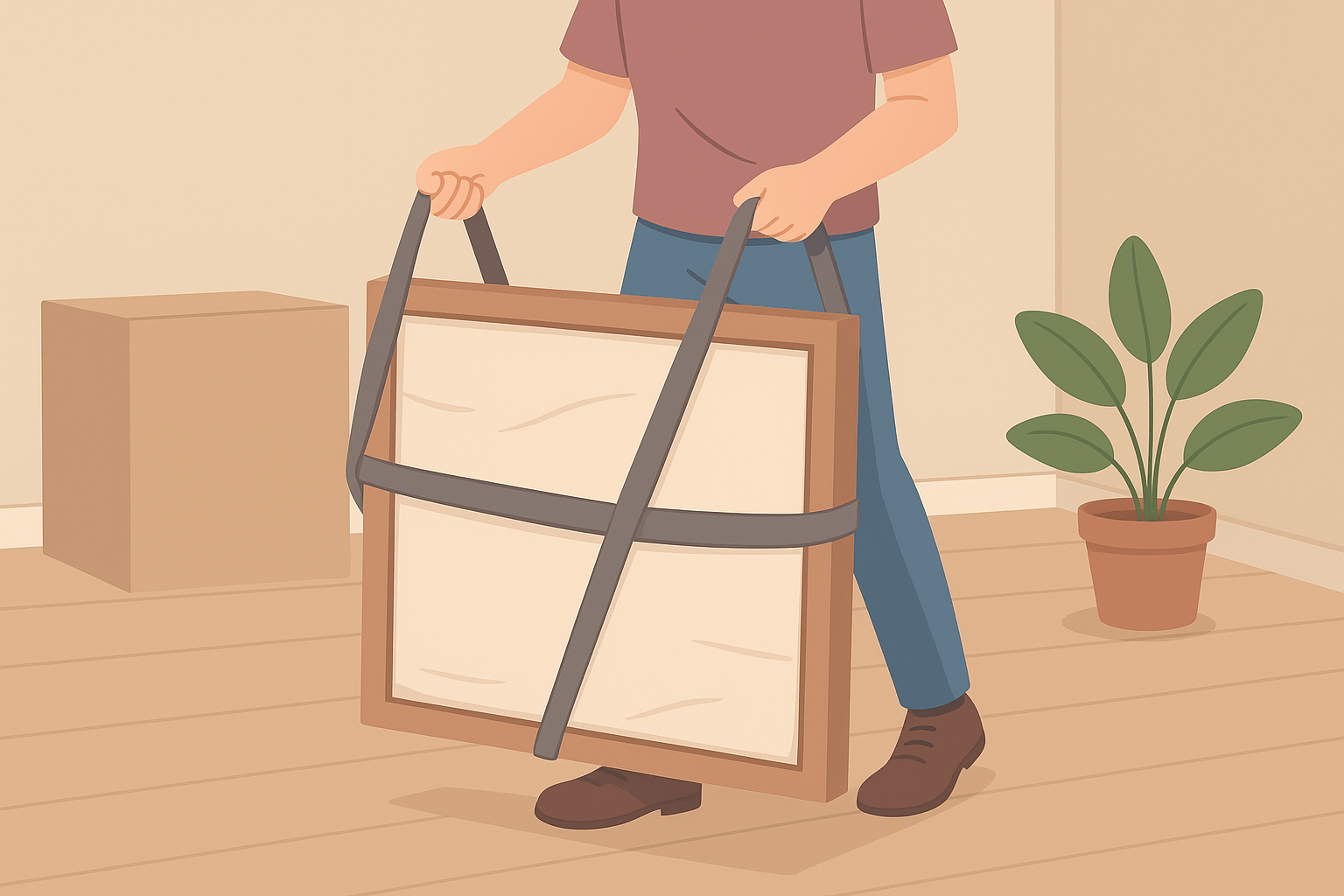

Moving fragile belongings is often the most stressful part of relocating. Whether you’re packing glassware, mirrors, electronics, or artwork, delicate items require steady handling at every stage of the move. Moving straps make a major difference by improving balance, control, and weight distribution, which keeps fragile pieces far safer during lifting and transport.
This guide walks you through the best way to secure fragile items with moving straps, using a smooth, reader-friendly format designed for clarity and practical use.
Fragile belongings can crack, chip, or break with even minimal impact. Their sensitive materials and uneven shapes make them challenging to carry securely. Using tools that offer stability—like moving straps—helps prevent accidents. Understanding how the best moving straps for your needs distribute weight gives insight into why they’re effective for protecting delicate objects.
Straps shift much of the load away from your hands and onto stronger muscle groups, letting you lift fragile pieces in a controlled, balanced manner.
Moving straps support awkward or delicate items by keeping them upright and stable. They also reduce sudden jerks, slips, and uneven tilting, which are common causes of damage.
Key advantages include:
The added stability is especially important for objects that cannot withstand rough movement.
Some belongings are more vulnerable due to their material or structure. Moving straps help secure items such as:
Straps help you carry these items more securely by allowing smoother, controlled movement.
Different fragile items require different strap designs. Learning how choosing the right moving straps affects support helps you determine which type matches your fragile belongings.
These support tall or wide fragile items by spreading weight across your upper body.
Ideal for compact but heavier fragile boxes, these provide helpful leverage and stability.
Before securing straps, wrap each fragile piece with a protective layer. Padding absorbs impact and prevents surface damage.
Effective options include:
Padding ensures the straps never apply direct pressure to sensitive surfaces.
Where you place the straps determines how secure the item will be. Proper placement becomes easier to understand when you follow the general methods described for using moving straps and apply them to fragile pieces.
Examples:
Balanced positioning keeps the item stable throughout the lift.
A quick test lift helps ensure the item feels centered and secure. Check for slipping straps, uneven weight distribution, or shifted padding. If anything feels unstable, adjust before moving.
Questions to consider:
Preventing imbalance early protects the fragile parts of the item later.
Fragile items are most vulnerable when navigating uneven ground or narrow areas. Moving straps offer controlled handling, but slow, steady pace is essential.
Applying techniques similar to those used when people safely descend stairs with lifting straps helps maintain control when going up or down steps.
Tips for narrow spaces:
Smooth movement protects delicate surfaces and edges.
Even after reaching the truck, secure placement remains crucial. Fragile items should stay low, stable, and protected from shifting.
Best practices:
This prevents sudden impact during driving.
Lifting fragile items works best with two people. The balanced support improves safety and makes each motion smoother. Explanations of the science behind lifting straps show why teamwork results in steadier lifting.
Fatigue affects your grip and coordination. Taking short breaks keeps you steady so fragile items stay safe throughout the move.
Labeling keeps everyone aware of which items require extra caution during carrying or loading. While straps provide stability, labels ensure consistent careful handling.
Moving straps make transporting fragile items much safer by offering balance, leverage, and controlled movement. With proper padding, correct strap placement, and mindful navigation, you can protect delicate belongings from common moving risks. Whether you’re dealing with mirrors, electronics, glass tables, or decorative pieces, moving straps help ensure they arrive safely at your new home.
