
Moving Containers
Recommendation
Moving Container Reviews
Recommendation
Truck Rentals Reviews
Storage Recommendations
Storage Review
Junk Removal Recommendations
Junk Removal Reviews
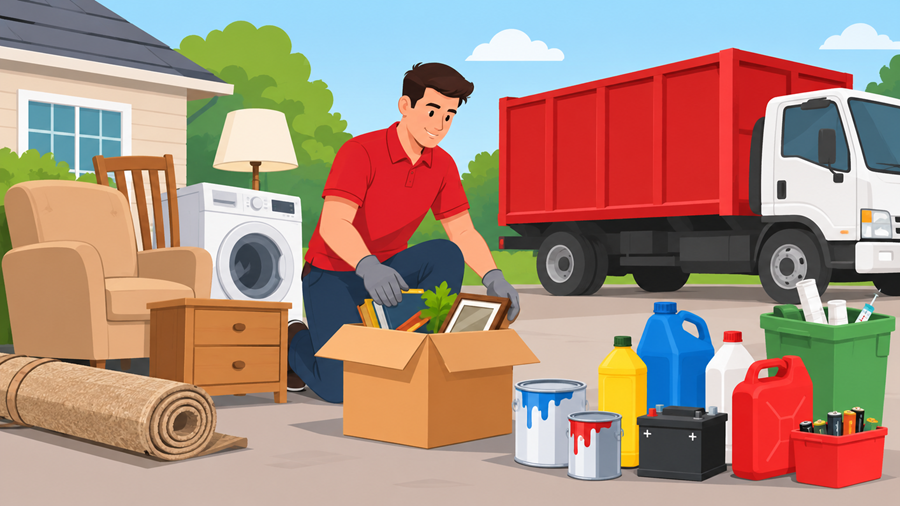

When planning a home cleanout, garage decluttering project, or move, knowing what a junk removal company will and will not accept can save you time, money, and frustration. Although professional services can haul away furniture, appliances, yard waste, and many household items, certain materials may be restricted because of safety risks, environmental regulations, or disposal requirements.
Understanding what items Junk King does not take helps you prepare for your appointment, separate restricted materials, and find the right disposal option for anything left behind. Acceptance policies can vary by location, so confirming the rules with your local team before scheduling a pickup is always a smart move.
According to the company’s official items we take and don’t take policy, most household junk can be collected, but hazardous waste is excluded from its standard hauling service. The restrictions cover materials that could endanger workers, damage equipment, or require specialized disposal.
Here are the main categories to check before booking.
Paint is one of the most common items that creates confusion during a home cleanout. Leftover liquid paint, paint thinners, varnishes, and solvents may contain chemicals that require special handling.
Other examples include:
Empty, completely dried paint cans may be accepted in some locations, but liquid paint should not be assumed acceptable. Check with the local team before placing any container in your pickup pile.
Garden sheds often contain products that homeowners have not used for years. Weed killers, insecticides, pesticides, and certain fertilizers may pose risks when stored or discarded incorrectly.
These materials can contaminate soil and water or expose workers to harmful substances. They should not be mixed with ordinary household rubbish.
Keep the original labels intact when possible and contact your local household hazardous waste collection program for disposal instructions.
Automotive fluids and fuel containers need special attention during garage cleanouts. Gasoline, diesel, motor oil, antifreeze, and similar liquids may fall outside standard collection services.
Flammable liquids can ignite during transport or disposal, while improperly discarded automotive fluids can harm the environment.
Before arranging a pickup, separate these products from furniture, scrap metal, and other accepted materials. Never pour fuel, oil, or chemicals into household drains or onto the ground.
Batteries are another important category to check before scheduling collection. The company lists lead-acid and lithium-ion batteries among its excluded materials.
Examples include:
Lithium-ion batteries can overheat or catch fire when damaged, crushed, or improperly handled. Lead-acid batteries also contain corrosive materials.
Use a designated battery recycling or hazardous waste collection program. Do not place damaged or swollen batteries in ordinary rubbish, and contact your local fire or waste authority for safe handling advice.
Ammunition and explosive materials are not suitable for ordinary junk hauling. This category may include live ammunition, explosives, and certain fireworks.
Never place these items in a general pickup pile or attempt to dismantle them yourself. Contact local law enforcement or the appropriate emergency or hazardous-materials authority for instructions on safe disposal.
For immediate danger, such as a suspected explosive device, keep your distance and contact emergency services.
Medical waste can expose collection workers and other people to infection or injury. Needles, syringes, contaminated medical supplies, and other regulated clinical waste require appropriate disposal procedures.
Do not mix loose sharps with regular household trash or place them in bags intended for a collection crew.
Use an approved sharps container and consult your healthcare provider, pharmacy, or local waste authority about available collection options.
Some renovation and demolition materials require specialized handling because of the substances they contain.
Examples include:
Asbestos fibers can become airborne when disturbed, creating serious health risks. Mercury can also be harmful when released.
Do not cut, break, sand, or remove suspected asbestos materials just to make them easier to haul away. Contact a qualified asbestos professional or your local environmental authority for guidance. Mercury-containing products should go through an appropriate collection program.
These exclusions are consistent with the company’s published hazardous waste guidance.
Not everything that requires careful disposal is automatically excluded. Many bulky household items are accepted through standard removal services, even when they are broken, outdated, or difficult to move.
The important distinction is whether the item itself contains restricted materials or needs specialized handling.
Old televisions, computers, printers, washing machines, refrigerators, and other appliances are listed among the items the company can commonly remove.
However, batteries and hazardous components may have separate restrictions. Confirm the requirements for unusual equipment or items with damaged power cells before arranging collection.
Sofas, chairs, bed frames, mattresses, tables, bookcases, and similar furnishings are typical junk removal items. They can often be collected during a single visit, along with other accepted household belongings.
Furniture with chemical contamination, sharp exposed components, or unusual construction may need individual assessment.
Light renovation debris, old timber, yard waste, branches, and similar materials may qualify for collection. However, some locations impose restrictions on particularly heavy loads, specialist materials, or certain types of rubble.
Never assume that every building material is acceptable simply because the company offers construction debris removal. Asbestos-containing materials and other restricted substances remain a separate concern.
For a broader overview of arranging a cleanout, read this junk removal guide.
A little preparation can help prevent delays and make the collection process easier.
Create a separate area for paints, fuels, chemicals, batteries, and other potentially dangerous products. Keep them away from items intended for collection.
Do not open unknown containers or mix products to save space. Unidentified liquids should be treated cautiously until a qualified waste professional advises you otherwise.
Service availability and disposal rules can differ between locations. An item accepted by one franchise may require special arrangements or be excluded by another.
Before confirming your appointment, provide the crew with an accurate list of anything unusual, heavy, damaged, or potentially hazardous.
Municipal household waste programs, approved recycling centers, battery collection points, and licensed hazardous-materials contractors can help with items excluded from ordinary hauling.
For a larger cleanout, it may be practical to use a professional service for accepted belongings and arrange separate disposal for restricted materials.
Ask what the quoted price covers, whether special handling is available, and whether any items require separate arrangements. This is especially useful when combining furniture, appliances, garden waste, and renovation debris in one visit.
For an overview of the company’s service and customer considerations, see this junk king review.
Pricing usually depends on the volume of accepted material, the service provided, and local operating policies. Restricted materials may not be eligible for collection at any price through the standard service.
That means paying a higher fee does not necessarily make an excluded item acceptable. Ask about restrictions before requesting an estimate rather than assuming an additional charge will resolve the issue.
To understand the pricing model, review this breakdown of junk king prices.
For alternative providers, compare the best junk removal companies and verify their acceptance policies before booking.
Wondering whether [junk king near me] is the right option? Start by checking the nearest location’s rules, service area, and availability. The question of [is junk king expensive] depends on the amount of material, the service required, and the alternatives available in your area.
When a cleanout is part of a long-distance relocation, coordinating removal before packing can also make the move easier. You can compare the best interstate moving companies separately from your junk hauling provider.
The company generally excludes hazardous materials such as liquid paint, chemicals, fuels, certain batteries, ammunition, medical waste, asbestos, and mercury-containing materials.
Empty, completely dried paint cans may be accepted in some locations, but liquid paint and solvents are generally excluded.
Lead-acid and lithium-ion batteries are listed as excluded materials, so contact an appropriate battery recycling or disposal program.
Yes, many electronics and appliances are accepted, although batteries and hazardous components may have separate restrictions.
Contact your municipal waste authority, a designated household hazardous waste collection program, or a licensed specialist for safe disposal options.
