
Moving Containers
Recommendation
Moving Container Reviews
Recommendation
Truck Rentals Reviews
Storage Recommendations
Storage Review
Junk Removal Recommendations
Junk Removal Reviews
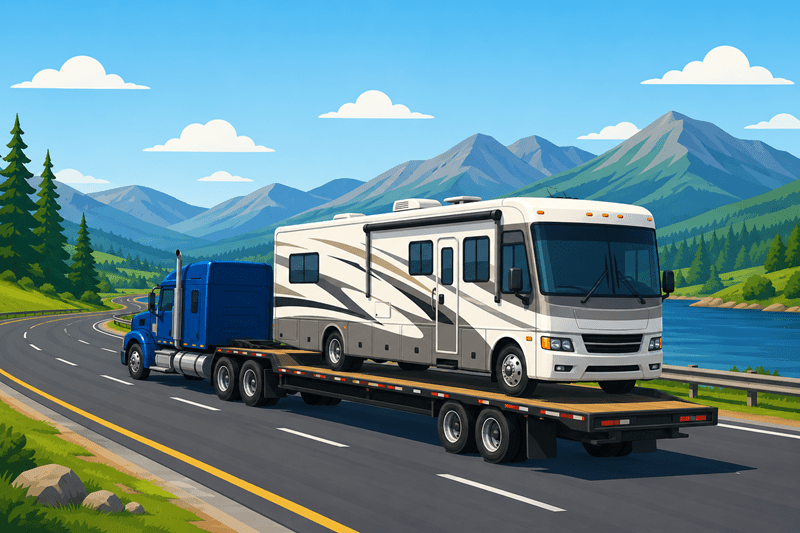

Moving an RV to another state takes more planning than most people expect. Whether you’re relocating permanently, buying a camper from another region, or preparing for long-term travel, the process involves logistics, timing, transport regulations, and cost considerations that can quickly become overwhelming.
From large motorhomes to towable campers, every type of RV requires a slightly different approach. The right transport method can help protect your investment, reduce stress, and prevent expensive mistakes during the move.
This guide explains everything you need to know about transporting recreational vehicles safely and efficiently across state lines, including shipping methods, pricing factors, insurance tips, and how to choose the right transport company.
Unlike standard vehicles, RVs are larger, heavier, and more complex to transport. Their size affects route planning, fuel expenses, permits, and even seasonal scheduling.
Some owners choose to drive the RV themselves, while others hire professional carriers to manage the move. The best option depends on the vehicle’s size, condition, distance, and your comfort level with long-distance driving.
Professional transport becomes especially valuable when moving oversized rigs through mountain roads, busy highways, or unfamiliar regions.
Different RV categories require different transport solutions.
Class A, B, and C motorhomes are usually driven or hauled using specialized equipment. Larger motorhomes often need experienced operators familiar with oversized vehicle handling.
Travel trailers are commonly moved using flatbed or tow-away services. Their weight and hitch configuration determine the best shipping option.
These require heavy-duty towing equipment and skilled handling due to their unique coupling systems.
Smaller units are generally easier and more affordable to relocate, though long-distance shipping still benefits from professional coordination.
There is no one-size-fits-all shipping method. The right choice depends on your RV type, budget, and timeline.
Hiring professionals is the safest and most convenient option for most owners. Specialized carriers understand state regulations, oversized permits, and proper handling procedures.
If you are already researching reliable interstate moving and storage companies, it often makes sense to work with providers that also coordinate vehicle or RV logistics during a larger relocation.
Some owners prefer driving the RV personally to save money. While this can work for smaller units, it adds fuel expenses, lodging costs, maintenance risks, and significant travel time.
Long cross-country routes can also put unnecessary wear on tires, brakes, and engine systems.
Tow-away shipping involves a professional driver towing your trailer or fifth wheel directly to the destination. This is a common option for towable RVs and can be more affordable than flatbed hauling.
Flatbed transport is often used for smaller campers or non-operational units. It offers additional protection but usually comes at a higher price point.
The total price varies widely depending on several key details.
Longer routes naturally increase transport pricing. Cross-country shipping is significantly more expensive than regional moves.
Larger RVs require specialized trailers, permits, and additional fuel usage. Oversized vehicles may also need route restrictions or escort services.
Summer months usually have the highest transport demand because many families relocate or travel during warmer seasons.
Remote areas or locations with narrow roads can increase transport complexity and cost.
Operational RVs are easier and cheaper to move. Non-running units require additional loading equipment.
Understanding the full cost of transporting vehicle options beforehand helps avoid surprise expenses during the booking process.
Proper preparation helps reduce risks during shipping.
Most transport companies recommend removing loose items inside the RV. Shifting objects can cause damage during transit.
Tires should be properly inflated, and fluid leaks should be addressed before transport begins.
Retract awnings, antennas, slide-outs, and stabilizers to prevent damage on the road.
Take detailed photos of the interior and exterior before pickup. This helps support any future insurance claims if needed.
Turn off propane systems, disconnect power sources, and secure batteries according to the carrier’s guidelines.
Most transport companies provide basic cargo coverage, but policy limits can vary significantly.
For expensive motorhomes or luxury campers, additional protection may be worthwhile. Many owners already carrying recreational vehicles insurance discover their existing policy may not fully cover transport-related incidents.
Before shipping, ask both your insurance provider and transporter about:
Always request written proof of carrier insurance before booking.
Not all transport providers specialize in RV shipping. Choosing an experienced company can make a major difference in safety and reliability.
Interstate transport companies should have active USDOT and FMCSA registration.
Look for detailed reviews discussing communication, delivery timing, and vehicle condition upon arrival.
Some customers compare carriers alongside trusted best auto transport companies when evaluating broader moving and transport reliability.
Transporting a large Class A motorhome is very different from shipping a sedan. Confirm the company has experience handling your specific RV type.
Avoid unusually low estimates that may hide additional fees later.
A reliable company should clearly explain:
Most RVs are shipped using open transport because of their large dimensions. However, certain smaller camper vans or specialty vehicles may qualify for enclosed shipping.
The right choice depends on the RV’s value and your budget.
Many people relocating long distance need both their RV and personal vehicle moved simultaneously.
In these situations, coordinating with providers offering auto transport services can simplify scheduling and reduce overall relocation stress.
Some transport companies even bundle vehicle and RV shipping together for lower combined pricing.
Booking early gives you more flexibility and often better pricing.
Spring and early summer are peak seasons. Reserving transport several weeks in advance can help secure preferred pickup dates.
Winter routes may involve snow delays, while hurricane season can affect southern states.
Most RV shipments use estimated delivery ranges instead of guaranteed arrival dates. Weather, traffic, and road conditions can all impact timing.
Choosing between self-driving and professional shipping depends on several factors.
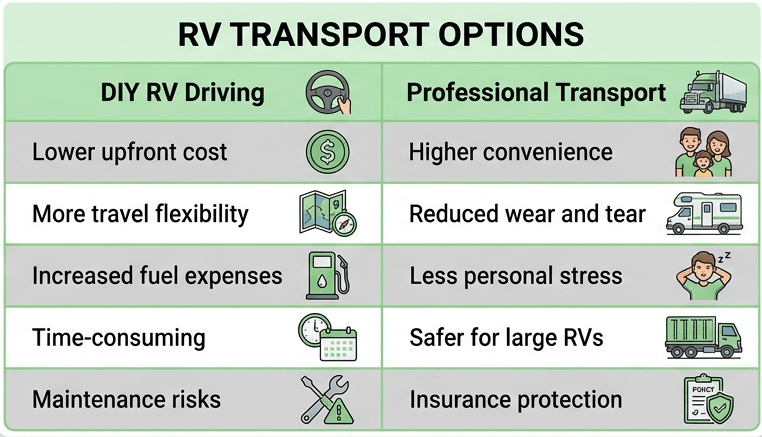
For shorter distances, self-driving may work well. For cross-country moves or oversized rigs, professional transport is usually the safer choice.
Before signing any agreement, ask the transporter:
Clear communication early can prevent major misunderstandings later.
Many shipping issues happen because owners overlook small details.
Peak-season availability disappears quickly.
Always verify what is actually covered during transit.
Unsecured belongings can damage cabinets, walls, and appliances.
The cheapest option is not always the safest or most reliable.
Always review the bill of lading carefully during pickup and delivery.
A smoother move often comes down to preparation.
Some roads restrict oversized vehicles or have low clearances.
Transport schedules can shift because of weather and traffic conditions.
Carry registration papers, insurance documents, and transport agreements separately.
Most modern carriers provide tracking updates or regular communication throughout transit.
If you are also shipping a second vehicle, researching providers like sherpa auto transport may help you compare different service experiences before making a final decision.
Transporting an RV across state lines involves much more than simply hiring a driver. The size of the vehicle, route complexity, insurance protection, and transport method all influence the overall experience.
Taking time to research carriers, prepare the RV properly, and understand pricing structures can help you avoid delays, damage, and unnecessary expenses.
Whether you’re relocating permanently, purchasing an RV from another state, or planning extended travel, working with experienced transport professionals helps ensure your RV arrives safely and on schedule.
Pricing depends on distance, RV size, season, and transport type.
Most companies allow limited items, but loose valuables are discouraged.
Most licensed carriers provide basic cargo insurance coverage.
Delivery timelines vary based on distance, weather, and route conditions.
Professional RV transport services are generally the safest option.
