
Moving Containers
Recommendation
Moving Container Reviews
Recommendation
Truck Rentals Reviews
Storage Recommendations
Storage Review
Junk Removal Recommendations
Junk Removal Reviews
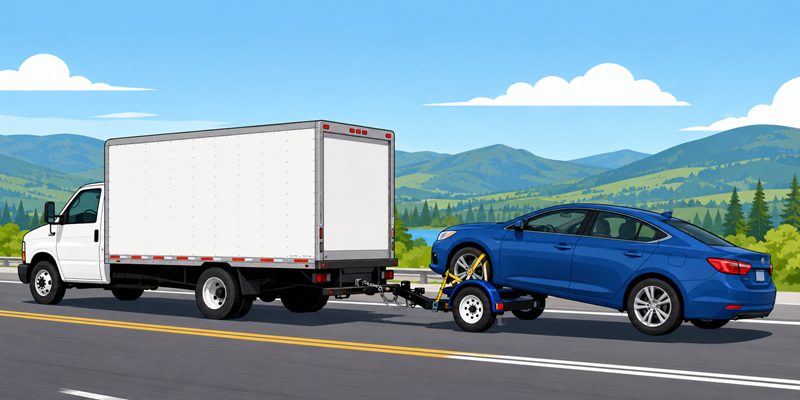

Moving a car across state lines can complicate an already busy relocation. This option may seem like the affordable middle ground between driving the vehicle yourself and hiring a professional carrier. But can you actually use one for a long-distance move? The answer depends on your vehicle, towing setup, route, and comfort level behind the wheel.
Key Takeaway
Yes, this equipment can be used for a long-distance move, but it is not automatically the best option. It lifts the front wheels while the rear wheels remain on the pavement.
Before reserving equipment, check the rental provider’s current weight limits, vehicle restrictions, hitch requirements, and one-way policies. Availability and terms can vary by location.
A tow dolly is designed to support the front end while the rear wheels remain on the road.
The equipment attaches to the hitch of a properly equipped moving truck. The car is driven onto the ramps, the front wheels are secured, and safety chains and straps are connected according to the rental company’s instructions.
The rear wheels remain on the road throughout the trip. Because the vehicle is only partially supported, you need to confirm that its transmission and drivetrain are suitable for this towing method.
Never assume a car is compatible simply because it fits within the equipment’s weight limit. The owner’s manual and rental company requirements should both be checked before departure.
For a compatible vehicle, a tow dolly can be a practical choice when cost matters.
This setup can make sense when you are moving a compatible vehicle and want to reduce the cost of transporting it separately. It can also be convenient when you are already renting a moving truck and want to make one trip instead of arranging a second driver.
A small sedan that meets the rental company’s size and weight requirements may be a practical candidate. Keeping the car with your household move can also simplify your travel plans.
However, not every vehicle is suitable. Some cars require driveline modifications or cannot be towed with their drive wheels turning. Verify compatibility before booking.
The dolly is usually more compact and less expensive, but that lower price comes with trade-offs. You need to manage loading and securing carefully, allow more room for turns and braking, and monitor the towed vehicle throughout the trip.
A car carrier supports all four wheels, which generally provides greater protection from road debris and tire wear. It may also be the safer fit for vehicles that should not have their drive wheels rolling on the pavement.
If you are comparing moving providers, our guide to the best interstate moving companies can help you evaluate your broader relocation options.
Before using a tow dolly, confirm that your vehicle’s drivetrain can handle the arrangement.
A tow dolly may work for some front-wheel-drive vehicles, while AWD, 4WD, rear-wheel-drive, electric, and specialty vehicles can have additional requirements.
Before booking, check:
If the manufacturer says the vehicle should not be towed with its drive wheels turning, do not use a setup that violates that instruction.
A tow dolly rental can look inexpensive until all trip-related charges are added.
When searching for a tow dolly rental, compare more than the advertised daily rate. The final price may depend on rental duration, mileage, location, truck rental, taxes, protection plans, and other charges.
Someone searching for a tow dolly rental near me may find several local options, but availability can change during peak moving seasons. Reserving early is wise when your dates are fixed.
If your goal is the cheapest tow dolly rental, compare complete quotes rather than headline prices. A higher base rate can sometimes produce a lower overall bill after mileage and add-ons are included.
A Uhaul tow dolly can be an option for eligible vehicles when paired with compatible equipment. U-Haul offers towing equipment for one-way moves, but vehicle restrictions, availability, and pricing can vary.
Before booking, confirm the exact truck and equipment combination available for your route. Inspect the equipment before leaving and make sure the vehicle is loaded and secured according to the rental instructions.
For considering a budget rental truck, check its towing requirements before assuming a dolly can be added to your reservation.
Treat every tow dolly trip as a serious highway towing task.
Before departure, inspect the tires, straps, safety chains, lights, coupler, and wheel assemblies. After driving a short distance, stop somewhere safe and recheck the connections.
Also review your roadside assistance and rental protection coverage before leaving. A breakdown with loaded towing equipment can be more complicated on an interstate.
If managing a tow dolly feels stressful, professional transport may be worth the added cost.
Not every long-distance move should involve towing your own car. Professional auto transport services can be a better choice when you want to avoid driving a large rental truck with a vehicle attached.
Professional transport may also make sense for expensive vehicles, very long routes, or moves where you do not want to manage loading, straps, highway towing, and roadside risks.
Our comparison of top car mover companies can help if you are weighing a carrier against DIY towing.
For a deeper explanation of the process, review this shipping a car guide before requesting quotes. Understanding pickup, delivery, insurance, and vehicle preparation makes price comparisons easier.
If you are comparing professional carriers, AmeriFreight is one company worth researching alongside other auto transport providers. An amerifreight car shipping review can help you assess service features, pricing considerations, and customer feedback.
Searches for car shipping amerifreight or car transport amerifreight often come from movers who want a professional alternative to towing. Compare a complete transport quote with your actual DIY expenses, including fuel, rental equipment, tolls, lodging, and your time.
Likewise, car shipping cost amerifreight should not be viewed as a fixed number. Route, vehicle type, transport method, season, and availability can all affect a quote.
A tow dolly works best when the savings clearly outweigh the added driving responsibility.
Start by calculating the true cost of towing. Add the moving truck, equipment, fuel, tolls, protection, possible lodging, and extra driving time.
A tow dolly can still be a strong value when the vehicle is compatible, the route is manageable, and you are comfortable handling the equipment. The right choice should balance cost, safety, convenience, and vehicle requirements.
For the right vehicle and route, a tow dolly remains a useful DIY transportation option.
So, can you use this equipment for a long-distance move? Yes, but treat it as a vehicle-specific towing solution rather than a universal answer.
For a compatible car and properly equipped rental truck, this setup can reduce transportation costs and keep the vehicle with your household move. For vehicles with strict drivetrain requirements, extremely long routes, or owners who prefer convenience, a full car carrier or professional transport may be better.
The smartest approach is to verify compatibility first, compare complete costs, and choose the option that gives you the right balance of price, safety, and peace of mind.
A tow dolly can be economical, but compatibility should always come first.
Yes, if the vehicle, truck, and equipment are approved for the route and towing configuration.
Usually, but total cost depends on rental, mileage, fuel, protection, and other moving expenses.
Some AWD vehicles require special procedures or cannot be towed this way, so check the owner’s manual first.
It can be safe when equipment is compatible, properly secured, inspected, and driven carefully.
Professional shipping may be better when convenience, vehicle protection, or a very long route matters more than DIY savings.
