
Moving Containers
Recommendation
Moving Container Reviews
Recommendation
Truck Rentals Reviews
Storage Recommendations
Storage Review
Junk Removal Recommendations
Junk Removal Reviews
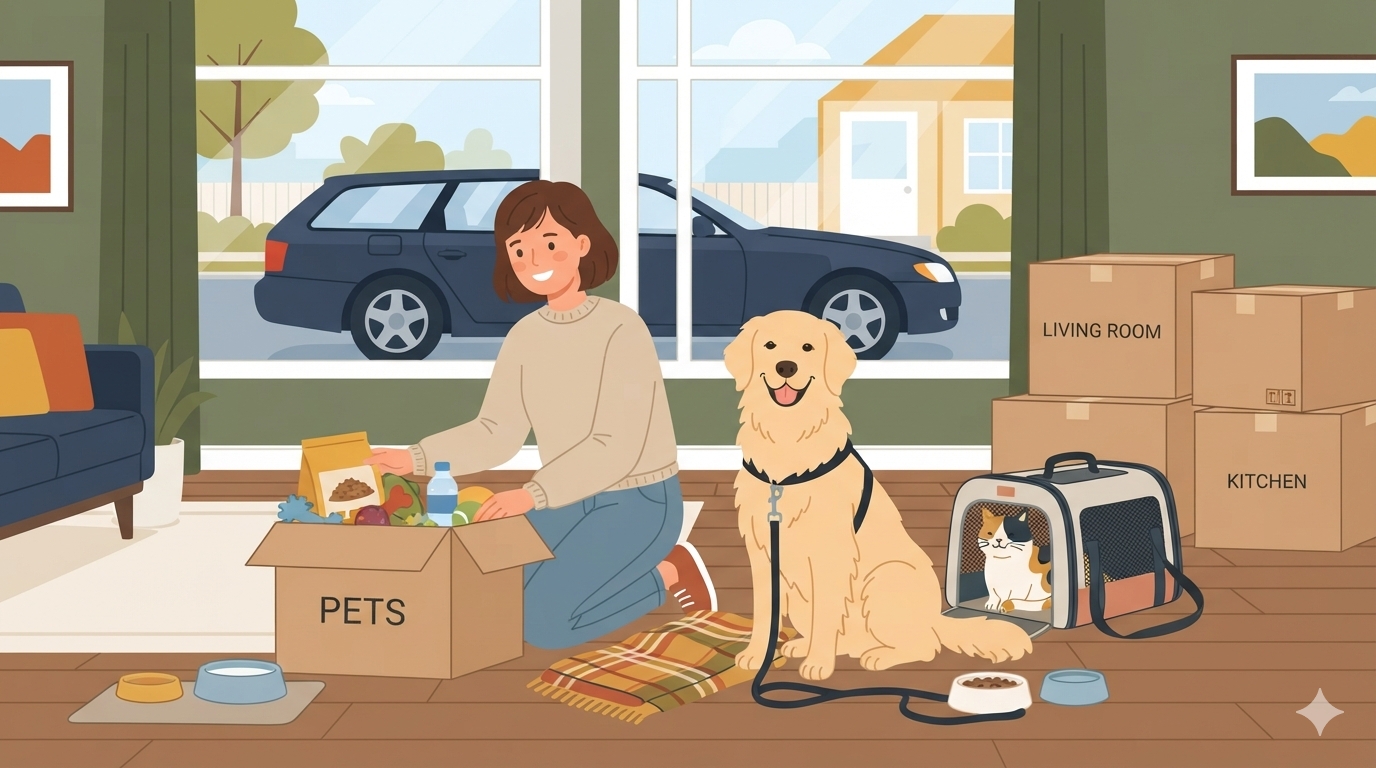

Moving with pets can be manageable when preparation starts early and every stage of the journey has a clear plan. Long-distance relocation introduces unfamiliar sounds, routines, vehicles, people, and surroundings, so animals may need extra reassurance. With thoughtful planning, moving with pets can be safer, calmer, and easier on the entire household.
Packing boxes, rearranged furniture, open doors, unfamiliar people, and household noise can make pets restless or anxious.
Dogs and cats may react by hiding, vocalizing, eating less, becoming clingy, or changing normal bathroom habits. Some animals show very few signs until travel or arrival, which makes preparation especially important.
Distance adds another challenge. A trip lasting several hours requires planning around food, water, bathroom breaks, rest, weather, and safe accommodation. Moving with pets works best when those details are planned rather than improvised.
A pet-specific checklist should be part of the household moving plan.
Maintain regular meal times, walks, play sessions, and rest periods while packing. Familiar schedules provide stability when the physical environment starts changing.
Leave favorite bedding, toys, blankets, and food bowls available until late in the packing process. Familiar smells can provide comfort during travel and arrival.
Check collars, identification tags, microchip details, vaccination records, medication information, and veterinary contacts. Keep copies in a travel folder and secure digital location.
For interstate travel, review destination requirements and transportation rules well before departure.
Choose transportation based on the animal’s size, temperament, health needs, and travel experience. For car trips, use a properly sized carrier, crate, or safety harness.
Introduce carriers and crates before moving day. Short practice sessions can make the setup feel familiar rather than turning it into a new source of stress.
Keep water available and plan breaks in safe locations. Avoid leaving an animal unattended in a parked vehicle, particularly during extreme temperatures.
Keep food, medications, records, cleaning supplies, and other essentials within easy reach.
Moving day brings extra activity, open doors, loud equipment, and unfamiliar people, increasing escape risks.
Use a closed room away from movers and heavy activity. Place familiar bedding, water, food, toys, and a litter box where appropriate.
A note on the door can remind everyone that the room is off-limits.
Keeping pets separated from moving equipment also reduces the risk of accidental injury. The goal is to give them a predictable space while the household work continues.
For a long relocation, map out safe stops where a dog can stretch, drink water, and take a bathroom break.
Owners working with long distance moving companies should confirm exactly what the movers handle. Household movers generally focus on belongings, while transportation and daily animal care require separate arrangements.
Researching the best interstate moving companies can make the household side of a relocation more organized, leaving more attention for pet travel planning.
Plan around weather, accommodation policies, and access to veterinary care.
The best moving with pets plans reduce unnecessary changes rather than trying to make the journey perfect. These simple practices can help:
Do not remove every familiar item at once. A bed, blanket, or favorite toy can provide reassurance when the surroundings look different.
Moving is already a major disruption. Keep food, exercise, sleep, and medication schedules as consistent as practical.
Some animals seek attention during stressful periods, while others prefer to retreat. Allowing access to a quiet area gives them control over how much stimulation they receive.
Use familiar commands, gentle handling, and a steady voice. Consistent behavior from people can make unfamiliar situations easier for animals to understand.
For additional preparation ideas, this comprehensive guide for pets moving covers practical considerations before departure.
Arrival does not instantly end relocation stress. The new home contains unfamiliar smells, sounds, rooms, outdoor areas, and neighborhood activity.
Set up one quiet room with familiar bedding, food, water, toys, and other essentials.
Cats and dogs may need gradual access to rooms, outdoor areas, and new routines.
Locate a nearby veterinary clinic and emergency animal hospital before they are needed. Having these details ready can be valuable during the first few days.
Every animal responds differently to relocation. Some become comfortable quickly, while others need more time.
Continue familiar feeding and exercise schedules. Predictability helps establish a sense of normal life after a major environmental change.
For dogs, secure doors, gates, windows, and fencing before allowing greater freedom outdoors. Initial walks should use a secure leash and familiar handling.
This resource on how to help pets adjust to a new home after moving offers additional ideas for creating a smoother adjustment period.
Complex routes, multiple travel days, or special handling needs may make moving with pets services worth researching.
Ask providers about experience, safety procedures, travel conditions, communication, emergency protocols, and what happens during delays. Clear answers can help owners understand the service before making arrangements.
Review these tips and tricks for a smooth transition with pets for departure and arrival planning.
Packing every pet belonging too early can remove familiar comforts before the animal is ready. Keep important bedding, toys, food, and supplies accessible until they are no longer needed.
Unsecured transportation is another serious concern. Pets should not roam freely around a moving vehicle because sudden stops can cause injuries or dangerous distractions.
Avoid making unnecessary changes to food or medication during the relocation. Consult a veterinarian about medication changes or special travel needs.
A new property also needs a safety check. Inspect gates, fencing, windows, balconies, doors, and possible escape routes before giving an animal more freedom.
These suggestions can help your pets make the transition easier and faster by focusing on preparation and familiar routines.
Update identification and records, discuss travel needs with a veterinarian, introduce the carrier or crate, and plan the route.
Keep routines stable, finish most household packing, prepare the travel kit, and confirm transportation and accommodation details.
Use a secure quiet room, keep essential supplies accessible, and prevent unnecessary contact with open doors or moving equipment.
Set up a familiar room first, provide food and water, maintain normal routines, and allow gradual exploration.
Monitor behavior, appetite, bathroom habits, exercise, and comfort while establishing a predictable routine.
Moving with pets requires more planning than relocating household belongings, but a structured approach can reduce avoidable stress. Start early, keep transportation secure, preserve familiar routines, and make the new environment comfortable.
After arrival, maintain predictable habits and allow gradual exploration.
The aim of moving with pets is not to eliminate every unfamiliar experience. It is to make each stage as safe, predictable, and comfortable as possible.
Start several weeks ahead so carriers, records, routines, and travel plans can be handled without rushing.
Familiar items, secure transportation, predictable breaks, and calm handling can reduce unnecessary stress.
A quiet closed room or trusted temporary care can reduce exposure to noise, strangers, open doors, and escape risks.
Every animal differs, but consistent routines and gradual exploration can make settling in easier.
Pack food, water, bowls, medication, records, identification, cleaning supplies, a carrier or restraint, and comfort items.
