
Moving Containers
Recommendation
Moving Container Reviews
Recommendation
Truck Rentals Reviews
Storage Recommendations
Storage Review
Junk Removal Recommendations
Junk Removal Reviews
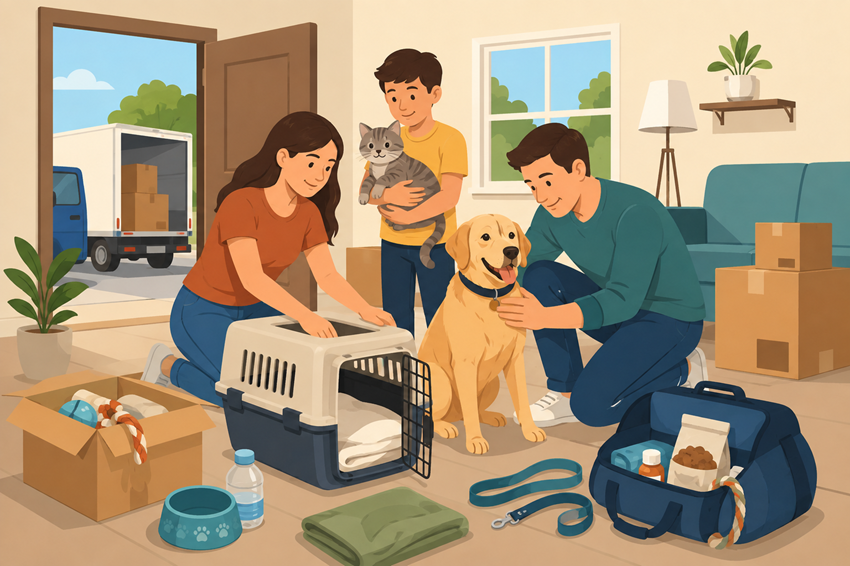

Moving to a new home takes careful planning, and relocating with a dog, cat, or another companion animal adds another layer of responsibility. A pet-friendly moving plan helps you organize travel, packing, veterinary needs, routines, and the first few days in the new home without added stress. With the right checklist, the move can be safer and more comfortable for everyone.
Key Takeaways
Pets do not understand why furniture is disappearing or why familiar rooms suddenly look different. Packing, noise, strangers, and changes in routine can make even confident animals anxious.
A thoughtful moving strategy reduces those disruptions. Build your pet’s needs into the moving schedule from the beginning rather than treating them as an afterthought.
If you are comparing professional movers, reviewing the best interstate moving companies can help you evaluate options for a longer-distance relocation.
Ideally, begin preparations several weeks before moving day. Early planning gives you time to update records, check rules, and arrange transportation.
Ask your veterinarian whether your pet needs a health certificate, vaccinations, medication refills, or other documentation for the destination. Keep digital and printed copies of important records.
For an interstate move, research the pet licensing requirements for moving to a new state well before departure because rules can differ by state, county, and municipality.
Make sure your pet’s microchip information and identification tags contain current contact details. If your phone number or address will change, update those records before the move.
One of the easiest ways to make pet-friendly moving smoother is to pack a separate bag for your pet rather than placing essential supplies inside moving boxes.
Include:
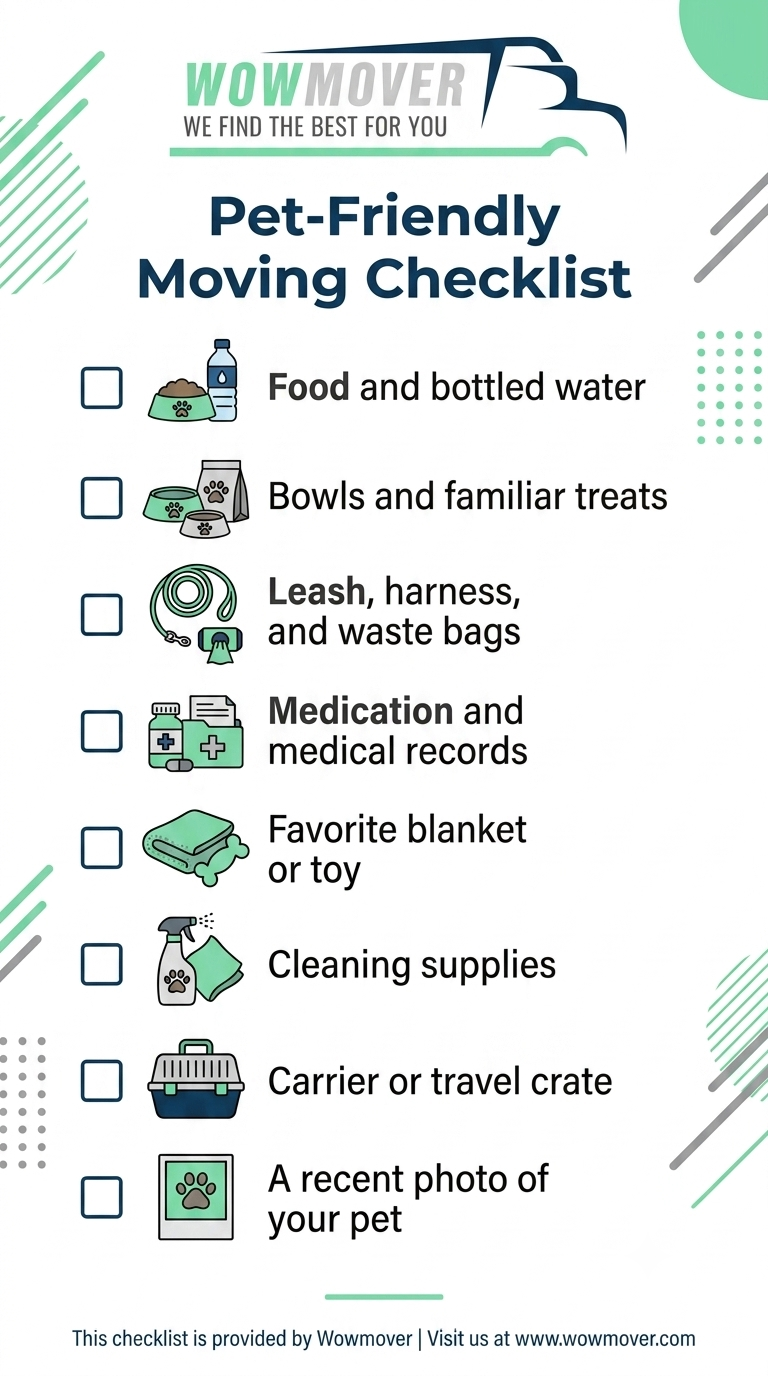
Keep this kit with you instead of putting it on the moving truck. You should be able to reach everything your pet needs without opening packed boxes.
Packing day can be confusing for animals. Doors may stay open, furniture may move around, and unfamiliar people may enter the home.
During pet-friendly moving, consider keeping your pet in a quiet, secure room away from the busiest activity. A trusted friend, family member, boarding facility, or pet sitter can also provide a calmer environment.
Maintain regular meal, walk, and rest times whenever possible. Familiar routines can help reduce anxiety.
For broader planning advice, this guide on moving with pets can help you prepare for practical relocation challenges.
Your transportation plan should reflect your pet’s size, health, temperament, and travel experience. Some pets are comfortable in a carrier, while others become anxious during long journeys.
For car travel, secure your pet with an appropriate carrier, crate, or restraint system. Never allow an animal to roam freely in a moving vehicle or leave a pet unattended in a parked car.
If air travel is necessary, check the airline’s current animal transportation rules and confirm carrier requirements before booking.
Professional pet relocation services may be useful for complicated journeys, particularly when distance, transportation arrangements, or documentation create additional challenges. Research stress-free relocation services carefully and compare what each provider actually includes.
Long-distance relocation requires more detailed scheduling than a short local move. You may need to plan rest stops, overnight stays, medication timing, and food supplies.
A pet-friendly moving plan for an international journey should also account for destination-country entry rules, veterinary documentation, vaccinations, quarantine policies, and transportation requirements.
If you are considering pet relocation international, start researching destination regulations as early as possible. Missing paperwork can disrupt your travel plans.
A qualified pet relocation company can coordinate transportation and documentation when the move is particularly complex.
Every animal responds differently to change. A confident dog may adapt quickly, while a nervous cat may need several days to feel comfortable.
Good planning means adapting the move to the individual animal rather than relying on a one-size-fits-all approach.
Cats often benefit from a secure carrier and quiet room at arrival. Dogs may need familiar walks and outdoor time to feel settled. Small animals may require carefully controlled temperatures and specialized travel containers.
On moving day, doors can remain open for hours, creating an easy escape route. This is one of the biggest practical risks during pet-friendly moving.
Use a closed room with a clear sign on the door, a secure crate, or another safe arrangement. Tell movers and visitors that your pet is inside and should not be released.
Before leaving, confirm that your pet has water, identification, and a secure carrier or restraint. Check the space once more before final departure.
If something unexpected happens, knowing how to handle unexpected challenges during a residential move can help you respond without losing track of your pet’s needs.
Arrival is only the beginning. A new home has unfamiliar smells, sounds, rooms, and outdoor surroundings.
During pet-friendly moving, start by creating a small, quiet area with familiar bedding, food, water, toys, and other comforting items. For practical tips on how to help pets adjust to a new home after moving, focus on familiar routines and give your pet time to explore gradually instead of giving access to the entire home immediately.
Keep routines as consistent as possible. Feed meals at familiar times and continue normal walks or play sessions.
Some pets settle within hours, while others need days or weeks. Watch for changes in eating, sleeping, bathroom habits, hiding, or behavior.
A calm pet-friendly moving approach continues after the boxes are unpacked. Give your pet attention without forcing interaction, and allow them to retreat to a familiar safe space when needed.
The cost of moving a pet depends on distance, transportation method, documentation, veterinary requirements, carrier needs, and whether professional assistance is involved.
When researching how much does pet relocation cost, compare the complete service rather than focusing only on the initial quoted fee. Ask what transportation, paperwork, veterinary coordination, and additional services are included.
For a family pet relocation, budgeting early can prevent last-minute decisions and help you choose the safest practical option.
During the final week, review your moving plan from start to finish.
A well-organized pet-friendly moving checklist protects more than your belongings; it protects an important member of your household. Early preparation, secure transportation, familiar routines, and a gradual introduction to the new home can make relocation much easier.
With thoughtful planning, you can turn a potentially chaotic move into a controlled transition that gives your furry friend the time and security needed to settle in.
Start several weeks ahead so you have time for veterinary checks, identification updates, and travel planning.
No; pets should travel with you or through a safe, dedicated transportation arrangement.
Yes, changes in routine and surroundings can temporarily affect appetite, sleep, behavior, and bathroom habits.
It is usually better to begin with a secure room and expand access gradually.
Keep the pet in a secure, quiet area away from open doors, heavy traffic, and unfamiliar visitors.
