
Moving Containers
Recommendation
Moving Container Reviews
Recommendation
Truck Rentals Reviews
Storage Recommendations
Storage Review
Junk Removal Recommendations
Junk Removal Reviews
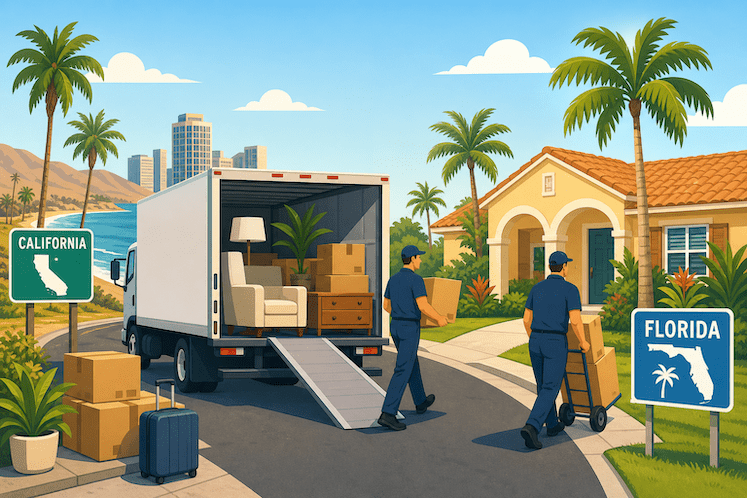

Moving from California to Florida is a major cross-country relocation, and the cost can vary more than most people expect. Distance, home size, shipment weight, moving date, service type, and add-ons all play a role in your final price.
For most long-distance moves from California to Florida, you can expect professional moving costs to range from $3,500 to $12,000+, depending on how much you’re moving and how much help you need. A small apartment may stay near the lower end, while a large household with packing, storage, or specialty items can climb much higher.
Before comparing prices, it helps to understand the basics of an interstate moving definition so you know why California-to-Florida moves are priced and regulated differently than local moves.
The average cost to move from California to Florida usually falls between:
These are general estimates, not fixed prices. A move from Los Angeles to Miami may cost differently than a move from Sacramento to Tampa because mileage, access, fuel, labor, and route demand can change the quote.
The biggest factor is usually shipment weight. Long-distance movers often price interstate moves based on the total weight of your belongings, distance traveled, and services included.
California and Florida are on opposite sides of the country, so movers are covering thousands of miles. That means more fuel, more labor hours, more equipment use, and more coordination.
Most routes from California to Florida run between 2,500 and 3,000 miles, depending on the cities involved. The farther the truck travels, the more expensive the move becomes.
There’s also demand to consider. California-to-Florida is a popular relocation route, especially for families, retirees, remote workers, and people looking for lower taxes or a different lifestyle. High demand can raise prices during peak moving season.
Not every California-to-Florida move covers the same mileage. Moving from San Diego to Jacksonville is different from moving from San Francisco to Miami.
Longer routes increase transportation costs, fuel charges, and driver time. Even a few hundred miles can affect the final estimate.
The more rooms you have, the more items you probably need to move. Larger homes require more labor, packing materials, truck space, and loading time.
A studio apartment may only require a small shipment, while a four-bedroom home may need a dedicated truck or a large share of trailer space.
Interstate movers often calculate pricing based on weight. Heavy furniture, appliances, tools, books, gym equipment, and garage items can increase your total cost quickly.
Decluttering before the move is one of the simplest ways to lower your quote. If you do not use it, love it, or need it in Florida, it may not be worth paying to move it across the country.
Full packing service is convenient, but it adds to the bill. Movers charge for labor, boxes, wrapping materials, and time.
You can save money by packing non-fragile items yourself and leaving delicate or high-value items to the professionals.
Summer is the busiest moving season, especially from May through September. Weekends and end-of-month dates also tend to cost more.
If your schedule is flexible, moving during the off-season or mid-month can help reduce costs.
Your moving quote can change if movers have difficulty accessing your home. Stairs, elevators, long carries, narrow streets, parking restrictions, and shuttle truck needs can all add fees.
This matters in California cities with tight neighborhoods and Florida communities with gated access, high-rises, or condo rules.
A DIY move from California to Florida may look cheaper at first, but the real cost can add up. Truck rental, fuel, hotels, food, tolls, insurance, equipment, and time off work all matter.
Professional movers cost more upfront, but they handle the heavy lifting, transportation, loading, unloading, and logistics. For a cross-country route, many people choose professionals because the distance is too long to manage comfortably on their own.
If you want a realistic estimate, it is smart to request a quotes from interstate movers before deciding which option makes the most sense.
Here is what a typical California-to-Florida moving budget may include:
This is usually the largest portion of the quote. It includes fuel, mileage, truck space, driver labor, and route coordination.
Movers charge for the labor needed to safely load your belongings in California and unload them in Florida.
Boxes, tape, bubble wrap, moving blankets, wardrobe cartons, and specialty packing materials can increase the total.
Basic mover liability is usually included, but it may not fully cover the value of your belongings. This is why understanding interstate moving liability is important before signing a contract.
If your Florida home is not ready when your items arrive, temporary storage may be needed. Storage-in-transit can add daily, weekly, or monthly charges.
Pianos, antiques, pool tables, motorcycles, safes, artwork, and fragile items may require special handling and extra fees.
A long-distance move means your belongings will be handled, transported, and sometimes transferred over a long route. Protection matters.
Released value protection is often included by default, but it provides limited coverage. Full-value protection costs more but can offer stronger reimbursement if items are lost or damaged.
Before choosing coverage, review the details of a moving insurance so you understand what is covered, what is excluded, and how claims work.
Many interstate movers require a deposit to reserve your move date. A reasonable deposit is common, especially during busy seasons.
However, large upfront deposits can be a warning sign. Be careful if a mover demands most of the payment before pickup or refuses to explain refund terms clearly.
A reliable company should be transparent about deposit before you agree to anything.
Because California-to-Florida moves are expensive, it is important to choose a mover carefully. Lowball estimates can be tempting, but they often lead to surprise charges later.
Watch for vague contracts, missing license information, no physical address, poor communication, and estimates given without asking about your inventory.
Before signing, review the paperwork closely and pay attention to contract red flags that may indicate a risky mover.
The less you move, the less you usually pay. Sell, donate, or dispose of items you do not need in Florida.
Focus on heavy and bulky items first. Old furniture, duplicate appliances, and boxes of unused items can add unnecessary weight.
Do not rely on one quote. Get several estimates from licensed interstate movers so you can compare pricing, services, and terms.
A good quote should explain what is included, what may cost extra, and how the final price is calculated.
If possible, avoid summer, weekends, holidays, and the last few days of the month. Flexible timing can help you secure better pricing.
Packing your own clothes, linens, books, and basic household items can reduce labor costs.
Leave fragile, oversized, or valuable items to movers if you want added protection and professional handling.
Do not underestimate how much you own. If your inventory is incomplete, the final price may increase on moving day.
Walk through every room, closet, garage, attic, and storage space before requesting quotes.
Many people move from California to Florida because Florida can be more affordable in several major categories.
Florida has no state income tax, which can be attractive for workers, retirees, and business owners. Housing may also be more affordable in many Florida cities compared with major California markets.
That said, Florida costs vary by location. Miami, Naples, and parts of South Florida can be expensive, while areas like Jacksonville, Tampa suburbs, Orlando suburbs, and parts of the Panhandle may offer more budget-friendly options.
You should compare housing, insurance, utilities, property taxes, transportation, and lifestyle costs before choosing your destination city.
Miami offers beaches, nightlife, international culture, and strong business opportunities. It is also one of the more expensive Florida markets.
Tampa is popular for families, professionals, and remote workers. It offers a strong job market, beaches nearby, and a more relaxed pace than Miami.
Orlando is often attractive for families because of its housing options, entertainment, and central location.
Jacksonville offers lower housing costs than many major Florida cities, plus beaches, neighborhoods, and a growing job market.
Sarasota is popular with retirees and people looking for a coastal lifestyle with arts, dining, and quieter communities.
A California-to-Florida move usually takes planning. Ideally, start at least 8 weeks before moving day.
At 8 weeks out, begin researching movers and decluttering. Around 6 weeks out, collect estimates and compare services. At 4 weeks out, start packing non-essential items.
During the final 2 weeks, confirm mover details, update your address, transfer utilities, and prepare essentials for travel. Keep important documents, medications, chargers, valuables, and basic clothing with you.
Delivery timelines vary, but many interstate moves from California to Florida take one to three weeks, depending on the mover’s schedule, route, and shipment type.
Before choosing a moving company, ask direct questions:
Clear answers are a good sign. Vague answers are not.
The cost of moving from California to Florida depends on your home size, shipment weight, timing, services, and destination. Most people should expect to spend several thousand dollars, with larger or full-service moves reaching five figures.
The best way to control your budget is to declutter early, compare detailed quotes, understand your contract, and choose a licensed interstate mover with transparent pricing.
A cross-country move is a big decision, but with the right planning, it can feel organized instead of overwhelming.
Most professional moves from California to Florida cost between $3,500 and $12,000+. Smaller apartments usually cost less, while large homes with packing, storage, or specialty items cost more.
The cheapest option is usually a DIY truck rental or moving container, especially if you have a small shipment. However, professional movers may be worth the cost if you want less physical work and better coordination.
Most interstate deliveries take about one to three weeks. The exact timeline depends on the mover, route, shipment size, and delivery schedule.
For many people, yes. Florida offers no state income tax, warm weather, beaches, and a different cost-of-living profile. Whether it is worth it depends on your job, lifestyle, housing budget, and preferred city.
For interstate moves, movers often consider both weight and distance. They may also factor in packing, labor, access issues, storage, and special handling.
Yes, you should review your protection options carefully. Basic coverage may be limited, so full-value protection or third-party moving insurance may be worth considering for a long-distance move.
The best time is usually during the off-season, such as fall, winter, or early spring. Mid-week and mid-month moves may also be more affordable than weekends or month-end dates.
