
Moving Containers
Recommendation
Moving Container Reviews
Recommendation
Truck Rentals Reviews
Storage Recommendations
Storage Review
Junk Removal Recommendations
Junk Removal Reviews
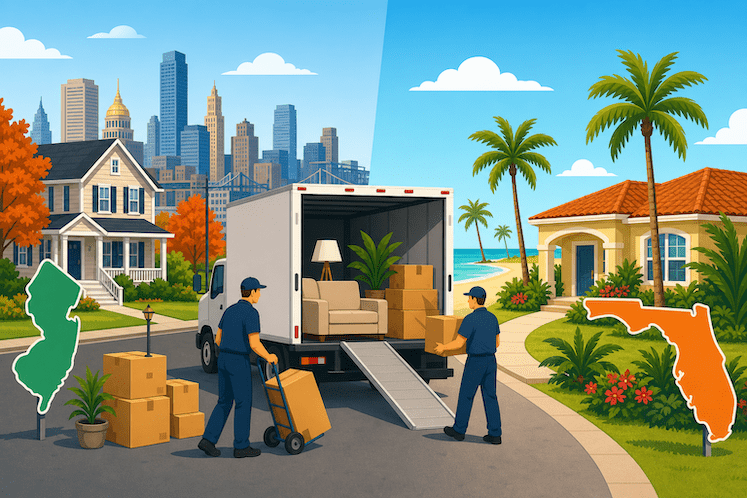

Moving from New Jersey to Florida can change more than your address. It can also change how much state tax you pay, how your paycheck looks, what your property tax bill may feel like, and how you plan for retirement, homeownership, and everyday spending.
The biggest difference is simple: New Jersey has a graduated state income tax, while Florida does not tax personal income. New Jersey taxes gross income earned or received by residents and nonresidents, while Florida’s constitution limits income taxes on natural persons, which is why Florida residents do not pay state income tax on wages, retirement income, or investment income.
That difference is one reason many people relocate from New Jersey to Florida. But income tax is only one part of the picture. Sales tax, property tax, insurance costs, home values, local fees, and residency rules all matter when deciding whether the move will actually save you money.
If you are already comparing movers and planning your budget, getting a free moving quote can help you estimate relocation costs alongside your potential tax savings.
New Jersey and Florida use very different tax systems.
New Jersey relies heavily on income tax and property tax. Florida, on the other hand, has no personal income tax and relies more on sales tax, tourism-related taxes, property taxes, and other state and local revenue sources.
For many households, Florida can mean a larger take-home paycheck. If you work remotely, retire, sell a business, or earn investment income, the difference can be significant.
Still, Florida is not “tax-free.” You may save on income tax, but you still need to consider housing, property tax, homeowners insurance, vehicle costs, and sales tax.
The clearest tax difference between New Jersey and Florida is personal income tax.
New Jersey uses a graduated income tax system, meaning higher income levels are taxed at higher rates. The New Jersey Division of Taxation states that its Gross Income Tax applies to income earned or received by resident and nonresident individuals, estates, and trusts. (NJ.gov)
New Jersey also has filing thresholds. For example, single filers and married people filing separately generally must file if their gross income is more than $10,000, while married couples filing jointly, heads of household, and surviving spouses generally must file if income is more than $20,000.
That means if you live in New Jersey, state income tax can affect your paycheck, annual filing, estimated payments, and year-end tax planning.
Florida does not tax personal income. The Florida Constitution states that no tax on the income of natural persons who are residents or citizens of the state shall be levied beyond the amount allowed under its constitutional language.
In everyday terms, Florida residents generally do not pay state income tax on:
Federal taxes still apply, but removing the state income tax layer can create real savings.
If you move from New Jersey to Florida and become a Florida resident, your paycheck may look different because Florida does not require state income tax withholding.
In New Jersey, state income tax withholding usually comes out of employee paychecks. In Florida, there is no personal state income tax to withhold.
That can increase your take-home pay, especially if you earn a moderate or high income. The higher your New Jersey taxable income was, the more noticeable the difference may be after relocating.
However, your employer, work location, and residency status matter. If you move to Florida but still perform work in New Jersey, or if your employer treats your work arrangement in a specific way, you should speak with a tax professional before assuming New Jersey tax no longer applies.
Moving to Florida does not automatically end your New Jersey tax obligations. Your tax residency depends on where you actually live, where you maintain ties, and where your income is earned.
New Jersey may still consider you a resident if you keep strong ties there, such as a home, business presence, family connections, voter registration, driver’s license, or regular physical presence.
To strengthen your Florida residency position, you may need to:
This is especially important for higher-income households, retirees with substantial assets, business owners, and people who split time between both states.
If you move during the year, you may need to file as a part-year New Jersey resident.
For example, if you lived in New Jersey from January through June and moved to Florida in July, New Jersey may tax income earned while you were a New Jersey resident. It may also tax New Jersey-source income after you leave.
Florida will not tax your personal income after the move, but federal tax obligations remain.
This is one reason timing matters. Moving near the beginning of the year may simplify your tax situation and maximize potential state income tax savings. Moving near the end of the year may still help long-term, but the first-year savings may be smaller.
Florida is often attractive to retirees because it does not tax retirement income at the state level.
That can include Social Security, pensions, IRA withdrawals, 401(k) distributions, and other retirement income. For retirees moving from New Jersey, this can make a meaningful difference in annual cash flow.
New Jersey does offer certain retirement income exclusions for qualifying taxpayers, but the rules depend on income, filing status, and retirement type. Florida’s approach is simpler because there is no state personal income tax.
Still, retirees should not focus only on income tax. Florida homeowners insurance, flood insurance, medical access, housing prices, and property taxes should also be part of the decision.
New Jersey is known for high property taxes. Florida property taxes vary by county and city, but many movers find Florida property taxes more manageable compared with New Jersey.
New Jersey’s Division of Taxation explains that real property tax is an ad valorem tax, meaning it is based on property value. Real property is assessed according to standards tied to true or market value.
Florida also has property taxes, but the state offers homestead protections that can help primary homeowners. Florida’s homestead exemption and assessment limits may reduce taxable value and limit how quickly assessed value rises for qualifying homeowners.
That said, Florida property taxes depend heavily on where you buy. Miami-Dade, Broward, Palm Beach, Orange, Hillsborough, and other counties can differ significantly.
One mistake movers make is comparing income tax only.
Florida may save you money on state income tax, but homeowners insurance can be expensive, especially in coastal areas or hurricane-prone regions. Depending on the property, you may also need flood insurance.
A New Jersey homeowner moving to Florida should compare:
A lower tax bill does not always mean lower total housing costs. The best approach is to compare the full monthly cost of living, not just the tax rate.
Florida has a statewide sales tax of 6%, and local surtaxes can apply depending on the county.
New Jersey also has sales tax, but the way everyday costs feel can vary by location and spending habits. Florida’s lack of income tax means the state relies more heavily on consumption-based taxes, tourism-related taxes, and property-related revenue.
For most households, sales tax will not outweigh the savings from eliminating New Jersey income tax, especially for higher earners. But it still matters for large purchases like furniture, appliances, electronics, vehicles, and home improvement materials after the move.
When you move to Florida, you will likely need to register your vehicle and update your driver’s license. Costs vary depending on your vehicle, timing, and whether you are registering in Florida for the first time.
Florida may also apply taxes and fees when registering a vehicle brought from another state, depending on your situation.
New Jersey drivers should budget for:
Auto insurance rates may also change after moving. In some Florida cities, car insurance can be higher than expected, so it is smart to compare quotes before finalizing your budget.
Florida has no state estate tax or inheritance tax. This can be appealing for retirees and high-net-worth households.
New Jersey no longer has an estate tax, but it does have an inheritance tax that may apply depending on who receives assets. Certain close relatives may be exempt, while other beneficiaries may face tax.
If estate planning is part of your move, speak with an estate attorney or tax advisor. Moving to Florida may be helpful, but documents should be updated to reflect your new domicile and Florida law.
Business owners should be especially careful when moving.
Florida’s lack of personal income tax can benefit pass-through business owners, freelancers, consultants, and entrepreneurs. However, business tax treatment depends on entity type, where income is earned, where clients are located, and whether the business still has New Jersey connections.
If your company continues operating in New Jersey, has employees there, owns property there, or generates New Jersey-source revenue, you may still have filing obligations.
Before moving, review:
A personal move does not automatically relocate a business for tax purposes.
Remote workers often assume that moving to Florida immediately eliminates New Jersey tax. Sometimes it does, but the details matter.
If you live and work full-time in Florida for a company based elsewhere, Florida will not tax your income. But New Jersey may still have rules depending on your employer, work arrangement, and whether any work is performed in New Jersey.
Keep clear records of where you work, where you live, and when your move became permanent. Documentation can help if questions come up later.
Useful records may include:
The cleaner your paper trail, the easier it is to support your move.
Taxes are only part of the financial picture. Moving from New Jersey to Florida can also change your cost of living in several ways.
You may see savings in state income tax and possibly property tax. But you may pay more or less for housing, insurance, utilities, groceries, transportation, and healthcare depending on the Florida city you choose.
For example, moving from Bergen County to Jacksonville may create major savings. Moving from a lower-cost New Jersey area to Miami or Naples may feel very different.
Florida is not one market. Tampa, Orlando, Sarasota, Fort Lauderdale, Jacksonville, Tallahassee, and Miami all have different housing costs and tax-related expenses.
For many former New Jersey residents, Florida’s strongest tax advantages include:
This is the biggest benefit for workers, retirees, business owners, and investors.
Florida does not tax Social Security, pensions, IRA withdrawals, or 401(k) distributions at the state level.
This can simplify estate planning compared with states that tax wealth transfers.
Florida homeowners may qualify for homestead exemptions and assessment protections on a primary residence.
Because Florida does not tax personal income, most residents do not file an annual state personal income tax return.
A move from New Jersey to Florida can be financially smart, but mistakes can reduce or delay the benefits.
If your life still looks centered in New Jersey, your residency position may be weaker.
If you lived in New Jersey for part of the year, you may still need to file a New Jersey return.
Rental income, business income, or work performed in New Jersey may still be taxable there.
Homeowners and flood insurance can be a major expense.
Wills, trusts, powers of attorney, healthcare directives, and business documents may need Florida-specific updates.
A good move plan includes both relocation logistics and tax planning.
Start by estimating your tax savings. Then compare those savings against your expected Florida housing, insurance, and lifestyle costs.
Next, decide when to move. If tax savings are a major reason for relocating, moving earlier in the year may produce a larger first-year benefit.
Finally, document everything. Keep moving contracts, closing documents, lease agreements, utility bills, and official residency updates in one place.
Moving from New Jersey to Florida can create meaningful tax savings, especially because Florida has no personal income tax. For workers, retirees, investors, and business owners, that difference can improve cash flow and simplify annual tax filing.
But the smartest movers look at the full picture. Property taxes, insurance, sales tax, housing costs, and residency rules all matter.
Florida can be a tax-friendly destination, but the real value depends on where you move, how you establish residency, and how your income is structured. With careful planning, the move can offer both lifestyle benefits and long-term financial advantages.
No. Florida does not tax personal income, which means residents generally do not pay state income tax on wages, retirement income, or investment income. (Florida Senate)
Possibly. If you lived in New Jersey for part of the year, earned New Jersey-source income, owned rental property there, or kept strong residency ties, you may still have New Jersey tax obligations.
For many people, yes. Florida’s lack of personal income tax can create major savings compared with New Jersey. However, you should also compare property taxes, insurance, housing, and sales tax.
Many retirees do, especially because Florida does not tax retirement income at the state level. But insurance, healthcare, housing, and local costs should be reviewed before moving.
Most Florida residents do not file a state personal income tax return because Florida does not tax personal income.
Common steps include getting a Florida driver’s license, registering to vote, updating your address, registering your vehicle, moving important accounts, and spending most of your time in Florida.
New Jersey may tax some retirement income, although exclusions may apply depending on income and filing status. A tax professional can help determine your exact situation.
Often, but not always. Florida property taxes vary by county and municipality. New Jersey is generally known for high property taxes, but Florida homeowners should also consider insurance and HOA costs.
