
Moving Containers
Recommendation
Moving Container Reviews
Recommendation
Truck Rentals Reviews
Storage Recommendations
Storage Review
Junk Removal Recommendations
Junk Removal Reviews
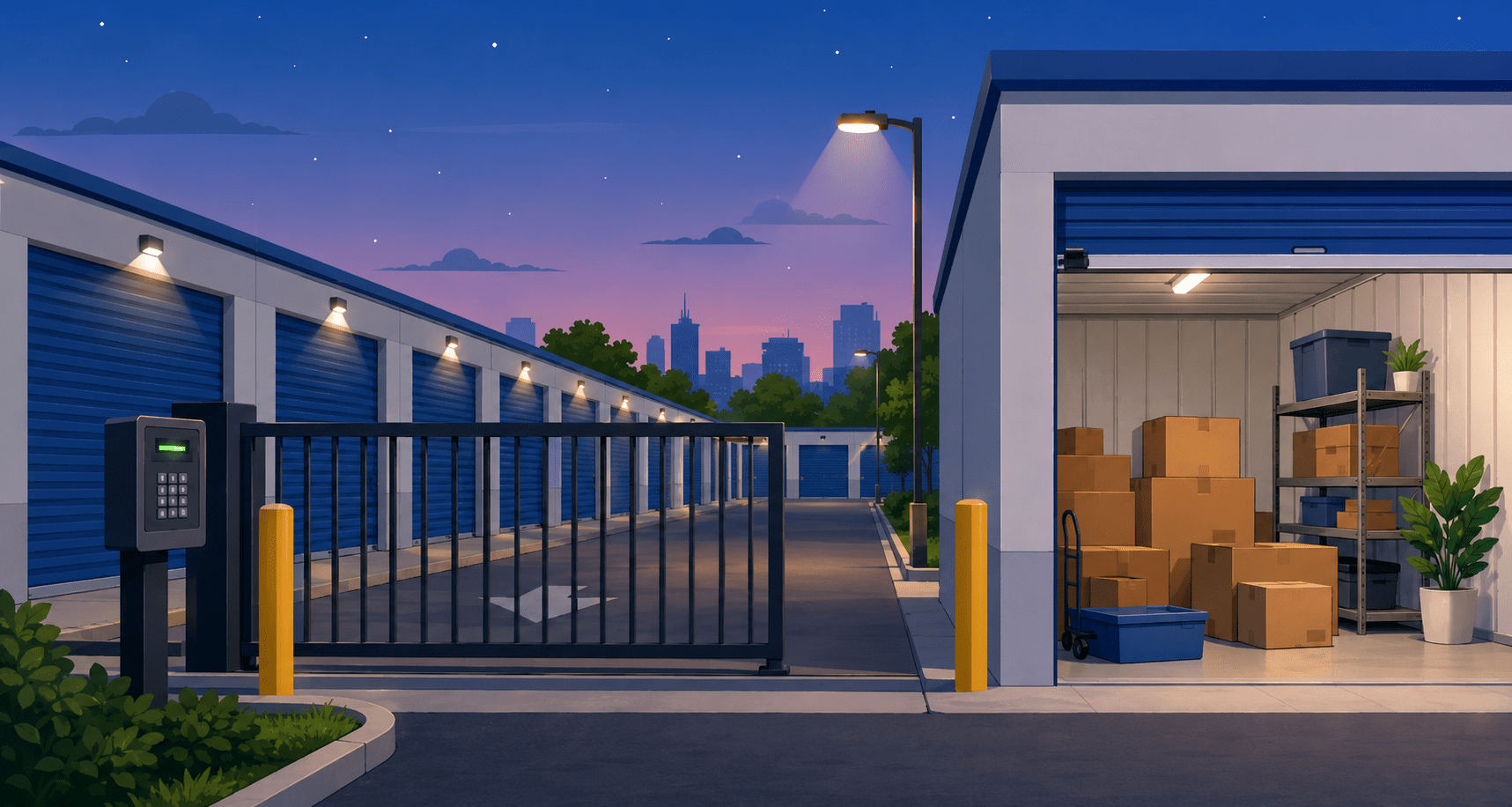

Storage units offer a convenient solution for homeowners, renters, businesses, and anyone needing extra space. However, finding 24-hour access storage can be more challenging than many people expect. While some facilities advertise around-the-clock access, availability often depends on location, local regulations, security policies, and customer qualifications.
Whether you’re storing business inventory, household belongings, moving supplies, or seasonal items, having unrestricted access can make a significant difference. If you’re relocating and coordinating temporary storage, understanding your options becomes even more important, especially when planning a move that may involve short-term storage during a long-distance relocation.
In this guide, we’ll explain how 24-hour storage access works, who typically qualifies, where to find it, and what factors to consider before choosing a facility.
24-hour access storage allows renters to enter their storage units at any time of the day or night, including weekends and holidays.
Most self-storage facilities operate with access hours that typically range from early morning to late evening. Common access windows include:
6:00 AM to 10:00 PM
7:00 AM to 9:00 PM
5:00 AM to 11:00 PM
Facilities offering true 24/7 access remove these restrictions, allowing customers to access their units whenever needed.
This flexibility can be particularly valuable for:
Small business owners
Contractors and tradespeople
E-commerce sellers
Frequent travelers
Military personnel
Individuals with non-traditional work schedules
Although demand for round-the-clock access exists, many storage companies limit access hours for security and operational reasons.
Storage operators prioritize customer safety and property protection. Restricting access hours reduces the likelihood of:
Unauthorized entry
Vandalism
Theft
Loitering
Property damage
Many facilities find it easier to monitor activity during scheduled operating hours.
Some cities and municipalities restrict overnight business activity. Zoning ordinances or local security requirements may prevent storage facilities from offering unrestricted access.
Even facilities that operate without on-site staff often require support personnel to handle emergencies, maintenance issues, or security incidents. Limiting access helps reduce operational costs.
Insurance providers may impose conditions on storage operators that influence access policies. Some facilities receive lower premiums by restricting overnight entry.
Not everyone needs around-the-clock storage access. However, for certain customers, it can be a necessity rather than a convenience.
Many businesses use storage units to hold inventory, equipment, documents, and supplies. Having access outside standard business hours allows owners to restock or retrieve items whenever needed.
Electricians, plumbers, landscapers, and construction crews often start work before sunrise. A storage facility with 24-hour access makes it easier to retrieve tools and materials early in the morning.
People coordinating relocation schedules sometimes need access outside traditional business hours. This is especially useful when dealing with unexpected delays or arrival times during interstate moves.
Individuals who travel frequently or face changing schedules may benefit from unrestricted access to their belongings whenever they return home.
Finding a facility with true 24-hour access requires more than a simple online search.
Independent and locally owned facilities are often more flexible than national chains.
Because local operators typically have greater control over facility policies, they may offer customized access arrangements for qualified customers.
When researching local facilities:
Check their website
Read customer reviews
Contact the facility directly
Confirm access policies in writing
Many websites advertise “extended access” rather than true 24-hour access.
Always verify:
Gate hours
Office hours
Access restrictions
Security requirements
Additional fees
A quick phone call can prevent misunderstandings later.
Some facilities offer 24-hour access only to:
Commercial customers
Long-term renters
Customers with premium units
Businesses with verified credentials
Understanding these requirements upfront can save time.
Access isn’t the only factor that matters when choosing a storage unit.
A quality facility should include:
Electronic gate access
Security cameras
Motion detection
Individual unit locks
Well-lit premises
Since customers may visit at night, strong security becomes even more important.
Climate-controlled storage helps protect sensitive belongings from:
Heat
Humidity
Moisture
Temperature fluctuations
This feature is especially valuable for:
Electronics
Furniture
Documents
Artwork
Antiques
The closest storage facility is not always the best choice, but location matters.
Consider:
Distance from home
Traffic patterns
Ease of vehicle access
Truck accessibility
A slightly longer drive may be worthwhile if the facility offers better security and unrestricted access.
A properly maintained facility often reflects better management practices overall.
Watch for:
Clean grounds
Functional lighting
Secure fencing
Pest control measures
Well-maintained buildings
Policies vary significantly between locations, even within the same brand.
Many national storage companies operate under regional management, meaning one location may offer 24-hour access while another does not.
U-Haul operates thousands of storage facilities across North America.
Some locations may provide 24-hour access, but availability depends on local management policies, facility design, and security considerations.
Always contact the specific location to verify access hours before renting.
Additional national brands occasionally offer extended or 24-hour access, including:
Extra Space Storage
StorageMart
Life Storage
Availability varies by market and location.
Before signing a rental agreement, ask the facility the following questions:
Is access truly available 24 hours a day?
Are there additional fees for unrestricted access?
What security measures are in place overnight?
Can access privileges be revoked?
Are there restrictions on certain unit sizes?
Is climate control available?
How is emergency support handled after hours?
Are there any local access restrictions?
Getting clear answers helps avoid surprises after move-in.
This is one of the most common misconceptions.
Most storage facilities limit access hours for security and operational reasons.
Large companies often have stricter corporate policies than independent operators.
In some cases, smaller local facilities provide greater flexibility.
Access hours and office hours are different.
Many facilities allow customer entry 24/7 while keeping management offices closed overnight.
The answer depends on your needs.
For customers who access their unit only a few times each year, extended access may not provide much value.
However, if your schedule changes frequently or your business depends on immediate access to equipment or inventory, the convenience can easily justify the cost.
The key is balancing flexibility, security, location, and overall value.
Finding reliable 24-hour access storage requires careful research, but the added flexibility can be incredibly valuable for both personal and business use.
While many facilities advertise convenient access, true 24/7 availability remains relatively uncommon. Local storage operators often provide the best opportunities for unrestricted access, though some national brands may offer it at select locations.
Before committing to a storage unit, verify access policies directly with the facility, review security measures, and ensure the location meets your specific needs. Taking a few extra minutes to ask the right questions can help you find a storage solution that offers both convenience and peace of mind.
No. Availability depends on local regulations, facility policies, security measures, and management decisions.
Some facilities may charge additional fees for unrestricted access, while others include it as part of specific rental plans.
Most reputable facilities use security cameras, gated access, lighting systems, and monitoring technology to help protect customers and their belongings.
Yes, although some facilities reserve unrestricted access for commercial customers or premium account holders.
Many facilities offer both features, but availability varies by location and unit type.
Contact the facility directly and request written confirmation of access hours, restrictions, and any qualification requirements.
