
Moving Containers
Recommendation
Moving Container Reviews
Recommendation
Truck Rentals Reviews
Storage Recommendations
Storage Review
Junk Removal Recommendations
Junk Removal Reviews
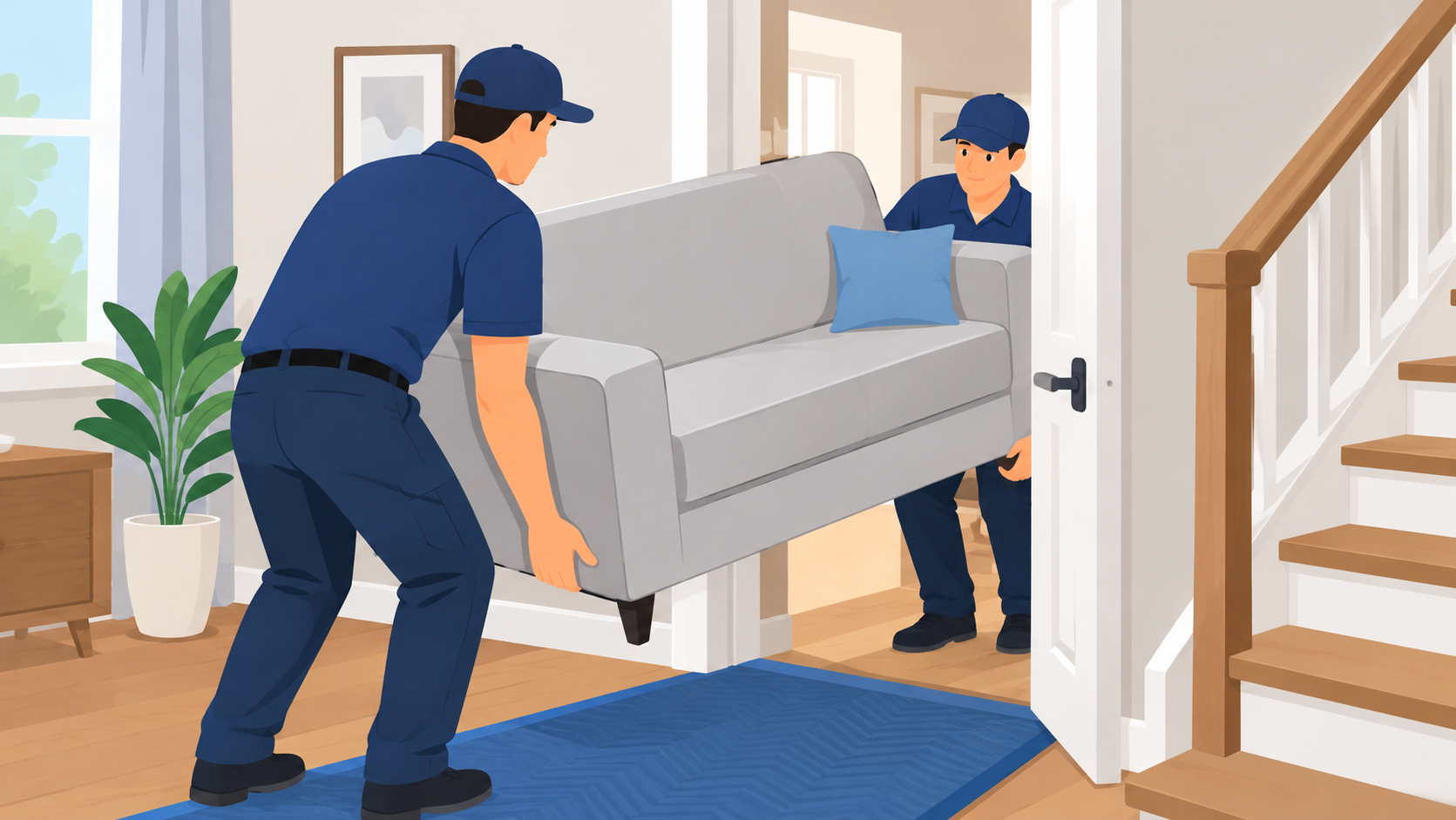

Moving furniture through narrow doorways and staircases can be challenging, especially when dealing with bulky sofas, large dressers, beds, and heavy tables. The key is to measure the furniture and the available space, plan the route, and determine the best angle before lifting. In many cases, removing detachable parts or carefully tilting an item can help it pass through a tight opening without damaging the furniture, walls, or floors.
Forcing furniture through a space that is too small can lead to scratches, broken components, property damage, and injuries. A little preparation can make the process safer and help you decide when professional movers are the better option.
Moving furniture through narrow doorways is difficult because the item’s dimensions, shape, and turning clearance may prevent it from passing through a space that appears wide enough. Hallways, stair landings, door frames, and ceiling heights can create additional restrictions.
A piece of furniture might fit through a doorway when held upright but become impossible to turn once it reaches a narrow hallway. The available space for maneuvering is just as important as the doorway’s width.
Common challenges include:
Understanding these limitations before moving day helps prevent unnecessary lifting and damage.
The best way to determine whether furniture will fit is to measure the item, the doorway, and the surrounding route before attempting to move it. Measurements help you identify potential obstacles and decide whether the furniture needs to be disassembled or repositioned.
Measure the furniture at its widest, tallest, and deepest points. Then measure the doorway’s clear opening, accounting for the door itself, handles, and any protruding trim.
Use a tape measure and record the following dimensions:
| Item or Area | What to Measure |
|---|---|
| Furniture | Height, width, and depth |
| Doorway | Clear width and height |
| Hallway | Width and available turning space |
| Staircase | Width, ceiling clearance, and landing dimensions |
| Elevator | Door opening and interior dimensions |
| Furniture components | Dimensions after removable parts are detached |
Do not assume that the doorway’s listed or standard dimensions represent the usable opening. Measure the actual space available for the furniture to pass through.
Compare the furniture’s dimensions with the available opening and consider how the item can be rotated. A sofa that is wider than a doorway may still fit when tilted vertically, provided its height, depth, and surrounding clearance allow the movement.
For irregularly shaped furniture, measuring alone may not provide a definitive answer. The shape of the arms, legs, backrest, and frame can affect how the item moves through a corner.
Before lifting, plan the intended position at each stage. If the furniture cannot pass through without hitting a wall, ceiling, or door frame, consider disassembly or professional assistance.
To move furniture through a narrow doorway, clear the route, protect the surrounding surfaces, and approach the opening at a suitable angle. Move slowly and make small adjustments instead of trying to force the item straight through.
Follow these steps to improve your chances of moving furniture safely.
Remove shoes, boxes, rugs, small furniture, and other obstacles from the room, hallway, and entrance. Open the door fully and check whether it can be removed from its hinges if additional clearance is needed.
Make sure everyone involved understands the route before lifting.
Cover exposed furniture surfaces with suitable moving blankets or padding. Use appropriate protection for vulnerable door frames, corners, and floors.
Avoid wrapping furniture so heavily that the extra padding makes it too large to fit through the opening. Secure the protective materials so they do not slip during movement.
For additional preparation tips, see WowMover’s guide on how to protect your belongings when moving.
Take off anything that can be safely removed, such as sofa legs, table legs, detachable shelves, or bed frames. Empty drawers and remove loose cushions when they add bulk or interfere with handling.
Keep screws, bolts, and small hardware in labeled bags so they do not get lost.
If the furniture has fragile connections or complicated assembly, check the manufacturer’s instructions before dismantling it.
Approach the doorway at an angle that gives you enough room to guide the furniture through. Depending on its shape, you may need to turn it sideways, raise one end, or tilt it carefully.
Avoid making sudden movements while the item is partially inside the doorway. The person guiding the front should communicate clearly with the person supporting the rear.
Advance a small distance at a time, checking for contact with the walls, ceiling, and door frame. If the furniture becomes stuck, stop and move it back to a stable position before trying a different angle.
Never use excessive force to squeeze an item through an opening. If the furniture cannot pass safely, reconsider disassembly or contact a professional moving team.
Moving a sofa through a narrow doorway usually requires checking its overall dimensions, removing detachable legs and cushions, and testing different orientations. The correct approach depends on the sofa’s frame, armrests, backrest, and the amount of turning space available.
Start by measuring the sofa’s width, height, and depth. Remember that thick armrests and curved backs can make the sofa more difficult to maneuver than its basic dimensions suggest.
Try the following preparation steps:
Some sofas can pass through a doorway when rotated onto their side, while others have rigid frames that limit their movement.
Do not force a sofa into an angle that places excessive pressure on its frame or joints. If you are unsure how to handle a large or awkward piece, consult this guide on how to deal with large furniture when moving.
Moving furniture on a narrow staircase requires careful measurement, coordinated lifting, and a clear plan for every turn and landing. Staircases introduce additional risks because the furniture must remain controlled while people navigate different heights and limited footing.
Before moving anything, measure the staircase width, ceiling clearance, and landing space. Check for handrails, light fixtures, low ceilings, and sharp turns that could interfere with the furniture.
Tight turns are often more difficult than straight stair sections because the furniture needs room to rotate. A piece that fits on the stairs may not fit around the landing.
To manage a tight turn:
Never lean over a staircase railing or place yourself in a position where a shifting load could knock you off balance.
Lifting straps may help distribute a load between trained or capable movers, but they do not eliminate the risks of carrying heavy furniture on stairs. Their suitability depends on the furniture, the staircase, the equipment, and the people handling the load.
If you use straps, follow the manufacturer’s instructions and ensure the furniture is stable before lifting. Avoid using equipment that prevents either person from maintaining secure footing or controlling the load.
For more information, read WowMover’s guide on how to use lifting straps for moving furniture safely.
If the staircase is exceptionally narrow, steep, or difficult to navigate, hiring experienced movers is generally safer than attempting the move without appropriate training and equipment.
You should disassemble furniture when removing specific components will create enough clearance for safe passage or make the item easier to control. Disassembly is often practical for bed frames, dining tables, desks, modular shelving, and some sofas.
However, not every piece should be dismantled. Some furniture has glued joints, delicate finishes, integrated components, or structural connections that can be damaged during removal.
Consider disassembly when:
Before taking anything apart, photograph the original assembly and label each component. Keep screws and brackets together, and avoid removing structural parts unless the design permits it.
If the furniture cannot be disassembled safely, a professional mover may be able to assess alternative handling methods.
The right moving tools can improve grip, protect surfaces, and make furniture easier to control. However, equipment should match the item’s weight, shape, and route rather than being used simply because it is available.
| Tool | Main Purpose | Important Consideration |
|---|---|---|
| Tape measure | Checks furniture and opening dimensions | Measure the full route, not just the doorway |
| Moving blankets | Protect furniture from scratches and impact | Secure padding without adding excessive bulk |
| Furniture sliders | Help reposition suitable furniture on floors | Not designed for carrying furniture on stairs |
| Lifting straps | Help distribute a load between movers | Require proper setup and coordinated handling |
| Screwdriver or appropriate tools | Remove detachable components | Follow manufacturer instructions |
| Floor and corner protection | Helps prevent property damage | Keep protective materials secure and free of trip hazards |
A dolly may help move suitable furniture across a level surface, but it is not automatically appropriate for narrow doorways or staircases. Do not attempt to roll heavy furniture down stairs using equipment that is not designed for that purpose.
The most common mistakes are skipping measurements, rushing turns, lifting without a plan, and forcing furniture through an opening that does not provide enough clearance. These errors can damage furniture and property or cause serious injuries.
Avoid these problems during your move:
If you encounter resistance, stop and reassess. Reposition the furniture, create more clearance where appropriate, or choose a different method.
Hiring professional movers makes sense when furniture is too heavy, fragile, valuable, or awkward to maneuver safely through a narrow opening. Professional assistance is also worth considering when the route involves multiple flights of stairs, sharp landings, low ceilings, or limited clearance.
Movers can assess the furniture and access conditions before deciding how to handle the item. Depending on the job, they may use specialized equipment, dismantle certain components, or recommend an alternative handling method.
Professional help is particularly useful when moving:
Before booking, describe the doorway width, staircase layout, landing dimensions, and any known obstacles. Photos or a short video of the route can help the moving company understand the challenge before moving day.
You can also review WowMover’s guide to choosing the right local movers to understand what to look for when comparing moving services.
Preparing your home before the movers arrive reduces delays and makes narrow spaces easier to navigate. The goal is to ensure that the route is clear, the furniture is ready to move, and everyone knows what to expect.
Use this checklist before moving day:
If you are organizing an entire household move, WowMover’s ultimate moving checklist can help you coordinate other important tasks.
Measure the furniture’s height, width, and depth, then compare those dimensions with the doorway’s clear opening. Also account for turning space, ceiling clearance, and any obstacles immediately beyond the doorway.
Sometimes. A sofa may fit when tilted or rotated, depending on its frame, armrests, height, and the available space. Measure the full route before attempting to move it, and never force it through an opening.
Removing a door from its hinges can provide additional clearance when the door itself restricts the opening. However, it will not solve problems caused by a narrow frame, a tight corner, or insufficient landing space.
Measure the staircase and landing, remove detachable components where appropriate, and plan the route before lifting. Use sufficient help and suitable equipment. If you cannot maintain secure footing or control the load, hire professional movers.
Yes. Tilting can place pressure on joints, legs, panels, and other structural components, especially if the furniture is not designed to be handled that way. Check the construction and manufacturer guidance before changing its orientation.
Stop pushing or pulling, return the furniture to a stable position if possible, and reassess the angle and available clearance. Consider removing additional components or obtaining professional assistance rather than forcing the item through.
Professional movers are a good option when furniture is heavy, fragile, oversized, or difficult to maneuver through narrow spaces. They can assess the route and determine whether special equipment, disassembly, or another handling method is needed.
Moving furniture through narrow doorways and staircases is easier when you know the dimensions, understand the route, and prepare the furniture before lifting. Measuring openings, removing detachable parts, protecting surfaces, and communicating clearly can prevent many common moving problems.
If a piece is too heavy or the route does not provide enough clearance, do not force it. Professional movers can help assess difficult access points and determine the safest way to handle bulky furniture.
A few extra minutes spent planning can save time, reduce the risk of injury, and help protect both your belongings and your home.
